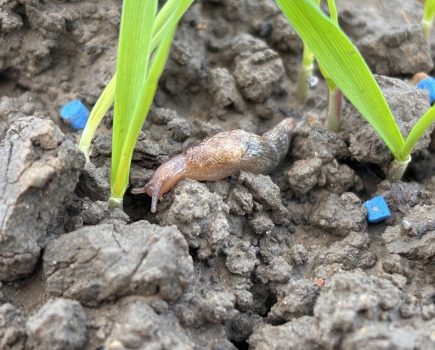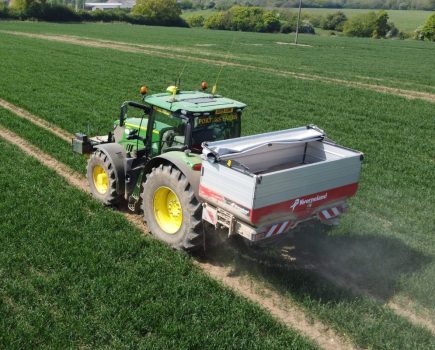

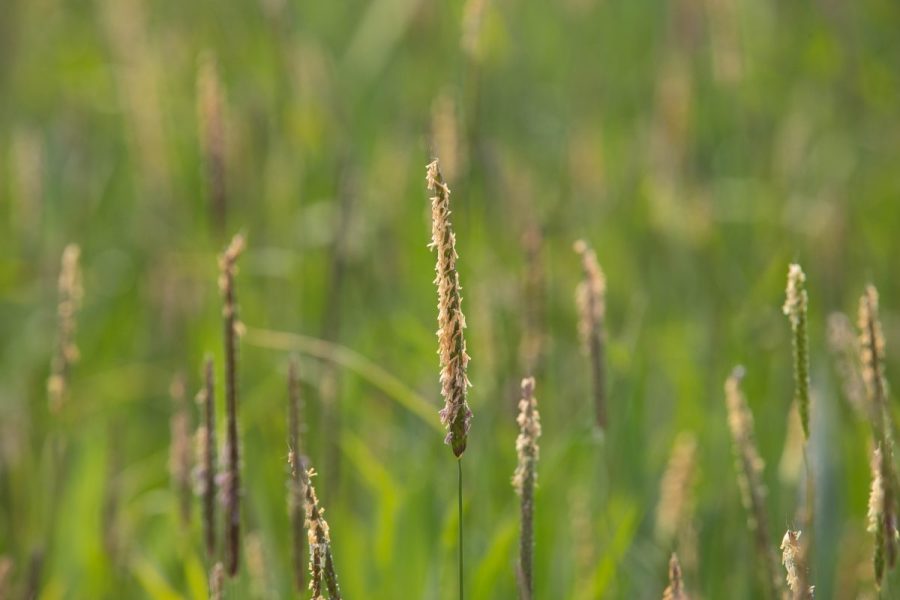
Although early drilled crops often mean a compromise on grassweed control, it seems in most cases, pre-em herbicide programmes have delivered the goods. But as those residuals begin to run out of steam, CPM asks, what does that mean for the spring?
“Travel as early as you can, for maximum control.” CHRIS MCCLYMONT
By Janine Adamson
According to weed scientist, John Cussans, the future is a lot like the past, only slightly different. In other words, while last season concluded with low weed populations and minimal seed return, that doesn’t mean fields won’t require monitoring this spring.
“Although we’re not shaping for a complete meltdown in weed control this year – the situation appears to be quite good with plenty in our favour – we have to understand populations at a field-level,” he urges.
“There may still be a flush – yes, lush crop canopies will help to suppress later geminating weeds, but the concern of complacency remains.”
John adds that although there’s a natural shift in focus toward fungicides in the spring, weed control shouldn’t slip from the agenda completely. “Weeds have to be considered at the same time as planning fungicide programmes – they shouldn’t be forgotten.
“Growers have spent money on robust autumn herbicide applications, but to get the maximum results, they should be followed up in the spring. With the rise in species such as meadow and rye brome, this could mean going out and specifically targeting those weeds because they’ve not been controlled at all by autumn herbicides.”
Bayer’s Chris McClymont highlights that this season’s drilling dates will inevitably have an impact. “While early drilling is effective in ensuring a well-established, competitive crop, from a pure weed management stance, it creates problems. Therefore this season, many growers are relying heavily on residual herbicides doing a good job,” he says.
Agrovista agronomist, Chris Martin, agrees that for his growers, the focus will be on any remaining grassweeds. “With some crops drilled in August in the North, populations are definitely there, while broadleaf weeds are less of a concern.
“Equally, for those who switched away from Avadex (tri-allate) at pre-em, wild oats appear to be thriving. That’s perhaps been taken for granted in the past, but could come back and haunt us if we’re not careful.
“Yes there are finite funds available so you can’t use every active ingredient in a season, but when you substitute, you don’t always consider the added value a specific product might bring.”
While the efficacy of spring-applied ALS herbicides frequently comes into question, it’s often due to an application error, rather than a breakdown in chemistry, he suggests.
“There are many cases where contact herbicides have been applied too late in the spring when the target weed is simply too big – that’s not a resistance issue. Being ready for a bright sunny day, even in February, means weeds are targeted when they’re small and applications will be effective, even if broader conditions aren’t ideal.”
According to Chris McClymont, this is the school of thought behind Atlantis Star (mesosulfuron+ iodosulfuron+ thiencarbazone), which can be applied from 1 February at the full rate, delivering 15g/ha of mesosulfuron. “It’s less impacted by cold air temperatures, meaning those early applications will be effective. Travel as early as you can, for maximum control,” he stresses.
“Equally, in going early and not mixing a graminicide with fungicides, you’re avoiding complicated tank mixes which can ultimately compromise efficacy.”
He also raises that given last year’s news on glyphosate-resistant Italian ryegrass, work continues to understand the magnitude of the problem and that it should be a wake-up call.
Currently, there are only three absolute confirmed cases, with other samples being assessed. John says this still equates to a small handful of incidences spread across the country. “What we can conclude is that there’s the potential to select for glyphosate resistance where there’s high risk practice – a combination of factors such as dramatically reduced mechanical weeding, use of a low-disturbance drill, and repeated spring cropping.
“It all puts pressure on glyphosate and is what all of the confirmed cases have in common,” he explains. “But despite this risk, given the limited number of cases, there’s a small window of opportunity during the next season for us to focus on the problem, test suspected samples and hopefully prevent it from becoming widespread,” concludes John.
Those concerned about a failure in glyphosate performance within Italian ryegrass should contact Bayer or ADAS.
This article was taken from the latest issue of CPM. Read the article in full here.
For more articles like this, subscribe here.
Sign up for Crop Production Magazine’s FREE e-newsletter here.