
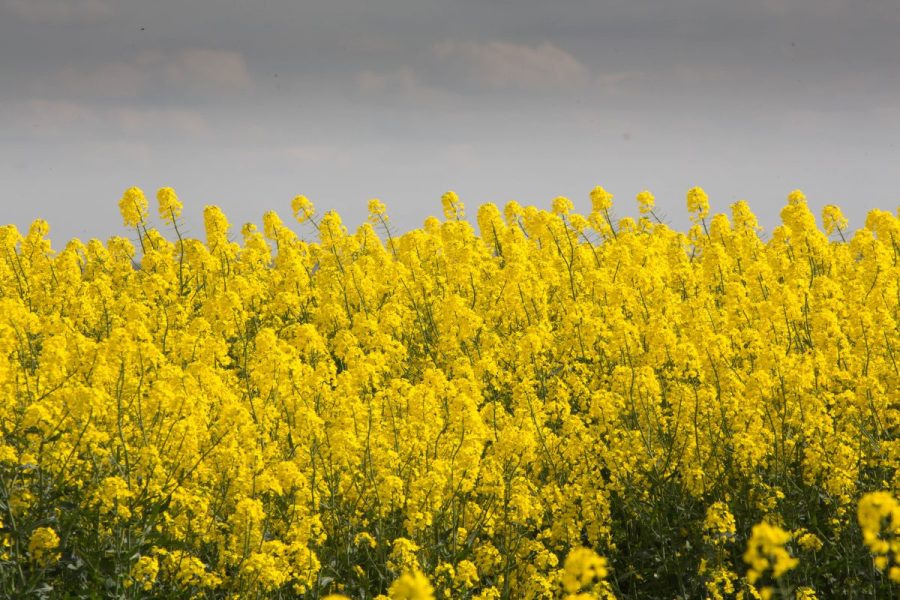
Last year bucked what had been a downward trend for oilseed rape. But was it simply a season where the stars aligned, or are growers getting better at stacking the odds in the crop’s favour? CPM finds out what drove the turnaround and whether it can be done again.
“2025 was one of the best yielding years of recent times for OSR,” PETE BERRY
By Charlotte Cunningham
After years of false starts, flea beetle battles and dwindling confidence, oilseed rape finally delivered in 2025. Yields surprised even the most optimistic growers, margins stacked up, and for the first time in a while, the crop looked as though it belonged in the rotation again.
For Pete Berry, head of crop physiology at ADAS, the season wasn’t a fluke, but nor was it simple. “2025 was one of the best yielding years of recent times for OSR,” he says. “And that wasn’t down to one thing – it was a combination of factors lining up in the crop’s favour.”
The question now is whether growers can engineer a repeat performance or whether last season was simply a perfect storm.
Pete believes the foundations were laid early. A relatively dry – or at least not excessively wet – winter meant crops avoided prolonged waterlogging, something OSR is notoriously intolerant of. Roots functioned properly, soils breathed, and plants went into spring in good condition – and then came the sunshine.
“A very sunny April was critical,” explains Pete. “That’s the period when the crop is setting seed numbers. If you have a well-rooted crop that isn’t under stress, high radiation at that stage translates directly into more pods and more seeds.”
Summer followed suit with further bright conditions helping to fill those seeds, while just as importantly, cabbage stem flea beetle pressure was low and disease levels were modest.
“It was a year where establishment was good, plant populations were strong, pest pressure was reduced and the weather supported the crop at the key physiological stages,” he adds. “There were a lot of positive signals.”
Not every field escaped unscathed, however. Crops on shallow or sandy soils struggled once drought conditions bit, particularly where rooting was compromised. But regionally, some areas excelled, he adds. “Scotland recorded one of its highest regional yields on record – around 4.7t/ha on average.
“They had similar sunshine benefits but slightly cooler temperatures and a little more summer rainfall, which extended the grain fill period.”
In short, OSR was allowed to behave like OSR – and it rewarded growers accordingly. However, while climate undoubtedly set the tone, Pete says the success of 2025 wasn’t purely a lucky roll of the dice.
“Years of pressure have forced change; establishment strategies have been rethought. Drilling dates have become more flexible. nutrition is more closely aligned to crop need and canopy management is no longer an afterthought.
“Essentially, we’ve improved our ability to establish crops more reliably,” he adds. “There’s much more thought about matching drilling to soil moisture, ensuring good seed-to-soil contact and chasing early vigour.”
That early vigour remains central to resilience, particularly against cabbage stem flea beetle. This is because strong autumn growth enables plants to tolerate grazing and larval burden far better than backward crops.
Warwickshire grower and agronomist, Will Oliver, is clear on the importance of spring nutrition in supporting that resilience. “By getting a first dose of nitrogen and sulphur on the crop as soon as conditions allow, you ensure the plant has the resources it requires to kickstart growth,” he says.
“A well-nourished OSR plant has a much better chance of withstanding any stress caused by challenging spring conditions and will be much better able to grow away from pest damage.”
Pete agrees: “Anything that supports early vigour and strong root development is going to improve resilience – nutrition absolutely contributes to that.”
But even before vigour comes into play, perhaps one of the more significant mindset shifts leading to OSR’s success has been around drilling windows.
For years, conventional wisdom dictated OSR should be in by late August or very early September, but recent data suggests the window may be wider than once thought. “A number of the highest yielding Yield Enhancement Network (YEN) entries last year were drilled in mid-September,” raises Pete. “That challenges the perception that you can’t go later.”
Even so, there are regional caveats – further north, the window remains tighter. But in more southerly regions, drilling well into September can still produce robust, competitive crops. “One of the challenges with drilling very early is producing a large canopy moving into winter,” he explains. “That can be difficult to manage in the spring and doesn’t necessarily set as many seeds.”
An oversized canopy can reduce light penetration, complicate spring management and increase lodging risk, he raises, while a more moderate plant entering winter may actually be easier to optimise. “It’s not about abandoning early drilling altogether, it’s about understanding the flexibility available and using it strategically.”
Fast forward to this season and if 2025 was characterised by a relatively kind winter, 2026 has so far told a different story. “It’s been much wetter and there’s no getting away from that.
“Waterlogging remains one of OSR’s biggest vulnerabilities – roots deprived of oxygen struggle to function, nutrient uptake falters and plants become more susceptible to stress,” says Pete.
That said, context matters. Following a dry harvest period in 2025, many soils entered winter with moisture deficits, so it took time for profiles to recharge. “Some soils could take quite a lot of rainfall before they reached field capacity,” notes Pete. “And structurally, they were in better condition because harvest wasn’t wet.”
Strong autumn establishment has also provided some buffer. “Well-rooted crops are inherently better equipped to tolerate short-term stress, but in fields where standing water has persisted, there’s little to be done until conditions improve,” he continues.
“With waterlogging, there’s not a huge amount you can do while it’s happening – the crop is under stress so the priority is to let it recover once conditions improve.”
As attention turns to spring, and growers cross their fingers in hope of drier, sunnier days, canopy assessment should be the starting point, advises Pete. “The first job is to measure canopy size. That determines nitrogen requirement and whether growth regulation is required.”
A canopy with a GAI of 2 at the start of spring already contains around 100kgN/ha in its biomass which significantly alters fertiliser calculations, he adds. “There’s a huge range of canopy sizes out there, many crops are very forward, but there are some smaller ones around.”
Agrii agronomist Robin Nurse has been urging growers to take a proactive approach to canopy manipulation this season. “Crops are well forward – they’ve benefited from a lack of pigeon grazing which we’ve seen in other years,” he says.
“However, lush OSR crops can often flatter to deceive,” he warns, stressing the need to ensure canopy architecture is right and disease is kept at bay.
The target remains a GAI of around 3.5 at flowering – enough to intercept light efficiently without tipping into excessive vegetative growth – and nitrogen remains the primary lever.
In thicker areas, rates may require trimming while thinner patches may justify more support. Micronutrients such as magnesium, boron and molybdenum are also important during rapid spring growth, adds Robin.
Plant growth regulators and fungicides complete the spring picture, with Robin favouring a preventative approach, particularly for light leaf spot. “With light leaf spot, no chemistry is truly eradicant, so we must keep it out,” he stresses.
Timing will be critical, however, because with strong rooting and advanced development, crops could move quickly once temperatures rise, warns Robin. “When things start moving, it’s likely to happen in a rush this year.”
With all of this in mind, what lies for the future of OSR? After several bruising seasons, 2025 has inevitably sparked renewed interest in the crop, following a time when the area had fallen sharply as growers questioned whether the risk justified the reward.
But following a very good performance in 2025 and relatively strong prices, OSR is firmly back in the conversation, believes Pete. “I think the area probably dropped lower than it should have, and I do think confidence will improve.”
Crucially, the industry hasn’t stood still and lessons learned during difficult years have sharpened management. Establishment strategies are more nuanced, drilling windows are better understood, and canopy and nitrogen management are increasingly data-led.
Going forward, ADAS is working with breeders and York University to identify varieties with deeper, more resilient root systems – traits that could prove invaluable as climate variability intensifies. “It’s a long-term project called OREGIN, funded by Defra,” explains Pete. “But the goal is to help breeders to select material that can cope better with climate variability.”
So the golden question is – can last year be replicated? Pete believes that while growers can’t order sunshine or dictate winter rainfall – and weather will always shape the outcome – what 2025 demonstrated is what OSR can deliver when it isn’t constrained. “It was a year where the crop wasn’t held back and when that happens, the yield potential is impressive.”
The challenge now is to stack as many controllable factors in the crop’s favour as possible – strong establishment, responsive nutrition, disciplined canopy management and vigilant disease control – so that when the weather does align, growers are ready to capitalise, he says.
So while lightning may not strike in quite the same way every year, OSR looks better equipped than it has in some time to make the most of whatever the season throws at it…
This article was taken from the latest issue of CPM. Read the article in full here.
For more articles like this, subscribe here.
Sign up for Crop Production Magazine’s FREE e-newsletter here.