
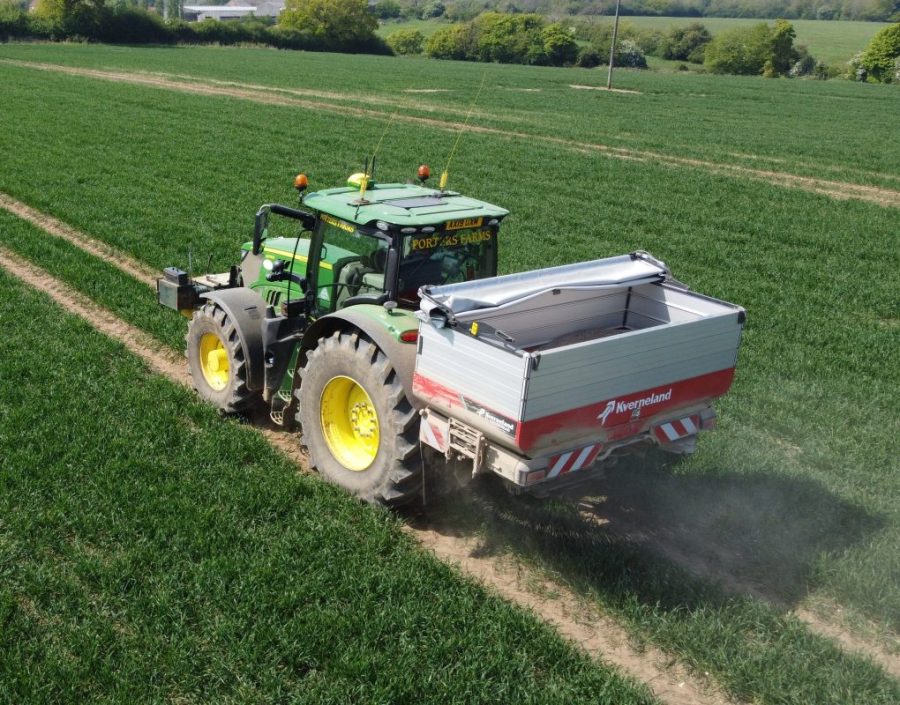
Phosphate is fundamental to crop performance, yet the majority of it never reaches the plant. Why does so much become locked up, and what can growers do about it? CPM finds out more.
“If you look at what’s actually available to the crop, it’s typically only 3-5% – that means around 90-95% is effectively locked up.” PHIL HAYGARTH
By Charlotte Cunningham
If you stand at the edge of almost any arable field in the UK and consider the nutrients beneath your boots, one uncomfortable truth quickly emerges. For all the money, time and expertise invested in fertiliser programmes, some of what’s applied never reaches the crop – and nowhere is this more evident than with phosphorus.
“Imagine there’s 100% phosphorus in the soil,” proposes Professor Phil Haygarth, professor of soil and water science at Lancaster University. “If you look at what’s actually available to the crop, it’s typically only 3-5%. That means around 90-95% is effectively locked up.”
It’s a statistic that gives pause for thought. Phosphate remains fundamental to crop establishment, resilience and yield potential, yet the overwhelming majority of it is sitting out of reach, bound to soil particles and unavailable to developing roots, at a time when growers are under increasing pressure to improve efficiency, reduce waste and justify every input.
Phosphorus has underpinned modern food production for decades, with mining and refining of rock phosphate transforming global agriculture and allowing soils to be supplemented far beyond their natural fertility. “It’s done amazing things for humanity,” says Phil. “It has supported modern farming systems and food security.”
But its importance goes far deeper than yield alone, he continues. “It’s part of DNA, part of seed germination, part of resilience – it’s part of the fibre of crop production.”
In other words, phosphorus is woven into almost every biological process that drives crop performance, meaning that when access is limited, the effects may not always be dramatic or immediately visible, but they are persistent.
Over time, restricted availability can quietly undermine rooting, canopy development and crop resilience, reducing a plant’s ability to cope with stress later in the season.
Part of the problem lies in how phosphate behaves once it enters the soil, because unlike nitrogen or potassium, it doesn’t move freely through the profile. Instead, it reacts rapidly with surrounding minerals, forming compounds that roots struggle to access, explains Phil.
The mobility of phosphorus is sensitive to soil pH, and it also tends to get locked up in precipitates bound with calcium, aluminium and iron. “It locks itself up, and once it’s locked up, it’s not very mobile at all.”
As a result, many soils become rich in total phosphorus but poor in available phosphorus, creating a growing disconnect between what’s present in the soil and what crops can realistically use.
Over years of application, ‘legacy’ reserves build up in inaccessible forms, while fresh fertiliser continues to be applied to meet immediate crop demand, reinforcing what Phil describes as an inherently inefficient system.
The consequences of this inefficiency are felt most keenly in the early weeks of crop growth, when phosphorus plays a central role in energy transfer and cell division, helping seedlings establish roots and build structural strength.
“Phosphate is primarily about rooting,” explains Toby Ward, nutrition agronomist with Origin Soil Nutrition. “That’s why it’s used so widely in starter fertilisers.”
Yet early spring is often when availability is lowest, because cold soils slow microbial activity and nutrient cycling, limiting the biological processes that might otherwise release phosphorus from bound forms – while young plants are simultaneously restricted by small, shallow root systems.
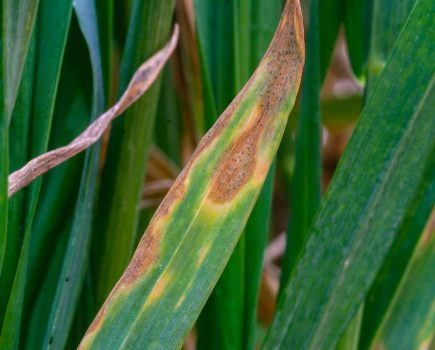
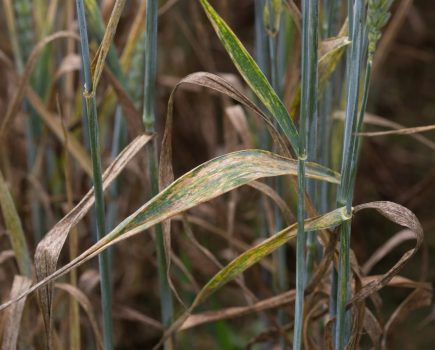
“You often see it in maize,” says Toby. “Purple leaves, stunted growth. Then, as soils warm up, the crop grows away.”
Cereals, oilseeds and vegetable crops can show similar symptoms, and while the effects are often subtle, they can influence tillering, rooting depth and canopy development throughout the season.
Research suggests young plants can devote up to 70% of their early energy to nutrient acquisition, meaning when phosphate is distant or inaccessible, that energy is diverted away from growth.
Part of the challenge is phosphate’s fundamental lack of mobility in soil, suggests Toby. “It’s a lazy nutrient – it doesn’t move very far.”
Once applied, it remains largely where it lands, which makes placement one of the most powerful tools available to growers seeking to improve uptake, he believes.
Broadcast fertiliser spreads phosphorus thinly across the soil surface, increasing the distance roots must travel to access it, while banding or placing nutrients close to seed concentrates supply where demand is highest, explains Toby. “If you broadcast it, you might not see the early uptake you’re hoping for; placement makes a huge difference.”
This is particularly relevant in reduced tillage systems, where stratification can develop and surface-applied phosphate may remain beyond the reach of deeper roots.
Toby adds that while growers have no shortage of phosphate sources, each behaves differently once entering the soil system, so considering this is vital to success.
Triple superphosphate (TSP) remains the dominant straight P fertiliser, while diammonium phosphate (DAP) is widely used in compound formulations. “DAP is popular for seedbed applications because it delivers nitrogen and phosphate together,” says Toby.
Organic sources complicate the picture further, as rock phosphates release nutrients slowly through chemical and biological processes, while manures and slurries contribute significant phosphorus in variable forms.
“People sometimes forget how much P they’re applying through recycled organic manures; it all adds up,” raises Phil.
As rotations diversify and nutrient sources multiply, understanding these interactions becomes increasingly important, he continues.
He believes that improving phosphate use is not only an agronomic issue, but also a strategic one, particularly as global rock phosphate reserves are finite. This is because while estimates vary, most suggest economically viable supplies may last only a few hundred years. “In geological terms, that’s nothing, so we have to be careful” stresses Phil.
At the same time, excessive soil phosphorus increases environmental risk, with runoff and erosion transporting bound phosphate into rivers and lakes and contributing to eutrophication. “If it builds up in soil, there’s a greater risk that it’ll eventually end up in water,” warns Phil.
This places growers in a difficult position, balancing the desire for productivity with the need to reduce losses and avoid unnecessary accumulation, he says. “Don’t just keep applying liberal amounts – think twice, be more modest, be more strategic.”
Soil testing remains central to that strategy, and under SFI and other schemes, regular analysis is now routine. However, data alone doesn’t guarantee better decisions, comments Toby. “It’s about interpretation, not just defaulting to a standard fertiliser every year.”
Indices, pH, organic matter and texture all influence phosphate dynamics, meaning two fields with identical P indices may behave very differently in practice.
As a result, Toby says it’s important to ensure focus is shifted to matching application rate, timing and placement to specific field conditions and moving away from blanket programmes towards more responsive systems.
For many growers, phosphate management is beginning to shift from a question of how much to apply, to how well it’s working. In Phil’s terms, much of UK agriculture is still operating on a relatively small slice of the phosphorus ‘pie’, while the rest remains locked away in inaccessible forms.
Improving access to that hidden reserve – through better placement, smarter planning and improved protection – represents one of the most significant opportunities for nutrient efficiency. “Phosphorus has given us huge benefits,” concludes Phil. “Now we have to use it more wisely.”
This article was taken from the latest issue of CPM. Read the article in full here.
For more articles like this, subscribe here.
Sign up for Crop Production Magazine’s FREE e-newsletter here.