
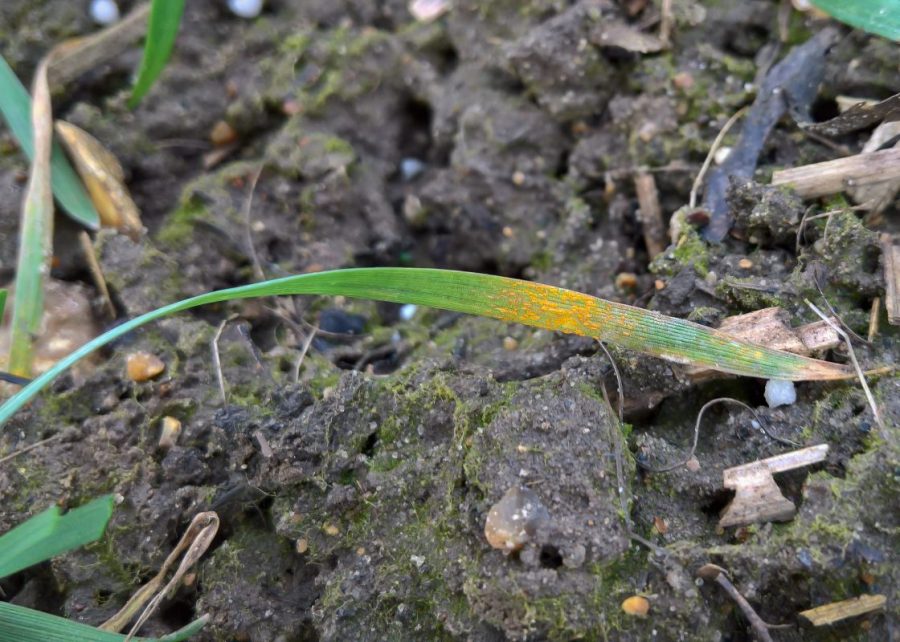
With the weather finally beginning to turn after weeks of inclement conditions, the joy of spring seems to be tantalisingly close. Still, experts reiterate that growers could be in for a disease heavy season. CPM gets the low down.
“There’s a volume of septoria inoculum waiting to build, plenty of mildew and in some cases, brown rust.” PAUL GRUBER
By Janine Adamson
In many ways, messaging from industry is beginning to sound like a stuck record – early drilling, forward crops, high disease risk, focus on fungicides. While repetitious, it should hardly be surprising.
Those with an air of cynicism may attribute this to a desire to ‘flog’ more chemistry, however, with prolonged damp conditions and few frost events, is it time to heed the advice?
Hutchinsons’ David Howard stresses that complacency should be avoided across the whole cropping rotation. “Growers shouldn’t be lulled into a false sense of security following the relatively low disease incidence seen last season, when a cold January and February followed by a dry spring and summer, helped to keep a lid on problems.
“The situation could be very different with more normal weather patterns this season. Although the winter is likely to have slowed and delayed rust arrival in crops, to what extent is always challenging to predict until we get to spring, and it’s unlikely to have gone completely.”
According to ProCam’s regional technical manager Nigel Scott, the reality is indeed high risk, with growers in the North facing a ‘double whammy’. “There are a lot of forward crops with septoria already in the base. This is in addition to justified concerns regarding yellow rust, given the North is where the Yr15 breakdown was first noted last year.
“With a lack of viable alternatives, growers have had to continue with susceptible varieties even if the resistance scores have dropped significantly. For example, in the past options like LG Typhoon and Champion were relatively easy-going varieties, but these are now high-input from T0 onwards and must be guarded appropriately,” he stresses.
Nigel, who’s based in Durham, says on average, growers drilled winter wheat up to 10 days earlier than usual in his area into warm soils; autumn conditions were then conducive to forward growth. He adds that it’s a similar story for winter barley too.
“Barley is looking very forward, increasing the risk of diseases such as net blotch. For those growers who’ve grazed their bulky crops with sheep, this will help to manage subsequent PGR and fungicide use, although isn’t something I’d recommend now onwards.”
Nigel’s colleague Paul Gruber is based in North Oxfordshire and highlights the changes between this season and 2024/5. “Yellow rust was first observed in my crops around 31 January this year, while last year it wasn’t visible until May. Importantly, this is comparing the same variety – Champion.
“This confirms the significance of the Yr15 breakdown, that it’s very real and widespread across the country.”
Paul says many growers in his area won’t necessarily be used to seeing yellow rust, so communicating the importance of applying a T0 to protect crops will be essential. He’s also seeing the presence of septoria. “As with everyone else, growers in the West went early despite not usually drilling until mid-October due to blackgrass concerns.
“As such, there’s a volume of septoria inoculum waiting to build, plenty of mildew and in some cases, brown rust. We also have to be aware that lodging risk is high, as well as poor blackgrass management leading into future seasons.”
Should septoria pressure be high by T0, David says growers should consider including multi-site folpet in the tank mix to help gain control.
“Use chemistry wisely to its best effect, considering the strengths of individual actives, and where they’re best used in the programme. But, beware of label restrictions that prevent the use of some products before GS30.
“Biological controls may provide another option to help keep disease at a manageable level when fungicide options are limited, although remember they’re purely protectant and not curative.”
One crop Paul is particularly concerned about is winter beans. “Early drilled or forward plantings are under high chocolate spot pressure (see box). It’s a wet weather disease and has cycled effectively due to the mild conditions.
“In these instances, crops will likely require extra fungicide and careful agronomic management,” he urges.
This article was taken from the latest issue of CPM. Read the article in full here.
For more articles like this, subscribe here.
Sign up for Crop Production Magazine’s FREE e-newsletter here.