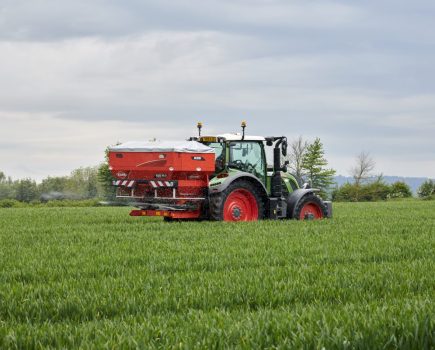

While this season’s winter wheat crops are packed with potential, left unchecked, weeds have the potential to reduce profitability at harvest. CPM finds out if there’s still time to gain control.
“Effective disease control will be crucial in realising crop potential, but this shouldn’t come at the expense of weed control.” DR PAUL FOGG
By Rob Jones and Janine Adamson
After what were coined ‘perfect drilling conditions’ last autumn, fast forward to current times and the weather has delivered the polar opposite – relentless rain. For many, early season weed control has fallen victim to this extreme, but is there still a window of opportunity?
Generally speaking, crop establishment was sound, supported by effective control from autumn herbicides. However, with inevitable survivors plus spring-germinating weeds, there’s no room for complacency, suggests Frontier’s Dr Paul Fogg.
“Residual herbicides performed well in the main and crops are currently in good condition with high yield potential. But, we’re acutely aware we’re moving into a new era for agriculture with much reduced support payments, so good crop yields are essential.”
Hutchinsons’ Dick Neale adds that in many dry situations, lower-cost products were used initially, followed by more robust residual options once rainfall arrived. “That strategy, combined with wider use of mixtures containing cinmethylin, bixlozone, aclonifen, metribuzin, flufenacet and diflufenican, has driven improved control.”
Sequencing has also played a key role, he believes. “Follow-up residual applications, applied when conditions allowed, significantly strengthened overall performance. Gradual wetting and mild weather supported active weed growth, aiding uptake without excessive leaching.”
Cultural control has further reduced blackgrass pressure, points out Dick. “Even where drilling dates were stretched, lower background populations meant residual chemistry faced less pressure. In many cases, seed return in 2025 was minimal – something to bear in mind if pressure rises again in 2026.”
Paul agrees that the very dry spring and summer last year don’t appear to have affected residual performance. “Seedbeds were in very good condition and there was enough rainfall in October to support herbicide efficacy,” he says.
“The benefit of seedbed quality is still visible in early spring with fields able to cope reasonably well with the wet weather in January and early February. However, it’s been difficult or impossible to travel until recently, which puts pressure on fieldwork. Effective disease control will be crucial in realising crop potential, but this shouldn’t come at the expense of weed control,” he stresses.
Critical to getting on-top of weed pressure is knowing resistance status to ALS chemistry, says Paul. “Obviously, against anything RRR resistant you’re better off investing in other parts of the programme. Where you can expect control of a main target weed – blackgrass, Italian ryegrass or brome – aim to apply a post-emergence contact spray as soon as possible.
“We know that mesosulfuron-based products are less dependent on temperature than other options, requiring a minimum of 5oC to perform. Then the addition of thiencarbazone in products like Incelo (mesosulfuron+ thiencarbazone) and Atlantis Star (mesosulfuron+iodosulfuron+ thiencarbazone) appears to support brome control,” he adds.
This is useful, because an increase in conservation tillage appears to be linked with an uptick in brome populations. Equally, autumn residuals aren’t as suited to controlling some brome species, meaning spring herbicide applications are becoming more of a priority in many fields, advises Paul.
From 1 March, Pacifica Plus (mesosulfuron+ iodosulfuron+ amidosulfuron) is another option for targeting mixed weeds, he says. “Wild oats, annual meadow and broadleaf weeds are often part of the target population in spring; they must be factored into the decision-making process around the post-em. Adding a residual partner to control subsequent germination is also something to consider in certain situations.
“It’s about farm economics – can you justify the return on investment from a post-em herbicide? Even a few plants can spread and tiller extensively affecting yield and causing higher seed return.”
Paul stresses that attention to detail is a must when applying a contact-acting spray. “To get the best performance, it’s best to apply as a standalone, not in a mixture with a T0. For crop safety, there has to be a minimum of 7 days between a mesosulfuron post-em and a tebuconazole application.”
With little chance for fieldwork in February, workloads may inevitably be compressed. This could lead to hoping a spray will cover both grass and broadleaf weeds, suggests Bayer’s Rachel Banks. “Whether it’s possible really depends on the weed spectrum.
“Atlantis Star is effective for grassweed control and also combats many key broadleaf weed species such cleavers, poppy, chickweed, mayweeds and speedwell. Hence, it offers a straightforward solution to many of the mixed weed problems we see in spring.
“If charlock and volunteer oilseed rape are key targets, then you may want to consider Pacifica Plus as an alternative.”
According to Rachel, although controlling weeds protects yield for the coming harvest, long-term management must be considered too. “Cutting seed return means fewer potential weeds for future seasons; the smaller the seedbank, the more options a farmer has regarding aspects like crop choice and drilling date come autumn.
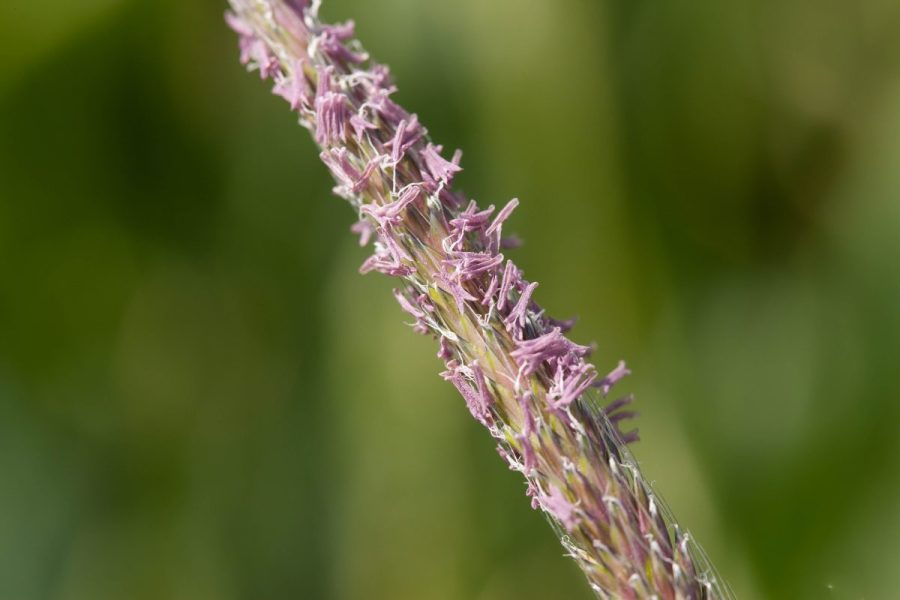
“It varies in-field, but 200 seeds/head is a reasonable benchmark for blackgrass and Italian ryegrass. Using a post-em to reduce head counts – in some cases possibly not eliminating the whole plant but reducing its vigour – will have benefits at harvest and beyond,” she comments.
Trials also suggest that using post-em herbicides can reduce the size of blackgrass heads even when the weed isn’t killed entirely. “A smaller head size is likely to mean less seed return. Bayer is currently looking at this in more detail this season to understand exactly how products like Atlantis Star interact with seed production on surviving weeds.”
Looking at what Atlantis Star can offer, Rachel says trials indicate 11% control of Italian ryegrass heads across a programme (see graph). “This equates to 20.8 fewer ryegrass heads/m2. Standalone, the Atlantis Star application provides 56% control; so within a programme, this makes a valuable contribution to reducing seed return.”
Then, there’s the role of adjuvant choice on herbicide efficacy, highlights Dick, as demonstrated in recent Hutchinsons trials. “Increasing Phase II (95% MSO oil) from 0.5% to 1% with Broadway Star (florasulam+ pyroxsulam) or Broadway Ultra (mesosulfuron-methyl+ pyroxsulam) improves brome control by up to 20%.”
However, ryegrass responds differently, he says. “Adding Phase II alongside Biopower or Probe reduces control from mesosulfuron+ iodosulfuron products, whereas including 0.5% Validate improved ryegrass control by up to 30%. For these mixtures, Biopower or Probe must be included as per the label, with Validate used additionally where appropriate.”
Dick notes that leaf drying within 3-4 hours is essential for contact products. “With crops and weeds continuing to grow, applications should be made promptly when conditions allow; water quality is also critical. ALS graminicides respond well to conditioning, and most water supplies will benefit from treatment,” he concludes.
This article was taken from the latest issue of CPM. Read the article in full here.
For more articles like this, subscribe here.
Sign up for Crop Production Magazine’s FREE e-newsletter here.