
With oilseed rape creeping back into rotations, plus the ever-looming threat of wash-out UK weather conditions, slugs could soon slime their way into proliferation across many farms. However, there’s a new molluscicide in the toolbox which promises to stop them in their tracks. CPM reports…
“Grey field slugs were controlled within 48-hours following the ingestion of Ferrabait.” CATHERINE WHALLEY
By Janine Adamson
The past exceptionally arid season aside, in many instances, UK arable land provides the perfect environment for slugs to not only survive, but thrive. From wetter, warmer winters to an increase in brassica-rich cover crops and leys in rotations, farms have evolved into a bountiful sanctuary for those of the gastropod world.
As with many crop pests, control options are limited, with just one existing active ingredient available to deploy once integrated pest management tactics have been utilised. However, following the launch of a new molluscicide from Adama, the tide could finally turn on these tentacled tyrants.
“Generally, slugs have been gradually increasing in pressure during the years, to a point where populations are significant – up to 60 slugs/m2 in some places,” highlights the firm’s Melanie Wardle. “Although they might not be front of mind following the extreme drought conditions of last season, they are for many growers, an unrelenting pest.
“So while ferric phosphate and alternative biological control products continue to have a place, we wanted to launch a product that would offer a step-up in slug control and address some of the drawbacks that farmers can face when using slug pellets.”
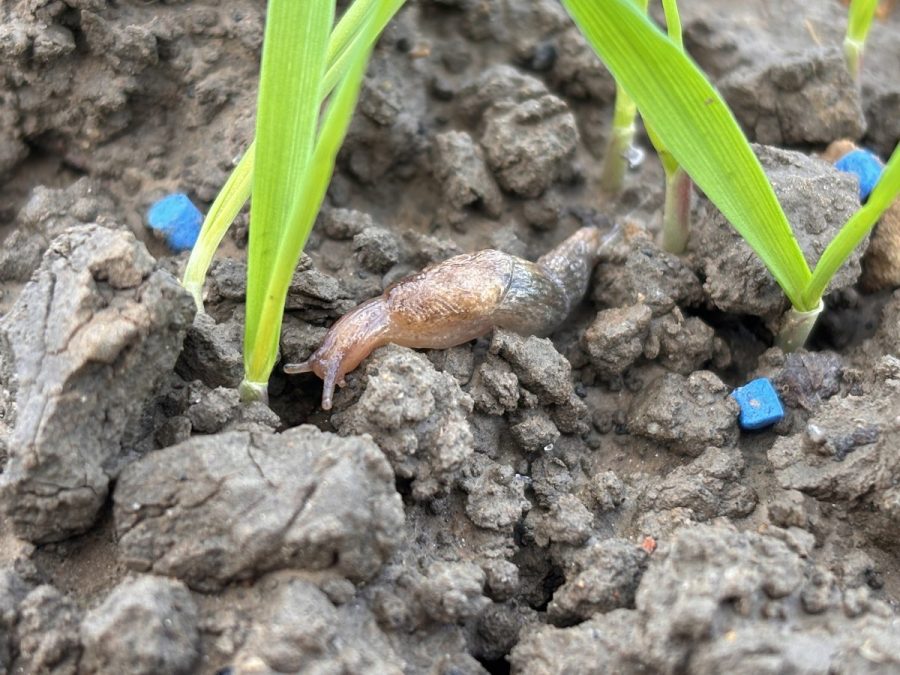
The product in question is Ferrabait, a complex formulation of 12 components including new active ingredient feralla (elemental iron). Adama’s Catherine Whaley explains that because feralla is toxic to slugs, it causes rapid cessation of feeding.
“Once ingested, the elemental iron in Ferrabait is solubilised which leads to pathological changes in the slug’s digestive system and organs. This causes feeding to stop almost immediately, with mortality soon following.
“Critically, this process is rapid. During controlled field trials using brassica seedlings, compared with two leading competitor products, grey field slugs were controlled within 48-hours following the ingestion of Ferrabait. This was well ahead of the competitor products being screened,” she continues.
“In terms of crop status, the untreated plots experienced 45% feeding damage after three days. But, the trial data indicates that by using Ferrabait, this is reduced by 95%.”
Other benefits of the formulation come from the inclusion of wheat flours for optimum pellet palatability, and humic acid to stimulate feeding. According to Catherine, another hurdle to overcome in the pellet’s development has been prolonging its efficacy when used in inclement conditions.
“The pellets must remain intact in wet weather, which is of course when slugs are most active. Additionally, if a product moulds then slugs won’t eat it,” she says.
Conversely, Ferrabait has been developed using Adama’s ‘desidro’ wet processing and two-stage drying technology, which is also a feature of the firm’s Gusto Iron (anhydrous ferric phosphate) slug pellets.
“This proven manufacturing system produces pellets with the ideal balance of persistence in wet weather and palatability over a longer duration. This means Ferrabait pellets remain mould-free and attractive for longer than other slug baits.”
To demonstrate this in action through trials, 4mm of simulated rainfall was applied to Ferrabait pellets and two competitor products for 10 days. Catherine highlights that because of Ferrabait’s coating, the pellets remained clear and therefore active for ingestion by slugs, while the competitor products both developed mould.
Moving on to baiting point optimisation, she says being 2.5mm by 2.1mm, Ferrabait pellets spread accurately to wide operating widths, providing the ideal number of baiting points (40-50 pellets per m2) when applied at typical field rates. They can also be used with a wide range of commonly used applicators, with an online calibration tool currently being developed to assist with ballistic settings, she points out.
“In contrast, smaller ‘mini’ pellets have a larger comparative surface area and therefore tend to degrade more rapidly in wet conditions. They also don’t spread as accurately at wider spreading widths, while larger pellets provide too few baiting points,” comments Catherine.
She stresses that to be effective, ultimately, a slug pellet must be attractive and palatable. “We know that 70% of slugs feed within 90 minutes of Ferrabait application, which is why knock-down is so fast for this product.
“It also takes less than one pellet to provide a lethal dose, with the rest remaining for the next slug to ingest, which is very efficient. This is a key, unique selling point of Ferrabait’s performance.”
According to Catherine, the product is ‘much more than a new active ingredient’. “With superior palatability, it simply really appeals to slugs.”
Looking at on-farm experience, with extreme arid conditions making last year a relative non-starter in terms of slug abundance, information is currently limited. However, among those asked to trial the product is Ceres Rural’s Ed Thompson – also a member of the Association of Independent Crop Consultants (AICC).
Reflecting on the importance of gaining a new active ingredient, he says with a general desire to push wheat margins and the uncertainty of future SFI options, farmers are rightly looking to introduce more break crops into their rotations. “But, there are three or four slug species which can significantly impact germination and establishment, particularly after crops such as OSR.
“As an agronomist, having the option of different active ingredients and pellet shapes offers the opportunity to target slugs at the right time, increasing the likelihood of successfully establishing the crop,” he comments.
Ferrabait will be available for use on farm from autumn 2026, with an authorisation for application across all edible and non-edible crops. The maximum individual dose rate will be 8kg/ha, for up to six treatments a year.
This article was taken from the latest issue of CPM. Read the article in full here.
For more articles like this, subscribe here.
Sign up for Crop Production Magazine’s FREE e-newsletter here.