

Despite a swathe of innovative fungicide releases coming to the market, one tried and tested option continues to remain relevant thanks to its consistent performance and ability to protect newer chemistry. CPM looks at why folpet holds its own in disease prevention.
“Seven years of data confirms that even in very dry years, growers should still see a 0.3t/ha benefit.” DAVID GRIFFITHS
By Janine Adamson
Arguably, the cereals market is in a strong position currently when it comes to fungicidal chemistry, with a breadth of new options to choose from, whether the goal is to be belt and braces, or, pare back and be more selective.
However, although recent new product releases seemingly claim to be unique, there’s something they all have in common – they’re single-site, thus susceptible to shifts in resistance and pathogen mutations.
Perhaps luckily, there’s valuable chemistry already in the armoury, protecting crops from various angles to stop pathogens in their tracks. This is of course the humble multi-site, specifically, folpet.
And while resistance management has long been the reasoning behind why growers and agronomists should include a multi-site in cereal fungicide programmes, folpet offers benefits beyond this too, claims Adama’s David Griffiths.
“Folpet is critical for the industry due to its role in protecting single-site chemistry. Equally, at a time when farm finances are tightening, growers ask whether resistance management alone is enough to warrant folpet’s inclusion in fungicide programmes,” he raises.
“As we’ve seen the past few seasons, conditions can be highly variable. In the case of spring 2025 specifically, which was very dry, growers were rightly questioning their investment in fungicides which made demonstrating return on investment challenging.”
Recognising the expectation that all chemistry in the tank must do its fair share of the heavy lifting, David says Adama has been investigating exactly what Arizona (folpet) adds to a disease management programme.
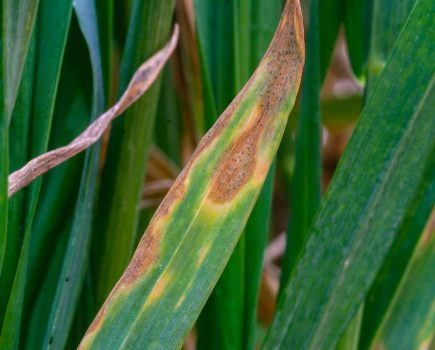
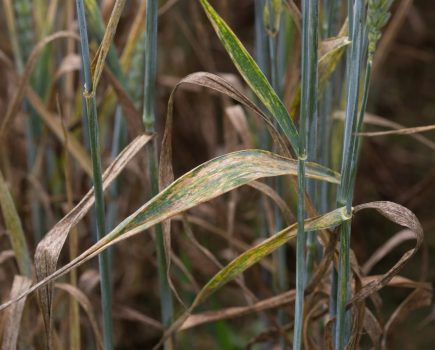
Looking at septoria, trials indicate that Arizona offers a 0.3t/ha average yield uplift in winter wheat across a range of farming scenarios and geographies. “It’s remarkably consistent, even when you compare dry years such as 2020 and 2025 with wet seasons like 2023 and 2024.
“In fact, seven years of data confirms that even in very dry years, growers should still see that 0.3t/ha benefit, meaning the margin over input cost is worth it, due to the yield increase,” explains David.
ADAS’ arable crop pathologist, Rebecca Joynt, points out that AHDB’s fungicide performance data backs this up further. “You can see that the efficacy of multi-sites remain consistent over the years despite being older chemistry.
“With this consistency, it’s arguable that multi-sites, on average, pay for themselves due to the yield response achieved from the control they’re bringing,” she states.
Rebecca highlights that ADAS has been broadening the scope of its trial work involving folpet, funded by Adama. “For septoria, historically, we’ve seen folpet bring the most value where susceptible varieties are being grown.
“But now, with new high-value active releases such as pydiflumetofen and fenpicoxamid, we’ve been assessing folpet alongside this newer chemistry. Encouragingly, growers should still see a benefit.
“Finally, we’ve been exploring the use of folpet with leading commercial varieties such as Dawsum and Champion, again seeing value. This would suggest that folpet isn’t for niche trial scenarios, it’s realistic for commercial environments too,” she says.
As a multi-site, folpet offers protectant activity, therefore application timing is critical, reminds Rebecca. “To control septoria in wheat, growers should observe the greatest benefit and disease control from two applications. In one-application scenarios, it varies whether this is best targeted at T1 or T2, and will depend on when disease comes into the crop.”
There’s also a case for application at T0, points out David. “Although this may be falling out of favour in the fight against septoria, our trial work still suggests Arizona delivers a benefit in terms of margin over input cost, all due to it offering protectant activity,” he says.
“This may be particularly prevalent this season, with crops drilled early and therefore requiring their potential to be protected. In these situations, it can be used either as a standalone product, or where other foliar diseases present a threat, as a tank mix partner to power-up other single-site modes of action.”
Grounded Agvice’s Kieran Walsh believes folpet provides something simple but is increasinglyimportant. “It reduces early infection while providing a support structure forfungicide programmes.
“With septoria still the main driver of fungicide spend in UK wheat, folpet helps to take the early pressure off, keeping lower leaves cleaner, reducing latent infection, and giving crops more resilience heading into the T1 and T2 sprays.”
Ever mindful that resistance management remains an integral part of fungicide use best practice, David adds that he hopes in demonstrating folpet’s commercial value, it cements the active’s place in all programmes, thus helping to safeguard other actives.
“Single-site chemistries such as azoles, SDHIs and Qils are all vulnerable to sensitivity shifts or mutations, making septoria ever challenging to control. In contrast, multi-sites like folpet are effective because they target various biochemical pathways within their target pathogen, persistently reducing spore germination.
“With new fungicide Gilboa (flumetylsulforim) in Adama’s pipeline, which is single-site, we want to protect not only the future of our own chemistry, but that of the wider industry’s too. That’s why the importance of folpet shouldn’t be downplayed.”
Kieran adds that since the loss of chlorothalonil, folpet is effectively the last usable multi-site with meaningful septoria activity. “Its role in resistance management has become even more important.”
As for growers with barley in the rotation, folpet can be applied at T2 for the control of ramularia, or T1 for added protection against rhynchosporium. “Ramularia is recognised as a more aggressive chemistry breaker than septoria in wheat, so having protective multi-site action against this disease is hugely valuable,” concludes David.
This article was taken from the latest issue of CPM. Read the article in full here.
For more articles like this, subscribe here.
Sign up for Crop Production Magazine’s FREE e-newsletter here.