
Historically, it’s been perceived that T0 offers the smallest yield contribution of all the fungicide timings, but could new rust strains and lush crops change the balance this season? CPM opens up the discussion.
“Chasing infection out of a crop is much harder and more costly than keeping a crop clean.” JOHN MILES
By Rob Jones and Janine Adamson
In recent seasons, challenging weather in March and April combined with a general trend of growing varieties more resistant to yellow rust and septoria, has shifted fungicide spend away from T0 in favour of T1 and T2.
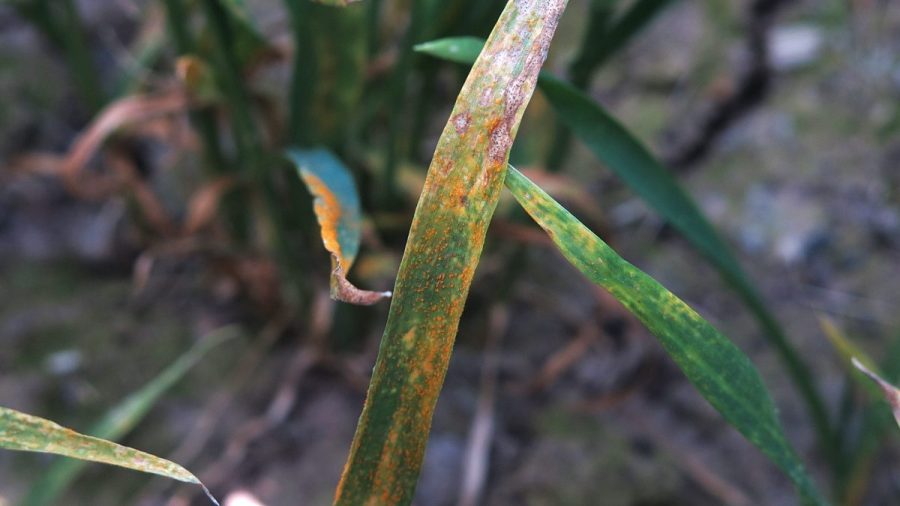
But could this be about to change? According to analysis compiled by Agrii, the breakdown of the Yr15 yellow rust resistance gene and its prevalence in AHDB Recommended List varieties means that almost half of the current UK wheat area is planted with a variety scored 4 or less for yellow rust.
John Miles, seed technical manager at Agrii, highlights that the breakdown of varieties to yellow rust wasn’t necessarily apparent on farm last year, primarily because conditions weren’t ideal for the disease. However, the risk remains real.
“It’s been a few years since we’ve seen a severe yellow rust threat, which happens when we have significant yellow rust pressure across a large wheat area,” he continues.
“Going back in time, some people might remember Slejpner breaking down to yellow rust in the 1980s; more will recall a similar event with Robigus and Solstice in the 1990s.
“The issue was that they were widely grown varieties – when Robigus broke down, it was grown in one in every three wheat fields across the country. This Yr15 breakdown is as significant as any of those previous occasions.”
Some of the most widely grown varieties this year such as LG Beowulf, KWS Dawsum, KWS Scope, and Champion (DSV), are rated 4 or lower, according to Agrii’s variety ratings trial work, he adds. This equates to 40% of the UK wheat area.
“It’s 10 years since we had Torch, Kinetic and Reflection breakdown to yellow rust. There are a lot of people who’ll have entered the industry since who haven’t experienced managing large acreages of rust-susceptible varieties.
“What we learned back then was that the cheapest way to manage yellow rust is to stay in front of it; chasing infection out of a crop is much harder and more costly than keeping a crop clean. Couple that with chemistry loss, such as epoxiconazole, and our tools are more limited than before.
“Subsequently, much hinges on the cold winter weather and how early spring comes. Yellow rust loves mild, bright days with a decent dew to provide leaf moisture,” highlights John.
However, it’s not just rust that farmers have to be conscious of. Earlier plantings and mild autumn conditions have led to thick, lush crops – while this is great for building yield potential, it also provides septoria an ideal environment to spread through the base of plants.
Where crops have been sown before the second week of October, RL resistance ratings will be affected, raises Jodie Littleford, Agrii’s technical manager for combinable crop trials.
In fact, AHDB-funded research led by ADAS indicates that a variety’s RL septoria rating decreases by 0.6 when drilled early. With most popular varieties scoring between 6 and 7 for septoria, early planting means they behave more like those considered susceptible to the disease, she adds.
In other work conducted by Agrii, the yield benefit of T0 has been evaluated. With data accrued since 2000, this suggests applying a T0 fungicide delivers an average 0.41t/ha yield benefit, but this fluctuates dramatically from season to season.
“In trials, whether it was a septoria or yellow rust season, we’ve seen a benefit in disease control and yield from adding a T0,” says Jodie. “This can be as much as 1t/ha, but even in the lowest disease year, a T0 added 0.15t/ha. At the current wheat price, this still delivers a return to the grower.”
In yellow rust-specific situations during the past three years, the average yield return has been slightly higher at 0.65t/ha, she comments. “So when you factor in the Yr15 shift going into this season, it highlights how critical T0 is going to be to keep ahead of the disease and mitigate yield losses.”
Jodie believes that there’s still useful chemistry to use at T0. “For yellow rust, we have mixed triazole products like Sakura (bromuconazole+ tebuconazole), which provides fast activity. There’s also folpet to get septoria programmes off to a good start.”
Strobilurins could factor in at T0 for rust control, but with only two applications allowed per season, Jodie suggests using one at T0 could limit product options for the subsequent timings.
“Conditions have been relatively mild so far this season, and brown rust remains active at around 7oC, so we really require some hard frosts to reduce inoculum and avoid an early epidemic as experienced in spring 2024.
“With sensitivity shifts reducing the efficacy of SDHI actives like benzovindiflupyr, strobilurins are an even more important chemistry group to tackle the disease later in the season,” she adds.
Plant health elicitors such as Innocul8 also factor into considerations at T0, raises Jodie. Although they aren’t fungicides, applying an elicitor early in the season can help to boost the plant’s own natural defences, especially against septoria.
“We’ve seen Innocul8 deliver a very consistent yield benefit over several years with different levels of disease infection. It’s a plant health product so supports disease control programmes; in the absence of disease, you still get a yield benefit from its biostimulant effects,” she explains.
Jodie expects thorough crop walking in March will be even more crucial than usual this season for agronomists and farmers to ascertain the levels of disease present. This is especially true for yellow rust, which tends to develop in foci rather than across a field, she adds.
This article was taken from the latest issue of CPM. Read the article in full here.
For more articles like this, subscribe here.
Sign up for Crop Production Magazine’s FREE e-newsletter here.