
With a fresh format set for LAMMA 2026, visitors to the two-day machinery show will have access to more innovation, information and expertise than ever before. CPM finds out who and what will be making its way to Birmingham in January…
“This marks a step-change in technical depth, positioning LAMMA as a broader business and systems event rather than simply a machinery exhibition.” LAMMA
By Charlotte Cunningham
UK farming heads into 2026 under a level of pressure that’s become the new normal. Persistent wet spells have pushed drilling dates later, harvests have stretched into September, and soil conditions have swung from baked to waterlogged within weeks.
At the same time, businesses face thin margins, high fixed costs and increasingly limited labour. As a result, machinery decisions are now shaped less by headline horsepower, and more by questions of resilience: widening working windows, reducing fuel use, protecting soil, and integrating reliably into data-led crop production.
It could be argued that LAMMA 2026, which returns to the NEC on 14-15 January, fits firmly into this context. This is because the show arrives with a refreshed format to reflect how machinery choices now sit alongside agronomy, carbon strategy and whole-farm planning.
Several new features aim to deliver a more integrated visitor experience, most notably the expanded co-location with CropTec and Low Carbon Agriculture, bringing content on nitrogen efficiency, trials data and low-emissions systems directly alongside the machinery that enables those outcomes.
A new Dairy & Beef Hub provides a clearer home for livestock technology – particularly relevant for those heading towards mixed farming systems – while the revived Demo Zone in Hall 10 offers rare live demonstrations. This is accompanied by four keynote theatres, including the CropTec Content Theatre and Low Carbon Agriculture Theatre, marking a step-change in technical depth, positioning LAMMA as a broader business and systems event rather than simply a machinery exhibition, claim organisers.
Within this framework, LAMMA 2026 hosts one of the most significant groups of machinery launches seen for several seasons, with manufacturers prioritising versatility, fuel efficiency and operator support – all closely aligned with current farm priorities.
Fendt
Fendt is set to debut four new tractor series for the UK. The 700 Gen7.1 Vario is expected to draw considerable attention, with the 720-726 models now incorporating DynamicPerformance, which adds 20hp across the line.
The range spans 203-303hp with Power, Power+, Profi and Profi+ specifications, positioned between the 600 Vario and the new 800 Vario. Notably, the uprated 724 and 726 now carry approval for 60km/h, broadening their suitability for haulage-heavy mixed operations.
Sitting above this is the new 800 Gen5 series, covering 260-343hp and equipped with the VarioDrive single-stage driveline. This delivers permanent, independent four-wheel drive without operator intervention, reflecting a wider push by Fendt towards simplifying operation and improving traction across both field and road work.
Fendt also previews the updated 500 Gen4 series, offering 134-164hp and now fitted with VarioDrive and a 10hp DynamicPerformance boost. With an operating weight of 11.75t and a payload of 4.9t, it targets users seeking a highly flexible mid-range tractor suited to loader tasks, drilling, mowing and haulage. At the top of the range, the 1000 Gen4 models from 426-550hp receive refinements designed to enhance drivability and fuel efficiency in heavy draft conditions.
Massey Ferguson
Massey Ferguson is bringing two notable developments to the stage in January, including the newly launched MF 8S Xtra which introduces a higher-specification package to the 8S range.
More significantly, Dyna-VT, MF’s continuously variable transmission, is now offered on the 5S series, which was previously limited to Dyna-4 or Dyna-6 options. The availability of CVT is expected to appeal strongly to mixed farms and loader-intensive operations seeking smoother and more efficient operation.
MF will also display the compact 1M and 1700e tractor ranges fitted with attachments such as mid-mounted mower decks and scrapers, reflecting the growing role of small multi-purpose tractors within diversified rural businesses.
Kuhn
Kuhn launches one of the few entirely new platforms at the show with the Karan trailed sprayer range. Developed over four years, the Karan is designed to maximise spraying time and accuracy.
The range will eventually include booms from 18 to 45m, with the mid-tier Power specification in 24-39m widths making its first appearance at LAMMA. Tank sizes extend from 4500 to 8000 litres, all housed on a compact 5m chassis paired with a steering axle capable of up to 28o articulation.
A central innovation is the Eagle boom-control system. Eagle1 uses ultrasonic sensors to maintain boom height from as low as 30cm above the target, adjusting tilt and geometry automatically. Eagle Pro adds additional sensors and independent variable-geometry control, offering even more responsive height and section management.
These features are increasingly relevant as climate variability broadens the range of crop heights and canopy structures encountered within a season, claims the manufacturer.
Application accuracy is further supported by Autospray PWM, which maintains consistent droplet size across a wide speed range and allows individual nozzle control. High-pressure circulation and rapid priming support clean and precise switch-on, helping reduce overlap and drift.
Opico
Ahead of the event next month, Opico’s assumption of UK distribution for Simtech drills represents a structural shift in the establishment sector and will be a hot topic at LAMMA 2026.
While the machines themselves are well proven, Opico’s national support, parts availability and technical backup significantly alter the appeal for growers evaluating a T-slot coulter system.
The Simtech opener, combining a disc with a 40mm T-shaped slot, is designed to create a consistent and aerated micro-environment for seed placement, improving germination in both grassland stitching and arable establishment.
With many growers reassessing establishment options under SFI, the availability of stronger technical support may accelerate adoption.
Hutchinsons
Away from the big shiny releases, digital agronomy takes a step forward at LAMMA with Hutchinsons unveiling PowerZone, a new field-performance mapping tool within its Omnia Digital Farming platform.
PowerZone draws on up to 15 years of satellite imagery to identify zones of consistently high or low potential within a field, offering a single management layer to support variable-rate seed, nutrition and crop protection decisions. The tool is powered by BASF Digital Farming’s xarvio Field Manager and has been used widely across Europe, but this is the first time it’s been available to UK growers.
Offered as an optional, no-cost addition for Omnia Business Manager users, it’s particularly valuable where historical yield data is missing or when new land blocks need rapid assessment, says Hutchinsons. Visitors will be able to see live demonstrations and obtain help setting up Omnia Access accounts at the firm’s exhibition stand.
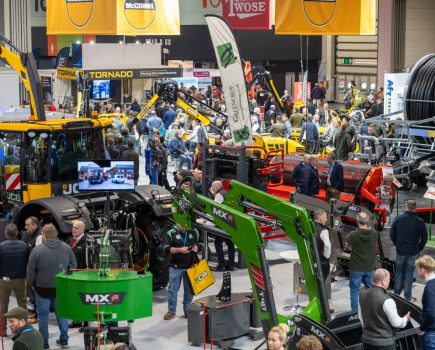
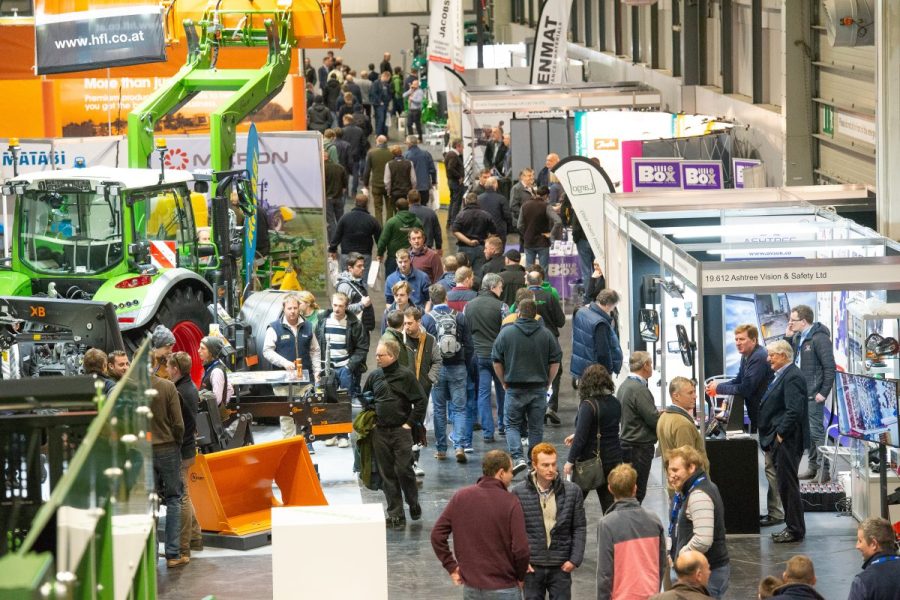
With the show spread across 11 halls and more than 700 exhibitors, LAMMA can appear overwhelming, but the structured seminar theatres, Demo Zone and clearer technical hubs create a more navigable layout.
According to organisers, LAMMA 2026 arrives at a moment when machinery and farm systems are evolving rapidly. The new tractor series, re-engineered sprayer platforms and changes in drilling support reflect an industry adapting to tighter margins, narrower weather windows and a greater emphasis on soil and system resilience.
For many, the show’s real value lies not only in viewing new machinery, but in understanding how each innovation strengthens whole-farm performance in the seasons ahead…
This article was taken from the latest issue of CPM. Read the article in full here.
For more articles like this, subscribe here.
Sign up for Crop Production Magazine’s FREE e-newsletter here.