
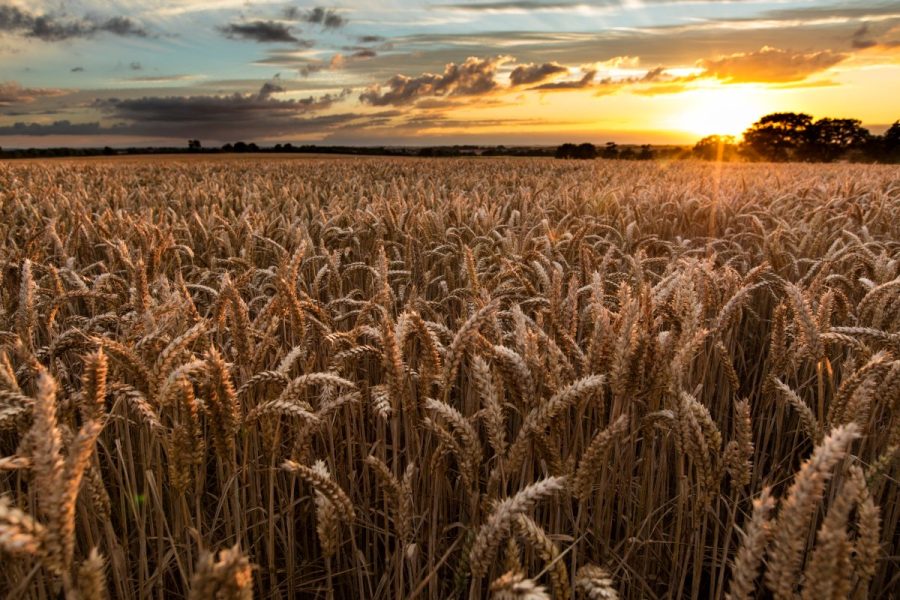
Bringing different elements of the supply chain together to drive sustainability and reward growers for their efforts is starting to gain traction, with pilot initiatives designed to achieve a new level of co-operation from food to fork. CPM takes a closer look.
“True sustainability isn’t just about the environment.” AMY HARDWICK
By Rob Jones
The loss of traditional subsidies, uncertainty over the future of SFI and ongoing volatility across virtually all agricultural markets, is forcing growers and the wider food industry to redefine their working relationships, suggests Agrii’s Amy Hardwick.
The traditional trading framework where each step of the food production journey exists in separate silos of operation has to move to wider cross-sector collaboration, if sustainability objectives and a secure future for growers is to be achieved, she continues.
“This is a time of enormous change in our industry,” comments Amy. “True sustainability isn’t just about the environment, it’s about ensuring food security and building a resilient farming sector for the future, too.
“With the type of transition growers are facing through the loss of BPS and SFI, plus ongoing fluctuations in grain prices and input costs, there’s a responsibility for all in the industry to be creative and look at ways farm income streams can be buffered.
“We all understand why we have to improve soil health and be more sustainable, but the big question is how we can do this financially and make everything stack up from an economic point of view?”
While nobody has all the answers on how to achieve this long-term, Agrii is already exploring new ways of encouraging sustainable practices and offering a reward for growers starting on the journey, explains Amy.
“Regenerative farming is great but it doesn’t work for everyone, so we’re looking at programmes that embrace some of these principles while helping our producers fund the transition to more sustainable farming.
“Fundamentally, we want to incentivise the grower to implement sound and sustainable practices, educate them as to benefits they will receive in the long-term, such as improved soil health, and reward them for doing so in the short-term.
“It’s not just altruism. Long-term viability is really important so we want to help farmers to become more sustainable, to make sure they’re there for the next generation, and also to ensure we can develop our offer for the future.”
The first such programme to be rolled out is based on a two-tier system with farmers able to receive payments of up to £100/ha depending on the number of sustainable practices they carry out on-farm, explains Amy.
“There’s a first tier consisting of a guaranteed payment for carrying out basic practices like an integrated pest management plan, use of cover crops, having a wide crop rotation and having an environmental base line analysis carried out.
“We’ve partnered with the Soil Association Exchange to provide this environmental starting point and it’s based on current policies and practices around biodiversity, carbon, soil health and other environmental metrics.
“After that, farmers can add supplementary practices into the mix. We’ve kept these optional because we recognise that what is sustainable to one farmer might not be sustainable for another. However, the aim is to help incentivise continuous improvement and provide a reason for farmers to keep developing their sustainability practices and take on more as their own journey develops, while receiving greater rewards.”
These supplementary practices are based around the three main environmental pillars of carbon, soil and biodiversity, she points out.
“So, for example, using a more diverse cover crop option or adopting a larger number of crop nutritional efficiency practices, such as using an inhibitor, all can lead to greater rewards depending on what is adopted.
“It’s calculated on a points-based system, so the more they do, the more points they earn, with a cap of £100. “Run through Agrii’s seed business GB Seeds, the initiative is currently focused on oats and barley with linseed being looked at for the future, but we also see the opportunity to extend such schemes across the rotation through other strategic partnerships.”
One such pilot project now up and running is ‘The Beloved Soil Initiative’ run with renowned pet food manufacturer, James Wellbeloved, part of the Mars Incorporated brand.
Focused on three of the company’s farmer suppliers of oats and barley, the scheme is based on the Agrii and Soil Association Exchange two-tier system detailed above. It’s an approach that aligns perfectly with the firm’s values and sustainability objectives, suggests James Wellbeloved’s Ed Owen.
“James Wellbeloved is part of Mars Pet Care, a global business that touches the lives of half a billion pets every year, which means we have the responsibility and opportunity to really shape the way in which the industry is seen.
“Mars itself is a family owned business which provides us with the ability to take a broad and truly long-term view. Sustainability is embedded in the company’s core principles, and since 2015, we’ve reduced our overall greenhouse gas emissions by around 16% while growing the business by more than 60%.”
Ed says they’re focused on practical ways to support sustainability. “This means looking at the design of our packaging to understand how we can both reduce it and make it easier to recycle.
“But, it’s also about how we partner throughout our supply chain to transition to more sustainable methods, and that’s where the work on regenerative agriculture and the Beloved Soil Initiative comes in.”
According to Zsoka Ardai, regional sustainable sourcing lead for Mars Pet Nutrition Europe, the company’s sustainable regeneration plan was established in 2017 with a focus on addressing the critical environmental issues where a difference could be made.
“Moving towards suppliers with the right approach to sustainable agriculture is very important to us, but we’re also looking at the carbon footprint of all suppliers, as well as human rights issues in the future.
“Our aim is to invest in long-term partnerships with the farmers by supporting them, providing education and incentivising them. So, under ‘The Beloved Soil initiative’, Agrii is responsible for managing the relationship with farmers, assigning advisors and ensuring we’re meeting the programme criteria and delivering premiums that reward hard work.”
Zsoka adds that the Soil Association Exchange independently verifies the programme, offering farmers access to tools and resources to support with their regenerative agriculture transition, and measure and monitor the programme’s success.
“Farmers are definitely getting more engaged in the process, but it’s a long-term commitment from both sides. It’s early days, but we believe we’re helping bring to life the urgent need to help support farmers to protect soil for future generations,” she says.
Summer 2025 also saw the first wheat harvested as part of another new initiative from Agrii, Bunge and Whitworth Bros, designed to drive greater sustainability through the wheat supply chain and reward growers for positive environmental actions.
Set to run for three years, the scheme aims to benefit farmers, supply chain partners and consumers through food products with a reduced carbon footprint and full traceability, explains Amy.
“We accept that what’s sustainable for one grower might not be by another, so we’ve produced a set of minimum requirements as a starting point for all those taking part in the scheme that will provide a fixed level of financial support.
“There’s then a set of options that participants can decide to implement on their farm if they’re suitable for them, or if they have the infrastructure to do such as. For example, cover cropping, minimising soil disturbance and more efficient nutrition practices.
“As with the Beloved Soil Initiative, the greater the number of actions and points, the more additional income achieved, with £100/ha possible across the scheme.”
Amy says fundamentally, the aim is to help growers implement such practices in a cost-effective way, while supporting environmental improvement and also maintaining enterprise profitability.
“With the regard to the supply chain, the idea is to help reduce the carbon footprint of the ingredients we’re supplying into manufacturing plus improve the quality of products and their traceability for consumers.”
According to Tom Eaton of Bunge, their interest in the scheme stems from the company’s belief that greater sustainability and traceability should be developed at pace across the grain supply chain.
“It’s a discussion point with producers and consumers alike, so it’s a positive move forward to be able to reward growers already investing in these sustainable practices on-farm and encourage them to continue their journey.
“In the current volatile pricing environment – where we’re often seeing wheat prices barely covering the cost of production – it also offers some financial reward for farmers in the short-term and encourages them to think more about their actions in the long-term.”
By working with Agrii and Whitworths, Tom says Bunge has tried to take a practical yet flexible approach, to ensure farmers are rewarded for the ‘right’ practices.
“As a key player in the market and a global commodity trading merchant handling the supply chain from farmgate to consumer, we’ve also given a commitment to our growers in the programme that we will always be market competitive,” he raises.
William Butler of family-owned Whitworths Bros – the UK’s largest flour milling business – says the industry requires long-term commitment and investment to embed sustainability across all its practices, with the scheme being a great starting point.
“Technology, infrastructure and equipment are all important, but we also have to invest in the supply chain to make sure we have suppliers in the future and high quality, environmentally-sustainable produce.
“To ensure our business stays viable for generations to come, we require a sustainable and resilient supply chain and that goes all the way back to farmers and growers. Taking part in the scheme with Agrii and Bunge is the starting point of an investment back into primary production for us that’ll help to make sure our supply chain will be there in two, three, four generations time.”
William says that’s one reason for the company’s commitment, but there’s also the drive to support lower carbon footprint wheat and regenerative farming, together with the ethical side of enabling healthy change and looking after soil health for the future.
“We’re approaching it from two directions – one from our customers’ perspective, and the other for our business’ desire for a sustainable viable future. The vast majority of the wheat that we mill is UK grown and we want it to stay that way,” he concludes.
This article was taken from the latest issue of CPM. Read the article in full here.
For more articles like this, subscribe here.
Sign up for Crop Production Magazine’s FREE e-newsletter here.