

UK soils are at risk of increasing deterioration due to higher winter rainfall and more frequent storms. CPM speaks to the experts, to hear their advice on treading carefully when it comes to spring cropping this season.
“Understanding the effects of additional rainfall on structural stability is increasingly crucial to maintaining soil health.” PROFESSOR PAUL HALLETT
By Mike Saull
There’s no doubt that as the UK’s climate warms, winter rainfall is reaching record levels – in fact, virtually all additional rain occurs in the six months from October to March.
According to Met Office data, between 2015-2024, the UK six-month winter period received 16% more rain than it did in 1961-1990. Combine this with continuous cropping and over-loosening, and perhaps unsurprisingly, weaker soils are being compromised.
Professor Paul Hallett of the University of Aberdeen is part of a team whose research across Scotland confirms that compaction and other forms of soil structural degradation are increasing and occurring at greater depth in the soil.
Couple this with the failure of drainage schemes now long past their use-up period, and untimely, excessive working of soils, then it’s becoming an issue that growers can no longer afford to ignore, he warns.
“Understanding the effects of this additional rainfall on structural stability is increasingly crucial to maintaining soil health and ensuring sustainable agricultural practices,” he continues.
KNOCK-ON EFFECT
“Greater waterlogging for longer periods means fewer operational days. Plus, with more erratic weather, soil damage is greater and compaction is lasting longer, potentially impacting subsequent crops in the rotation.
“Not only are yields less consistent, but year-on-year there are implications for harvest timings and subsequent crop establishment, so there’s an annual knock-on effect,” explains Paul.
Working with The James Hutton Institute, the team from Aberdeen assessed a range of soils across four catchment areas to examine arable and grassland sites at risk of soil degradation during the winter.
The survey included a wide distribution of variable soil textures and theoretical compaction risks across Scotland. Researchers recorded the state of soil structure in the winter using the Visual Evaluation of Soil Structure (VESS) and Subsoil Structure (SubVESS), scores across 140 fields.
Then, following Storm Frank in winter 2015-16, when Eastern Scotland received 228% of its average January rainfall, 42 of these fields were resampled to assess the effects after the period of intense and prolonged precipitation.
Initial results prior to the extreme January conditions revealed that 18% of topsoils and 9% of subsoils were severely degraded. However, following the record wet winter weather, there was a 30% increase in occurrence of structurally degraded topsoils, illustrating the extreme effects of rainfall on soil stability.
In addition, run-off, erosion and nutrient losses were around 10 times greater than they’d been before from degraded parts of fields such as tramlines, compared with areas within the field or at less trafficked boundaries.
A follow-up survey of the farmers who managed the fields examined by the researchers – alongside visual observations – suggested that widespread degradation of artificial drainage was a contributing factor, highlights Paul.
“Physical soil assessments found that finer textured soils on the west coast were among the most prone to damage and difficult to work with. Alluvial soils with a high silt content were also incredibly sensitive to structural degradation and compaction, as were poorly drained gley-soils that are often waterlogged for long periods.
STARK REALITY
“All-in-all though, the fact that around 20% of soils surveyed across the study were seriously degraded and not working at any potential, is very concerning,” he says.
More recently, University of Aberdeen PhD student, Jessica Brook, revisited the same sites, carrying out both visual assessments and penetrometer tests to reassess the structural health of the soils.
“While the data is currently unpublished, early penetrometer results indicate several of the sites still have structural damage, most noticeably at subsoil depth. However, visual evaluations indicate that for others there’s been an improvement over time, showing that with good management practices, structural recovery is possible,” explains Jessica.
Paul suggests that as damaged soils dry out in the late spring and early summer, they become stronger, resulting in roots unable to push through them to seek out the moisture below. “It’s a form of ‘mechanical drought’ due to soil density and can be quite persistent,” he adds.
“Some soils will recover if deeper rooted crops in the rotation or cover crops that can push through these layers are sown. Natural shrinking and weathering and the addition of organic matter that works its way down into the profile will also help, but we do have to be careful to not increase the problem to depths where mitigation is more difficult or impossible.”
According to Paul, reduced autumn/winter traffic, greater incorporation of soil organic matter and avoiding root crops on vulnerable soils are all practices that could reduce the problem. He points out that while more farmers are recognising such issues and re-investing in drainage using new installation techniques, the deterioration of UK soils and more erratic weather still restrict access to fields at key periods.
As farmers move towards reduced cultivation, there may be benefits to the topsoil, but shallower plough-pans could exacerbate the impacts, he stresses.
So, what else should farmers do to reduce the risks? Paul believes the first step should be to note which fields are most susceptible and then draw up a plan of action to remediate and minimise further compaction risks.
“Obvious visual damage is seen following prolonged periods of winter rainfall on newly established cereal crops where recently loosened topsoils are more prone to re-compaction. This results in slumping around establishing roots and resettling of the loosened seedbed which becomes waterlogged.
“More worrying, is the build-up of compaction at and below cultivation depth and this should be checked using a spade. There are also greater risks of erosion from storm water unable to penetrate compacted soils and then running-off the land taking soil with it.”
TRAMLINE TROUBLES
Paul says that studies at the James Hutton Institute in collaboration with Lancaster University indicate that 80-90% of the soil loss from UK fields occurs due to run-off from tramlines, as such, the integration of crops such as maize isn’t helping.
He adds that while it may seem sensible to subsoil these tramlines in the late autumn, the loosening of soils weakens them meaning they could compact and slump into a worse state, should there be more prolonged waterlogging.
As a result, Paul supports the current trend of maintaining the same tramlines in each successive crop, but employing some sort of physical intervention along them to reduce prolonged periods of run-off.
“Don’t underestimate the price of soil erosion leading to soil and nutrient loss and significant clean-up costs. This can be highly significant in intensively cultivated soils, particularly those down to horticultural and root crops.
“Only around a half of applied nitrogen is captured by the crop with significant quantities lost in wetter conditions that encourage anaerobism or leaching. Phosphorous retention is also an issue.”
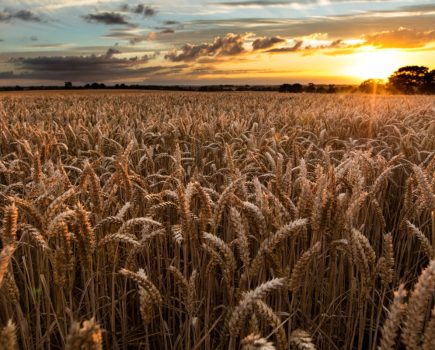
Significant soil loss and erosion damage is also seen following root crops – particularly where the soils is left bare – meaning it’s increasingly important to leave cereal stubbles in-tact over the winter period prior to preparing ground for spring crops, suggests Paul.
However, root crop harvesting is increasingly in the hands of contractors and, faced with more erratic weather events, this means crops can be lifted in less than acceptable conditions. Even where contractors use tracked vehicles, their vehicular weight is such that the damage they leave is often greater than that a farmer would want, he adds.
In a move to reduce risks when establishing winter crops, it’s a case of reducing tillage and leaving soils relatively undisturbed, or growing cover crops as an alternative strategy, says Paul.
“Then during the spring, a positive option could be to reduce tillage and only carry it out when soils have dried out sufficiently to take traffic. Overworking of a seedbed and operating too deep when soil moistures are sub-optimum will lead to long-term deterioration of soils.
“Increasing the carbon content of the topsoil will help to stabilise soil structures in the long-term, but ultimately, winter cropping could be increasingly compromised on some of our weakest soils in the wettest regions, especially if rainfall continues to rise.”
Where risks are great, cover cropping by selecting the best species to anchor soils, or to help penetrate compaction at depth, is beneficial; a change to reduced tillage will also have a positive impact, advises Paul.
“While soils can be remarkably resilient, as we go forward, it’ll be critical to do all we can to increase the long-term physical health of our soils. Compaction is a huge issue that is underrated in the UK,” he affirms.
Agrii’s sustainability and environmental services manager, Amy Hardwick, agrees that recent weather extremes have highlighted where there’s good and poor soil structure, and the overall demand for better soil management.
“Crops in healthier, well-structured, higher organic matter soils fared much better in last year’s dry spring and summer conditions. In contrast, in seasons where weather conditions are more stable, you don’t see the yield swings,” she points out.
“Each field and situation is different, and best practice is to sit down with your agronomist and identify those areas where crops aren’t yielding or which are simply untenable, for example, in situations where fields regularly waterlog or are a problem when establishing a crop.”
Cropping and cultivation practices may have to change to help provide a more resilient and higher revenue stream, she believes. While building organic matter content and revitalising drainage will also help to improve long-term sustainability.
One way to build organic matter is through the use of overwinter cover crops ahead of a spring crop, reminds Amy. However, selecting the most appropriate species and getting it right ahead of the spring crop can be difficult, she suggests.
“If you’re using the cover crop to root to depth and help to break down any pan or poorly structured zone in the soil, then include deeper and stronger rooted species such as radish or vetch. Alternatively, species such as phacelia with a shallow root architecture are effective in creating a good seedbed ahead of spring establishment.”
ROOTING BENEFITS
To improve soil structure, Agrii’s suggests planting the firm’s ‘Structurator’ mix of winter rye and black oat, with oil radish, linseed and phacelia, which aims to provide a high biomass, and a strong and diverse root system that helps to create a well-structured soil profile.
“If, however, from a soils-perspective, you’re looking to minimise erosion risks, then a fast-establishing winter rye/vetch, medium biomass mix that gives full season cover and captures nutrients, may be a better option.
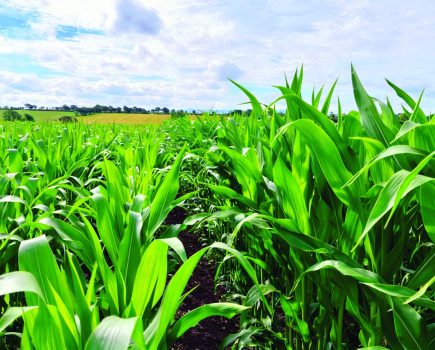
“Those growing maize could look at under-sowing the crop with grass or getting a vigorous overwinter cover established as soon as the crop is cut. Here, an earlier maturing maize variety will help to minimise any soil loss or deterioration risks.
“Best practice is to get the cover crop established as soon as possible and choose species that work well together and do the job you want,” points out Amy. “Whatever option, plan well ahead and select a cover crop with a specific aim in mind.”
This article was taken from the latest issue of CPM. Read the article in full here.
For more articles like this, subscribe here.
Sign up for Crop Production Magazine’s FREE e-newsletter here.