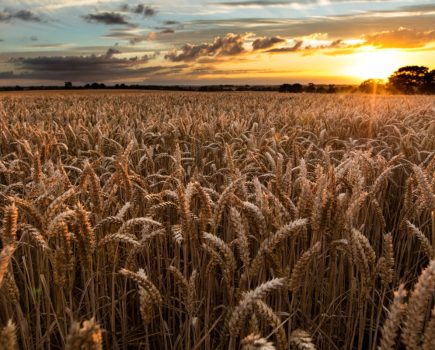

Two new projects are aiming to help both the industry and growers think differently when it comes to how varieties are selected and then utilised on-farm. CPM reveals the details…
“Compared with straight variety stands, cereal blends can potentially deliver stronger yield and quality.” GEORGIA BAXTER
By Janine Adamson
Selecting a variety to perform under the pressure of today’s farming systems – whether that’s overcoming adverse climate conditions, managing high weed burdens, or making a move towards a low input approach – means increasingly more information is required to support decision-making.
Recognising the demand for further data in addition to the AHDB Recommended Lists for cereals and oilseeds (RL) has led to the launch of two new projects – both of which evaluate criteria beyond headline yield figures and the conventional scoring system.
The aim is to add further value to the RLs in their current format, with the topics for both projects selected in direct response to feedback from levy payers. The first, which investigates whether growing a blend of varieties can deliver better milling wheat, will combine UK trials with the experience of farmers and millers, points out AHDB’s Georgia Baxter.
“Compared with straight variety stands, cereal blends can potentially deliver stronger yield and quality, as well as offer other benefits such as improved yield stability and reduced disease severity.
PIQUING INTEREST
“Furthermore, the uptake of varietal mixtures is increasing in Europe, most notably in Denmark, where winter wheat blends are now the most common ‘variety’ given the country’s strict regulations on fungicide use.
“Although not yet common practice in the UK, the recent RL review demonstrates that grower interest in the performance of blends is increasing,” she explains.
To select the hard milling varieties for the trials (UKFM Groups 1 and 2), the AHDB variety blend tool for winter wheat is being used. The blends will then be compared with single stands of the same varieties.
Georgia adds that the tool is built on pedigree information and RL agronomic data. “However, as the tool data is based on varieties grown as straights, it doesn’t account for complementarity of traits.
“Simply put, it doesn’t indicate whether a mix will be greater or less than the sum of its parts. This is why these new trials are important to validate the tool – they’ll specifically assess how varieties complement each other in mixes, including how they exploit resources in a relatively wide range of timings and spaces.”
While the use of blends is piquing interest in wider Europe, concerns remain that the resulting grain may fail to meet the uniformity requirements of end-users. This is why the project is focusing specifically on milling wheat, highlights Harper Adams University’s Dr Edward Dickin, who is overseeing the project’s delivery, along with Cope Seeds.
“While some of the blends are purely Group 1 varieties, others have varying quantities of Group 2s. This is to ascertain at what point does Group 2 inclusion dilute the end quality – for example, having just one Group 2 in a blend, or could this be two Group 2s?,” he queries.
“Importantly, it’d be impossible to test every single blend possible – or use the project as a basis for providing specific recommendations – because new varieties come and go so frequently. Instead, by validating and ground-truthing the blend tool itself, it’s possible to future-proof the outcomes of this project.”
The trials will be drilled in autumn 2025, 2026 and 2027 at two sites – Harper Adams in Shropshire, selected for its high septoria pressure; and Agrii Throws Farm in Essex which has generally high yellow rust.
ROBUST PROTOCOL
Treatments will include a no or low-fungicide programme to evaluate the disease resistance of blends compared with their component varieties, and a high fungicide intensity approach to test any additional benefits which the blends may offer.
“This equates to 12 trials effectively, to provide a robust data set based on practical application,” says Ed.
Disease levels, canopy assessments, growth stages, crop height and yield will be measured, as well as grain quality using milling and baking tests, analysing mycotoxin concentrations and recording ergot presence.
“The project’s results should help to answer important questions such as: how should the variety blend tool be used to maximise its impact?; how important is a greater genetic diversity in blends?; and how do blends perform relative to straight stands?,” states Georgia.
“By answering these questions, the work should deliver evidence on the performance of variety blends, prime conversations among farmers and millers, and hopefully underpin the adoption of varietal blends in the UK.”
As well as expertise from Harper Adams University and Cope Seeds (see box), additional funding has been provided by Wildfarmed, DSV and Whitworth Bros. The project will also improve and validate a genomic prediction model, which will use additional variety blend trial data supplied by Cope Seeds and Harper Adams University.
Then in contrast, the second project involves assessing crop physiology traits for weed competitiveness in low-input and organic farming systems.
Again, the recent RL review identified an appetite for crop physiology information, especially to assist with variety selection under lower inputs. Information on variety competitiveness against grassweeds was highlighted as important in helping growers to exploit crop genetics more fully, as part of an integrated pest management (IPM) approach.
The demand for this information is underpinned by a lack of herbicide chemistry and increasing herbicide resistance issues, suggests AHDB’s Henny Lowth.
And while many studies have investigated cereal traits associated with varietal competitiveness with weeds, including early growth habit, tillering and height, there’s relatively little information in a practical format that can be trusted and used by farmers, she adds.
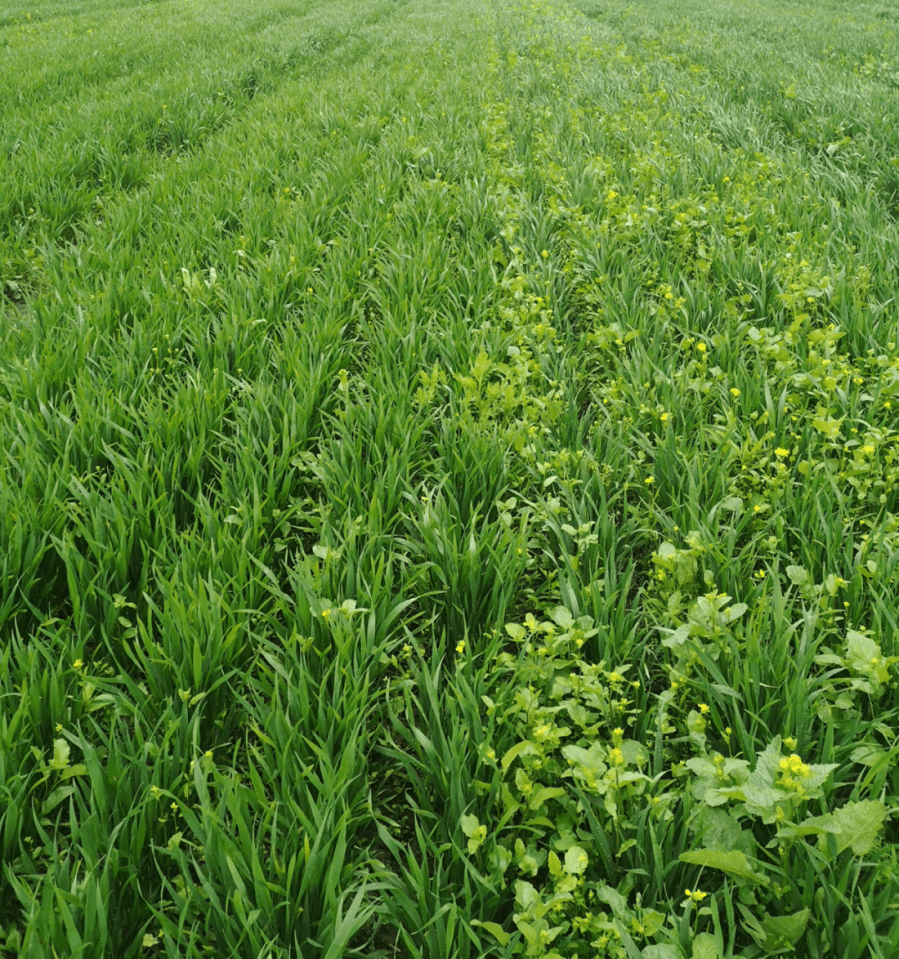
“Currently, weed competition or suppression isn’t assessed in RL trials. However, competitive crops could play a much greater role in integrated weed management. For example, research suggests that up to 25% control of blackgrass can be achieved, with some crop species such as barley more competitive than others.”
In addition to crops species, there’s growing evidence to support the use of competitive varieties. For one, an ongoing AHDB-funded PhD studentship project has shown that the strong rooting habits of some winter wheat varieties improve competition against blackgrass during the autumn.
“However, many aspects of competition remain poorly understood,” states Henny. “Additionally, management choices influence a crop’s ability to compete with weeds such as seed rates, row spacing and seedbed quality, which add further complexity to the variety-assessment process.”
Previous work started by the Organic Research Centre in 2017 developed a network of farmers and researchers to establish and evaluate field-scale winter wheat variety trials. Initially focused on commercial organic farms, the network was supported through the LiveSeed and LiveWheat projects and included an emphasis on weed abundance/composition, as well as key agronomic, yield and quality traits.
ESSENTIAL TRAITS
The network provided a proof of concept for variety evaluation in a wide range of farming systems, including organic, reduced-tillage and lower-input systems, and identified three main traits responsible for weed competitiveness: early crop vigour; early crop ground cover; and good crop canopy cover at flowering.
The new AHDB project will build on this work with the aim of contributing to a robust multi-year, on-farm trial data set based on traits that correlate with weed competitiveness in organic and low-input farming systems.
“The results will be made available for exploitation alongside or as part of crop physiology assessments within RL trials. Ultimately, the project will give farmers additional information on the weed competitiveness of varieties,” highlights Henny.
The project has three collaborating organisations: Cope Seeds UK, Organic Research Centre and UK Grain Lab. Leading the research is ADAS’ Dr Lynn Tatnell, who stresses that while the work is looking at lower-input systems, the outputs of the project should have relevance to all.
“Whether striving to reduce input use or not, selecting varieties for their competitiveness is a key contributory factor towards achieving integrated weed control and best practice,” she says. “Using alternatives to chemistry – particularly cultural control methods wherever possible – integrated with good herbicide actives, is the most effective approach to ensure available chemistry is preserved for as long as possible.”
Looking ahead,in addition to the weed suppression project, traits related to crop vigour are being measured in a small subset of RL winter wheat trials. The results in the first year (2024/25 season) show small but consistent differences between varieties in RL sites in South Wales, England (Suffolk) and Scotland.
Measurements will continue for the 2025/26 season; if robust and reliable information on crop vigour can be generated in trials, the RL Board will consider the potential to measure vigour traits routinely as part of the RL.
This article was taken from the latest issue of CPM. Read the article in full here.
For more articles like this, subscribe here.
Sign up for Crop Production Magazine’s FREE e-newsletter here.