
From battling falling wheat prices to pioneering no-till farming and crop rotations, Agventure’s farmer-led co-operative is finding a way through economic uncertainty. CPM reports from Kenya.
“I required a system that’s like a Kenyan marathon runner, who can run in snow, wind or rain and still beat everyone else in the world.” BRYN LLEWELYN
By Mike Abram
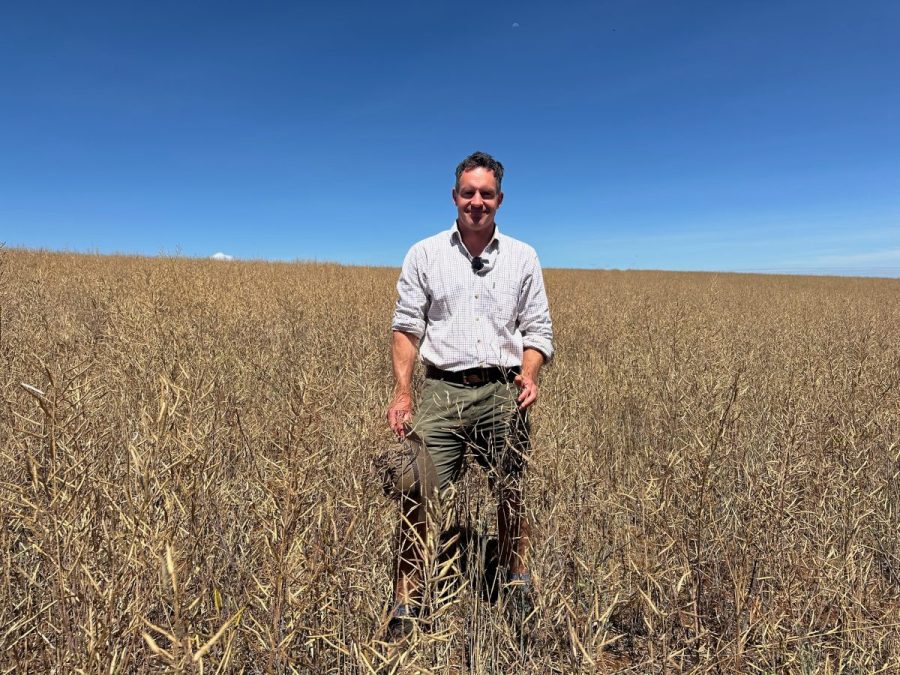
David Jones has just climbed over the gate from a field of emerging oilseed rape, when a truck stops suddenly by the side of the road. The driver, a farmer, hurries over to where he’s standing, keen to speak to David – a British-born agronomist working at the time for Agventure, a farmer-owned co-operative consisting of 10 farms covering 12,000ha in Kenya.
The conversation that follows is remarkably familiar, with the farmer, John Magiti, bemoaning a rise in costs alongside a concurrent decline or stagnation in crop prices.
By Kenyan standards, John’s farm is reasonably large – approximately 100ha of rented land, although nothing like the scale of the farmers in the AgVenture co-operative. “We even have VAT on agricultural machinery,” he complains. “I don’t know how we’re going to survive – the economy is tough.”
This year, he’ll grow malting barley on more than 90% of his land. “I only have 4ha of wheat,” he tells David. “Wheat is a big problem; the last time I asked for a wheat price it was initially about KES 5300 per 90kg bag (£345/t).”
That price is set by the Agriculture and Food Authority (AFA) in Kenya, following discussions with stakeholders including the Cereal Millers Association and the Cereals Growers Association. It’s typically based off the effective cost of imported wheat delivered to Nairobi, plus approximately 10% duty.
But the price set last year was much more expensive than imported wheat was arriving for, and the local wheat failed to sell until the price reduced. And, John isn’t impressed with the reduced price of KES 4750 / 90kg bag (£309/t) set by AFA in July.
“What’s made the price of wheat come down?” he asks David. “Annual land rent has become more expensive. I was paying KES 15,000/ac (£88/ac), now its KES 18,000-20,000/ac (£105-117/ac).”
Growing costs are also increasing with seed, fertiliser and sprays in the region of KES 25,000/ha (£147/ha).
In comparison, malting barley with its higher yields and lower growing costs is more profitable. Even so, there’s variation of around KES 12/kg (£70/t) between Kenya, Uganda and Tanzania prices for malting barley, with Kenyan growers receiving the lowest on-farm price at KES 54/kg (£320/t).
“The Ugandans are aggressively buying barley from Kenya,” explains David in his truck. “The difference will likely rebalance next year as Uganda responds to an issue with its current barley crop.
“It’s those kind of shenanigans that Agventure was set up to deal with,” says David, explaining that Agventure’s strength is being able to market to various clients within East Africa, rather than just one customer in Kenya.
Set up in 20210, Agventure buys all its members’ inputs together, like a buying group, and negotiates sales of what it produces.
But the group is much more than simply procurement and marketing, important pillars though they are. In fact, the group was forged as much as a response to a failing agricultural model, which was reliant on even more intensive monoculture than found in the UK.
The result is a business that enables its farmer members to weather the economic challenges explained by John, while helping other growers with advice and opportunities to strengthen their own farm businesses.
Most of the farms in the group are owned by families who arrived from Europe sometime between the first and second World Wars. Back then, the farms were built on Merino sheep and wool. Over time, this was joined and ultimately gave way to an intensive monoculture of wheat and barley that persisted for more than 70 years.
But that reliance on a narrow rotation created a fragile system, suggests Bryn Llewelyn, a founding member and chairman of Agventure, who farms just under 1000ha in the foothills of Mount Kenya. “If you had the perfect run, you could get the perfect crop. If you didn’t, at the first sign of a problem, the crop would collapse.
“I required a system that’s like a Kenyan marathon runner, who can run in snow, wind or rain and still beat everyone else in the world.”
LEARNING FROM OTHERS
A 2008 trip to the Liverpool Plains region in New South Wales in Australia provided inspiration, he adds. “They had similar rainfall, soils, challenges and a government that wasn’t supporting them, so they had to do their own research and development.”
From the trip, the founding farmers identified three aspects for a new, more robust system: no-till, crop rotation and controlled traffic farming.
Some of the group, including Bryn, implemented the ideas on their return, without much, if any, transition. “We tried no-till using an old seeder with soft 220lb springs – it was like putting a rake on tarmac,” he recalls. “We went through five or six years of hell financially.”
While the initial period was difficult, he drew on his stepfather-in-law’s knowledge of no-till pioneers from the Cotswolds in the 1980s, and had faith that sticking with no-till would eventually reap rewards.
“This year, we tried that old seeder again and it was like going through butter,” he says. The main drills on the farm are now a 9m Novag disc drill and an identical 2.5m version for pollination strips, reseeding permanent pastures and trials work, imported from Europe with two Claas tractors at a cost of around £1.15M.
“The necessary finance was raised through sale of some land, with loan interest rates running at 12-17%. Two other farms in the group have opted for Horizon disc drills, while also running tine drills.”
Having both tine and disc drills helps with flexibility, depending on conditions, he adds. “My definition is zero-till is the disc drill, while no-till is with the tine,” says Bryn. “We’d never go back now. Our ability to operate in the wet is amazing, as is our ability in very dry conditions.”
Implementing controlled traffic farming has helped – providing tramlines that can be used after just two weeks in a wet period compared with months previously. “They’re like concrete but go 30cmdr off them and you bury the machine.”
If moving to no-till was challenging, just as difficult was implementing rotational break crops, initially canola (OSR) and peas, although now the farm grows nine commercial crops. “We had no seed, zero knowledge of agronomy or whether we had the right chemicals cleared in Kenya, harvest or storage techniques,” recalls Bryn. “There was no market, and we had no idea what we were going to sell it for.”
That was where the other two cornerstones of Agventure have been crucial – the R&D team led by David (see panel), and a move into processing or finding ways to add value.
That strategy to move beyond selling commodities is best exemplified with their work with canola. The group invested quickly in a cold press to produce a premium ‘Pure Mountain’ canola oil sold in supermarkets and the firm’s own shops. A second processing unit, established in 2013, uses a hot press.
“That’s branded as MegaFry,” shares David, while walking a field of canola. “Hot pressing changes the properties of the oil, but it improves the extraction rate, producing a higher volume, lower value product.”
As a business, Agventure presses just under 10,000t of canola annually, which is split around 50:50 between being produced on Agventure member farms and out-growers. “We have several thousand growers ranging from farms of maybe 5ha up to ones with several hundred,” explains David. “They’d typically grow maize, wheat or barley, but wouldn’t have a lot of break crops.”
IMPROVING ROTATIONS
The firm’s Center of Excellence has provided training for more than 700 small- and medium-sized farmers to encourage them to adopt and integrate rotational crops, such as canola, supporting soil health improvements. Agventure’s field officers provide one-to-one support on everything from planting rates, crop protection advice and how to set up harvesters, points out David.
In return, the firm’s canola seed out-growers receive a guaranteed price, currently around KES 60/kg (£350/t) for the seed, with the opportunity to buy back canola cake for use as an animal feed.
At that price, the current economics for growers like John, who was an early out-grower pioneer, is a challenge, admits David. “Farmers always say they can see an agronomic benefit after growing canola for their cereal crops, but are struggling to make a net margin by the time they factor in fixed costs. But after you’ve paid everyone in the supply chain a margin, it’s tough to pay more.”
Markets for other crops are being developed, albeit with much more progress required. Linseed and sunflower oil can be processed using similar equipment as canola oil, says Bryn, with the potential to produce similar branded products. “We have to develop these markets. Currently, linseed goes into Rwanda to an NGO that mixes it with soil as an economic substitute for concrete flooring in housing.”
Lupins is another crop that potentially could be interesting, with a market as a protein compound in animal feed. However, field trials have shown difficulties establishing the crop due to millipedes and, despite good nodulation, a disappointingly low protein content of around 27%, which reduces its value in animal feed.
Setting up its own animal feed business is a planned future development, comments Bryn. “That’ll be hugely exciting because it enables us to grow the diversity we require and to add value rather than selling commodities.”
But first, the business is developing its own certified seed business for the varieties David’s team selects as being suitable for Kenyan conditions (see panel).
“We want to grow as much seed on our farms as possible,” stresses Bryn. “Having local seed available helps East African, and particularly, Kenyan farmers, whether they’re large, medium or small scale.”
This article was taken from the latest issue of CPM. Read the article in full here.
For more articles like this, subscribe here.
Sign up for Crop Production Magazine’s FREE e-newsletter here.