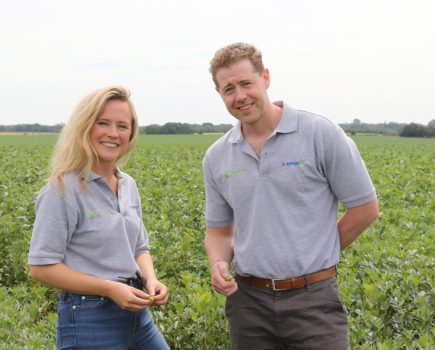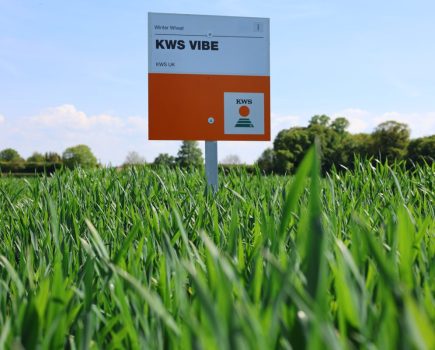


According to KWS’ Martin Brown, although optimism may be currently lacking among some growers when it comes to UK sugar beet, a level of hope remains, particularly when it comes to future varieties.
He acknowledges that while the current beet crop was off to a slow start due to unfavourable establishment conditions, this could become a situation of the past, with breeders looking to identify varieties more suitable for the UK’s changing climate.
Even more encouraging, is that growers may not have to wait until new varieties are launched either, adds Martin. “KWS is currently trialling its existing sugar beet varieties to understand their tolerance to drought, with a hope of identifying the most resilient options.
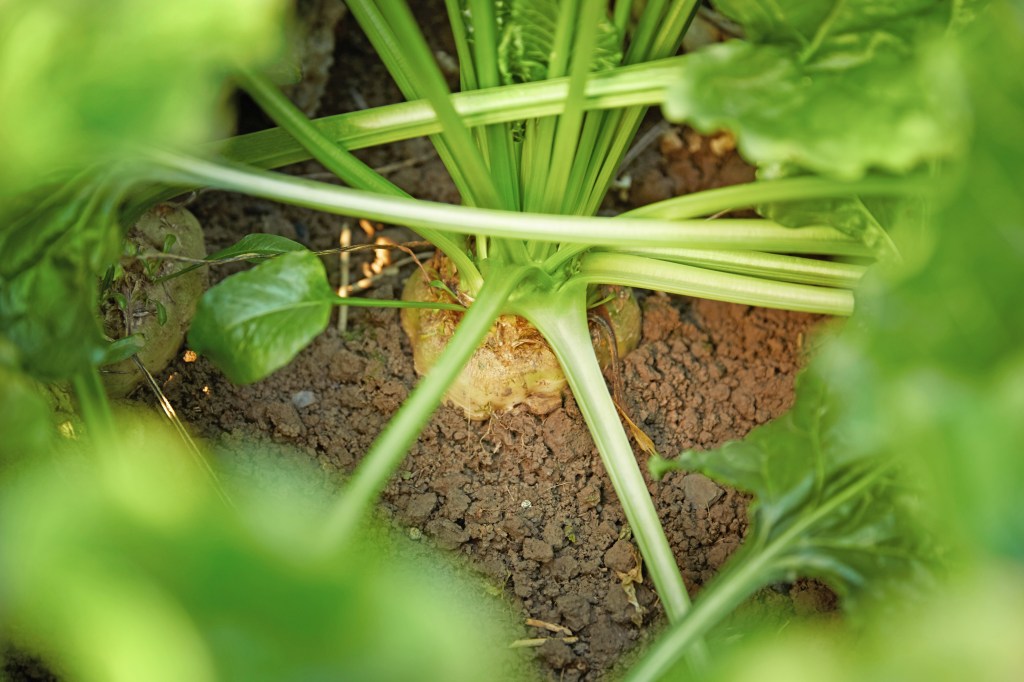
“For this, we’re looking at wide range of factors such as plants with smaller canopies for reduced evapotranspiration, and larger taproots that can establish quickly without any fanging,” he explains.
“We also know that drought tolerance can be achieved by planting earlier, although this of course poses a higher bolting risk. But if we reduce bolting, there’s the potential to plant earlier and therefore maximise any early season moisture.”
Overcoming crop stress
Equally, with hot and dry summers comes stressed crops, and as a result, beet moth. “Heat stress is a precursor to many other pest and disease challenges. For beet moth specifically, having varieties with erect canopies that can withstand the conditions better will be key to overcoming this insect pest.
“Ultimately, minimising temperature effects and stress from day one will inherently reduce the risk of subsequent pest and disease pressure, and is something we look for in all of our varieties,” highlights Martin.
The team is also looking at varieties from KWS around the world, such as those being grown in Turkey and Morocco, to see if they may have potential for the UK.
Pipeline options
Looking beyond the currently available varieties, he adds that KWS’ global head office in Einbeck, Germany, is developing new options aimed at the UK market specifically. Once these have been initially screened, they are then brought to the UK for trialling ahead of official listing. However, once variety listing is factored into the timeline, it still takes around 10 years to bring a variety to the market.
At the moment, 60% of KWS’ pipeline varieties have a degree of virus yellows tolerance, points out Martin. “We’re also looking at introducing more Conviso Smart options – some of which will be paired with virus yellows, and others with beet cyst nematode tolerance.
“This is alongside our central breeding goals of drought resilience, and tolerance to cercospora, BCN, powdrey mildew and rust.”
Long-term goals
KWS also has longer-term goals too, he adds. “This includes achieving virus yellows resistance, rather than just tolerance, as well as other traits such as beet moth resistance, and low bolting for very early sowing.”
However, Martin stresses that although crop genetics set the foundation from a seed-perspective, this won’t offset poor attention to detail. “Seedbed conditions have to be excellent with great levels of seed-to-soil contact to give the crop its best chance of establishment, and of achieving its yield potential. Genetics can only do so much,” he concludes.