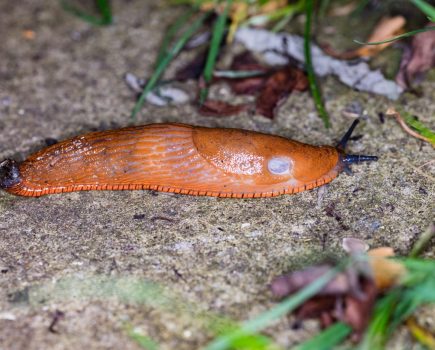

Three years of farmer-led research has taken slug control from predicting where the pest will strike to exploring how it could be targeted – and even whether wheat itself could provide part of the answer. CPM looks at what the SLIMERS project has uncovered.
In waterlogged soils patches become unstable and break down, but we’ve now confirmed that patches reform temporarily in places we wouldn’t expect in normal conditions, and then quickly return to their predicted areas once more typical soil conditions return,” – PROFESSOR KEITH WALTERS
By Charlotte Cunningham
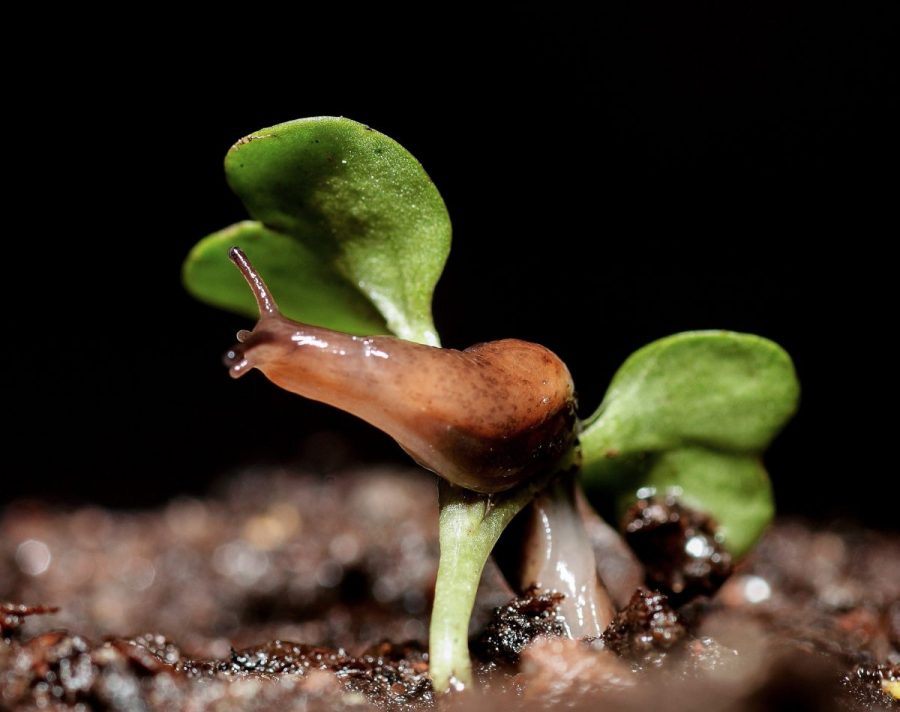
For something capable of causing an estimated £43.5M of crop damage each year, slugs have an inconvenient habit of refusing to behave uniformly…
One part of a field can disappear almost overnight while another remains virtually untouched. And although growers have long recognised those troublesome patches, predicting exactly where they’ll occur – before the damage is done – has been rather more difficult. But what if those patches aren’t quite as unpredictable as they first appear?
That question has formed one of the central threads running through the three-year, £2.6M Defra-funded SLIMERS project, and as the farmer-led programme draws to a close, researchers believe they can now predict where the highest-risk areas will be, potentially allowing growers to cut slug pellet use by an average of 50%.
Alongside this, the project has been investigating whether individual slugs could ultimately be detected and treated with biological controls, while work at the John Innes Centre has homed in on three regions of the wheat genome associated with natural resistance.
So rather than searching for another silver bullet, SLIMERS – Strategies Leading to Improved Management and Enhanced Resilience Against Slugs – has effectively been coming at the problem from three directions.
According to Professor Keith Walters of Harper Adams University, the starting point was understanding why slug patches appear where they do. “Coming into SLIMERS we already knew that slugs don’t occur randomly across fields, but suspected that they form distinct patches according to soil type and climatic conditions,” he explains. “The Slug Sleuth’s data of slug populations across their fields helped us to develop that understanding further, and also allowed us to confirm our hypothesis about how slug patches re-form after waterlogging.”
Previous research had demonstrated that slug populations form patches which remain relatively stable during crop establishment, but what researchers couldn’t reliably predict was their location. SLIMERS set out to fill that gap, with farmers and agronomists repeatedly monitoring slug traps across commercial fields, and extensive soil analysis, which together helped build a ‘biological’ model that revealed what was different beneath higher-slug areas.
Research partners say what emerged was an interaction between organic matter, soil texture and pH. Slugs rely heavily on environmental moisture, so areas capable of retaining favourable conditions encourage them to remain for longer, with the relative proportions of sand, silt and clay further influencing suitability, notes Keith.
The useful part is that much of this information may already exist on farm. Soil scans undertaken for other precision farming purposes can be repurposed and fed into a second model developed to predict patch location, which then produces a georeferenced map showing higher and lower-risk areas. In other words, rather than finding the slugs, it predicts where growers ought to look for them.
An exceptionally wet spell during the project also provided an opportunity to see what happened when conditions went awry. “In waterlogged soils patches become unstable and break down, but we’ve now confirmed that patches reform temporarily in places we wouldn’t expect in normal conditions, and then quickly return to their predicted areas once more typical soil conditions return,” says Keith.
By autumn/winter 2025-26, the model was ready for on-farm testing. Across the trial fields, the proportion classified as ‘at risk’ ranged from 19% to 86%, averaging around 50% – meaning pellet applications could theoretically be halved by treating only those areas.
However, perhaps ironically, the final year proved a rather good one not to be a slug. Populations were exceptionally low, so Keith’s team returned to individual trap data to establish whether catches followed what the biological model predicted – and they did. “Despite low slug numbers during the testing period we have sufficient data to prove that the model works. And perhaps most importantly, that farmers are happy to use it and it fits in with modern commercial equipment.”
But knowing where to treat raises another question – could what’s applied there change too? That’s where another strand of SLIMERS becomes particularly interesting…
Biocontrol using the nematode Phasmarhabditis californica isn’t itself new, but economics make blanket application across broadacre crops difficult. However, the project found that if you apply it only where a slug is actually sitting, the sums could look rather different.
To enable this, researchers had to first be able to reliably see the target. Small grey field slugs (Deroceras reticulatum) blend remarkably well into soil, stones and crop residue, making conventional RGB camera recognition difficult. So UK Agri-Tech Centre researchers turned to multispectral imaging.
By measuring how slugs and their surroundings reflect different wavelengths of light, laboratory work demonstrated the pest could be distinguished from background material. Fotenix then took the principle into the field, building a dataset to train the detection model.
The other half of the equation was ensuring a detected slug could actually be hit. Farmscan Ag developed a 6m precision application system using individual nozzle control at 25cm spacing, RTK positioning and Isobus integration – deliberately pursuing an approach which could potentially work with existing machinery rather than requiring a completely bespoke platform.
Spraying living nematodes brought further complications, and pressure, filtration, nozzle size and recirculation had to be refined to ensure they survived the journey through the sprayer. Trials eventually achieved around 220 nematodes within a 5cm radius of each target, while placement testing recorded 99% accuracy at 1-3kph.
However, there’s still a gap to bridge and researchers say that while slug detection and accurate application have been achieved, the imaging system currently processes its decision offline. Therefore, the next step would be bringing the two together in real time at practical operating speeds.
Yet the prediction work offers another possibility – future systems could concentrate detection or treatment within areas already identified as higher risk. And there may be another way of reducing vulnerability before a machine enters the field at all…
Research through the project at the John Innes Centre began with screening wheat from the historic Watkins Collection, which identified Watkins 788 – a landrace originally collected in Turkestan – as showing particular potential for natural slug resistance.
Researchers crossed Watkins 788 with commercial variety Paragon to create Recombinant Inbred Lines, 77 of which were tested alongside their parents during SLIMERS. Detailed feeding studies used grey field slugs collected by farmers and citizen scientists from across the UK.
“Having slugs from different parts of the country was important,” explains Dr Victor Soria-Carrasco. “We know slug populations can vary, so using a wide range of grey field slugs helped us ensure the results represented real-world conditions.”
Because the wheat lines had already been genetically sequenced, differences in feeding could be linked back to the genome. “The thousands of data points collected in the feeding trials helped us to identify the specific molecular markers or parts of the chromosome,linked to slug resistance,” says the John Innes Centre’s Dr Simon Griffiths. “With that understanding, and the screening protocol we’ve developed, plant breeders can now select for those markers to produce a slug-resistant variety.”
Three regions of the wheat genome associated with resistance have now been identified, although – once again – low slug pressure frustrated attempts to prove the effect under commercial conditions during autumn 2025. “Overall, however, the laboratory work demonstrates obvious potential which makes field trials under conditions with greater slug pressure an urgent requirement,” says Keith.
Perhaps that distinction is important when taking stock of SLIMERS. The project doesn’t finish with an autonomous machine roaming commercial fields treating every slug it encounters, nor a slug-resistant wheat variety ready to go into the drill. What it does leave is a clearer route towards both – alongside prediction maps which could influence decisions much sooner.
Crucially, much of the evidence underpinning those developments has been generated on commercial farms, something Keith believes has been fundamental to how far the research has progressed. “I’ve no doubt our farmers collected data to the same level of accuracy as trained technicians,” he concludes. “Plus, by working with farmers from the start, the developments we have made have been more significant and impactful.”
This article was taken from the latest issue of CPM. Read the article in full here.
For more articles like this, subscribe here.
Sign up for Crop Production Magazine’s FREE e-newsletter here.