
by Andrew Wilson
Well, what a month eh? A man could swear! Isn’t it coincidental that at a time of year when nearly every arable farmer in the country is burning diesel, that the price should rise by nearly 30% in a fortnight, apparently because a few folk are upset with each other thousands of miles away. There’s only one thing more frustrating than expensive fuel, and that’s no fuel at a critical time of year, so as ever, we have no choice but to suck it up.
If there was to be a glimmer of cashflow hope, it was to be the SFI window opening, although predictably that turned to jelly in less than half a day. We’ve had 6ac of grass margins earning nothing since Defra pulled the 2025 scheme with a few minutes notice, but previously the BPS covered the rent, so it wasn’t as big an issue as it is now. I’d logged a technical query before the system closed, but whether the glimmer of hope is the proverbial train coming, who knows.
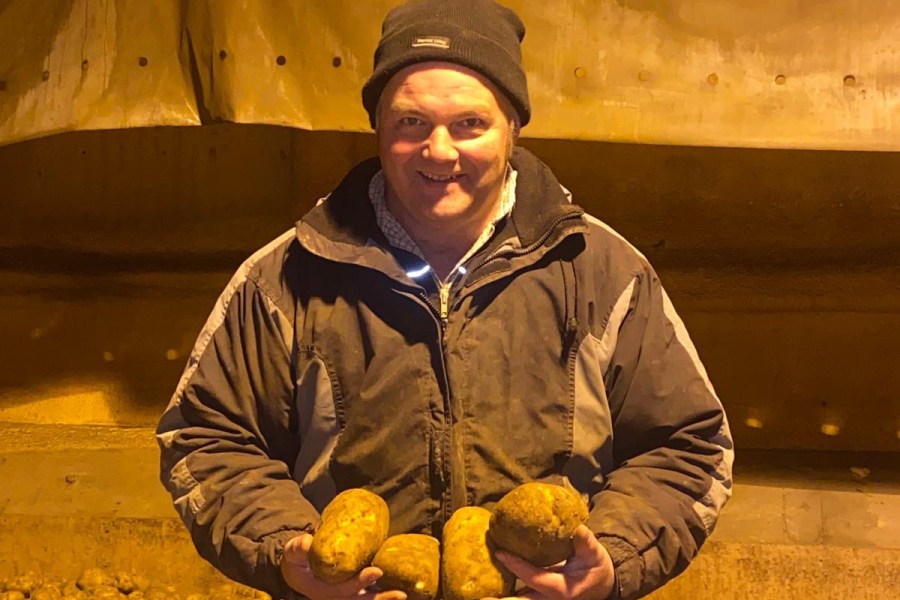
As ever, we crack on, what will be will be. With 10 different crops, livestock, stewardship and diversification, it’s unusual that everything is poor at the same time. That said, with potatoes looking to average 65-70% of contract yield at best, and beet that currently looks like very dry parsnips, I think we’re in for some pain yet. This isn’t helped by quality issues with what look to be our best yielding fields this season.
One variety that we grow is currently sat at over 26% dry matter which makes them like eggs to handle, and another variety has some serious secondary growth issues. Couple that with some in-field sprouting and a high physiologically aged crop, and they’re going to take some looking after this winter, which is a tough old gig with a crop that looks at present like it won’t break even.
So, thoughts for 2026? I’ve long been a fan of a SWOT (strengths, weaknesses, opportunities and threats) analysis, and take the view that everything will have a high year and a low year at some point. But if the weakest player is consistently the lowest player, then change it – and remember to consider the consequences of doing so. I’m fortunate to have a committed and strong team here on the farm, which is a motivating factor in seeking opportunity and finding solutions to problems.
I said last time that we’d reached the end of the line for sugar beet here, which is sad, but at the same time presents opportunity for change. We drilled some oilseed rape back in early September, which for all it has a long way to go yet, is growing away nicely. My potato area will stay as it currently is, with maybe a few tweaks to the varietal spread depending on where contract prices sit when the industry announces them later in the year. They are an important crop to us, and to stop growing would be a monumental change to the business and how it operates, mostly in a negative way.
So, we find solutions. Tweak the spuds, be keen on the detail, contract a few more crops generally, with a premium if it can realistically achieved. Vining peas create a great entry for a first wheat and are a low-risk crop, so they’ll stay on our lighter land, as will winter beans on the heavier ground, spring malting barley and feed wheat will retain their positions too. I’ve contracted some heritage malting barley, and forward sold some of next year’s wheat, just in case markets bomb.
What does look like my cup of tea for 2027 is growing hybrid spinach seed. It’s essentially sown with a beet drill and looked after similarly, but harvested with a combine. It’s nice to be involved in producing something that’s in demand, particularly when it utilises mostly existing kit, and presents new challenge, opportunity and reward.
We grow a wide range of crops on our little patch, plus grass, stewardship, cover and companion crops, pollinator strips and other nature-enhancing measures. Add to that contact-finished pigs, muck of various types, an average nitrogen loading of only 120kgN/ha and a completely in-house operation, and I struggle to see how we could spread risk any further.
This year we’ve looked at how and why we dress farm-saved seed, and with what. Single purpose dressings have been the automatic go-to for decades, but why? Are they delivering value? We’ve utilised an excellent local agricultural laboratory and done more in-depth seed testing this year than usual, and ditched any varieties with poor vigour scores or much bunt present, in a bid to improve crop health.
This has resulted in dressing some seed on a threshold basis, and some alternative ideas trialled. Wheat blends generally perform slightly above straight varieties here, so I’ve pushed that envelope a bit further, and used more nutritional dressings and less fungicidal ones.
Next month I’m hosting two meetings here on the farm. Both groups are primarily focussed on healthy soil and clean water, so alongside all of this, we’ve treated some wheat seed with a biological drench and sown it next to some traditional single purpose-dressed seed and will observe carefully over winter.
Having ditched a couple of wheat varieties due to reducing grain quality, we’ve also sown four new ones side-by-side on very comparable land in the same rotation slot for analysis and shortlisting into our 2027 variety profile. It’s going to be an interesting year of ‘why’.
This article was taken from the latest issue of CPM. Read the article in full here.
For more articles like this, subscribe here.
Sign up for Crop Production Magazine’s FREE e-newsletter here.