
by Andrew Wilson
It hardly seems a fortnight since spring and here we are at the cusp of harvest already, the irrigators are at full chat, the hay is made, sheds washed and kit almost ready.
That makes us sound incredibly organised, doesn’t it? If only. One flaw in having quite a large armoury of kit is that it all requires attention at some point, which takes a bit of fitting in at times. Some key machines are serviced by respective specialists, but most things go through the farm workshop, which has evolved over time – it has its own filing cabinet now!
We have some appraisal sheets that serve as an aide memoir for all of those little niggles that develop towards the end of a season but don’t actually stop you at the time. Such things are easily forgotten eight months later, so an hour walking around a machine making notes while things are fresh is always time well spent.
Much as I dislike the term, we have a few standard operating procedures for things like trailer servicing, where we are quite thorough. If there isn’t a years’ worth of wear in the brake shoes, spring bushes, wheel bearings, tyres or drawbar eye, then we fit new – I don’t want a trailer laid up with poor brakes halfway through lifting any more than I want an operator coming a cropper with such a thing on the road.
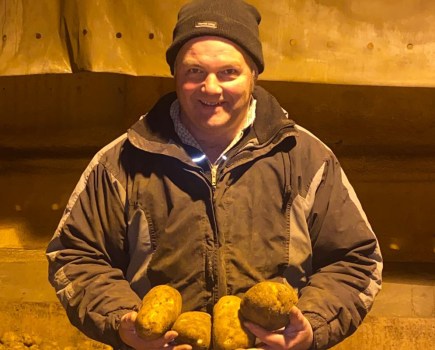
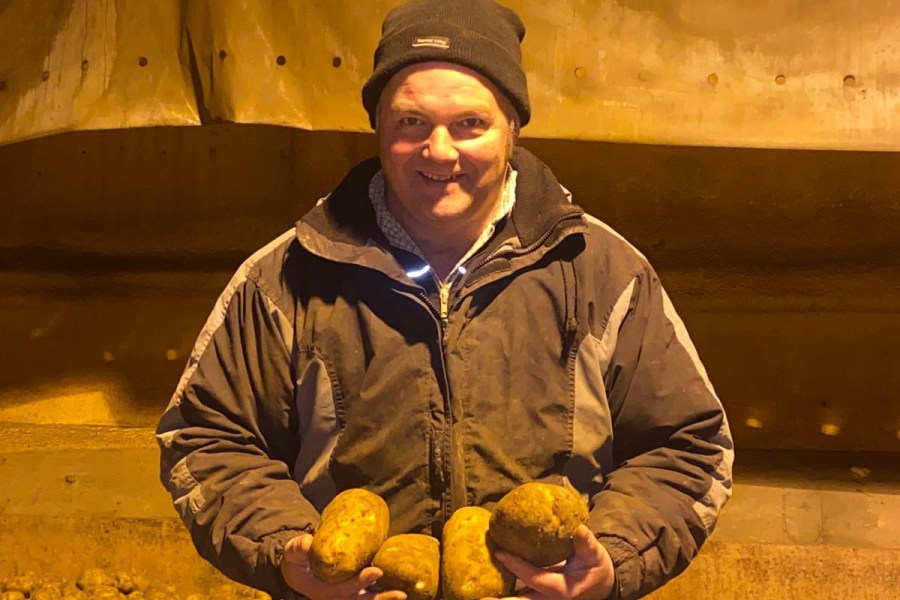
It’s another tester of a season, and in these parts root crops are struggling for moisture earlier than they were in 2025. We can only irrigate about a quarter of our potatoes and two thirds of the beet this year, but it’s a slog getting around when we’re trying to avoid hot daytime hours and are often wrestling with the reality of rather antiquated kit.
A recent dilemma was that of maleic hydrazide on the irrigated crops – fresh tuberisation is a direct response to crop stress and very evident this year, so I grasped the opportunity of a cooler weekend and applied MH in the evening to the irrigated crops. The crops without water are noticeably behind and far too stressed at the moment to even consider such a thing, but hopefully being as we’re in the first week of July, there’s a bit of time yet. We’ve proven many times here that a hot growing season increases the physiological age of the daughter tubers significantly, which facilitates early dormancy break in store, which together with delayed movement down the line is a problem that we can all do without.
To pull out a positive, the effect of earlier foliar nutrition and biostimulants to boost the crop’s resilience and susceptibility to alternaria has thus far proven fruitful. Calculating return on the cost of such things isn’t always easy, but we’re hosting a couple of official trials on the subject this year, which will make the accuracy of such calculations much greater.
During the past two years we’ve significantly upgraded our grain drying facilities to improve efficiency and reduce over-drying. It had very little exercise last year, and so far, looks like it’ll be redundant again in 2026, but what’s not to be underestimated is the effect of the heat of the sun on the grain temperature at intake. I had an eye-watering quote this year to upgrade our grain cooling facilities, which given current market prices, is unaffordable.
Running grain through the dryer at either end of the day simply to cool it seems a bit extravagant, but it’s much more thorough and effective than pushing it into a heap and hoping a few pedestals can work some magic, in my experience.
Grain in store needs to increase in value by more than the cost of the money it is tying up, plus the cost of its storage and any weight loss. At a pound a month carry, that equation just doesn’t look favourable, and with an impending fertiliser tax on the horizon, I feel the shed space and finance will be better employed procuring and storing inputs for 2027 than it will storing grain.
Despite the doldrums of the markets, I remain optimistic for the future of British farming, but the need to be adaptable and react to opportunity is more important than it’s ever been. What does that mean for us?
Focus on what consistently works and keep tweaking. Study cost and value, yet don’t glue the chequebook shut – zero investment all too often results in a reverse trajectory that’s hard to recover from. Seek out more achievable premiums; ask what if?; consider the consequence of change.
SWOT analysis is quick and easy and often paints a picture that shows what has to happen, which combined with honesty and gut feel, can move things forward into the future.
Finally, and arguably most importantly, continue to invest in people, because a key strength of any business is the team on the ground. This was made very clear to me recently when we had a phenomenally busy fortnight haymaking, irrigating, concreting and setting up for our recent celebrations. To say my team all went way above and beyond without even being asked is an understatement – it was noticed lads, thank you very much indeed.
Keep safe, keep chewing the fat, and happy harvesting.
This article was taken from the latest issue of CPM. Read the article in full here.
For more articles like this, subscribe here.
Sign up for Crop Production Magazine’s FREE e-newsletter here.