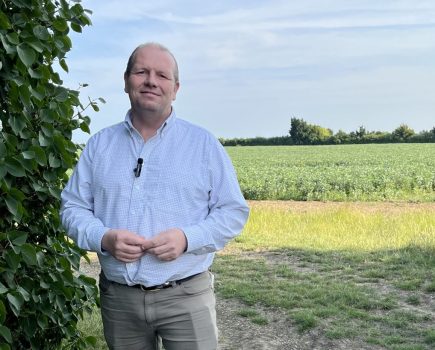


by Andrew Wilson
Well, I’ve done it – I’ve sold a well thought of classic tractor, on with selling another, and bought a youngster. We’ve taken 39 years and 15,000 hours out of our fleet and taken a step forward, or at least it feels like it.
Each December I go through the running costs of our myriad of kit and identify where change is necessary. Neither of the outgoers have been sold due to issue but are both more than 20 years old. That’s not a problem in many ways, but the roles played by each and resulting positions post fleet shuffle, has meant it’s time to move them on before the gap to change becomes an uncrossable gulf.
The cost? Not inconsiderable, but with a few finance agreements ending I felt we had to keep one ‘on the drip’ so to speak. Time will tell whether I’ve made the right decision.
As I write this at the end of March, the weather in Yorkshire is decidedly wintry, soil temperatures stubbornly around 7oC, and soil moisture in the tender zone on most of the farm. My fancy new soil monitoring probe has also shown something surprising about the uptake of nutrition and the effect of rainfall – it was a good two weeks from us putting fertiliser on winter cereals before a decent shower of rain moved the feed to where the plants could access it. It’s certainly focussed my mind on fertiliser timings and quantities given the price of the stuff!
My philosophy is still where it always is – feed to crop potential rather than broad prescription, and pay attention to trace elements, particularly those that can affect the availability of other nutrients.
Pleasingly, crops currently look well, even the beans have recovered from cold, wet feet and chocolate spot. Rust susceptibility in certain varieties of wheat and barley showed itself earlier than I was anticipating a few weeks back, so Twinkle toes came out to put some tebuconazole and micronutrients on the affected fields.
I tend to favour early disease control and put far more value on T0 than T3 anyway, but this still caught us out. The cost will likely be recouped from savings later in the season; it doesn’t feel like the time for a belt-and-braces approach even if prices have recently lifted a little.
My cultivation policy has for some time been ‘as little as possible but as much as necessary’, although we’ve been guilty of leaning too far towards the former at times, particularly when fuel has been as expensive as it’s recently become. With this in mind, I approach each field on its merits and have sown the few spring oats we have this year with a wide tine drill straight into a desiccated light cover crop that saw the necessary cultivation last summer. Fertiliser requirements of the crop were all applied to the seedbed in the hope the oats will be up and competitive quickly – it could just do to warm up a few degrees to help them along.
The land destined for ‘probably the best malting barley in the world’ is still too wet and has been host to a couple of our old classic tractors this winter – one with a backhoe, the other a drain jetter and obligatory home-adapted water cart. In a dusty filing cabinet in my office attic, I unearthed some drainage plans from the late 19th century and a few from the 1960s which have helped align some of the crop lines seen in the dry summer last year. Progress has been steady, as it was always going to be, but getting some of them working again has been a satisfying task and should provide a greater return on investment than any magical potion we could apply to the crop.
Experience has taught me that barley requires more nurturing than oats, so I intend to spring tine that land soon to wake it up a bit then get the seed in the ground before the moisture is lost. One advantage of our rather over-the-top drill armoury is that there’s usually one to suits the situation facing us.
We lifted the last of our surplus-to-contract sugar beet in the last week of March to clear the field and begin working it into decent fettle for the following pea crop. It’s just my luck that in a year when I have surplus beet the stockfeed market is awash with fodder beet and uncontracted or un processable potatoes, but it’s slowly finding homes.
My pre-potato cover crops are all now desiccated, although later than I planned, and are being topped as other work and trafficability allows. We’ve just had another pig batch change so muck spreading will follow shortly, with imported poultry manure being the choice on land further away, alongside a trial of some compost.
So, how did the ploughing match go? Very well – we had a great turnout for all classes except the trailer ploughs. This means while I was the lowest score in my class, I still won! Joking apart, I enjoyed it and really appreciated the wisdom of a long-time supporter of our event who despite having now retired from ploughing, certainly hasn’t lost his eye for detail. Thank you, David.
I’d like to end this column with some sad news and a reminder that life isn’t finite nor guaranteed. A humble and hard-working local family farmer and friend of mine grew lots of vegetables and reared some fantastic quality livestock. He sold his produce directly to the public and was a significant part of our local farmers market and cricket team. Pete was taken suddenly by natural causes and leaves a young family at only 47 years of age.
Crack on, I think, is the message I want to convey – the best time to do anything is now.
This article was taken from the latest issue of CPM. Read the article in full here.
For more articles like this, subscribe here.
Sign up for Crop Production Magazine’s FREE e-newsletter here.