
Embracing the public by ‘farming Christmas’ is helping one Leicestershire business to improve its profitability and create an enterprise fit for its future generations. CPM meets the family behind Grange Farm Christmas Barn.
“We either expanded and invested in dairy, or focussed on what we’d become better at – diversification.” JIM MOUNT
By Janine Adamson
Mighty oaks, from little acorns grow… while the species is incorrect, the ethos certainly rings true for Jim and Jane Mount, and their sons Harry and Will, at Grange Farm near Thorpe Langton.
In their case, the seedling idea was selling a few Christmas trees from the farm gate in the late 1980s. Now, during peak festive season, the business can sell up to 400 trees a day, as well as manning a fully-festooned retail shop, charity grotto and pop-up café.
Traditionally, the business was a mixed family farm, but it was in 2002 when a harsh but practical decision had to be made, says Jim. “We were milking and farming across two sites and it’d been a logistical struggle for a while with the farms 17 miles apart; we had to change direction.
“We either expanded and invested in the dairy enterprise, or focussed on what we’d become better at – diversification.”
Jim recalls that while giving up the livestock was a significant decision for all involved, the farm had been engaged with supplementary activities for some time, mainly selling hay, haylage and straw bales to the local equine community. They’d also been selling potatoes from the farm gate, as well as the aforementioned Christmas trees.
Despite having no specific plans for the trees, they quickly took off, eventually forming Grange Farm Christmas Barn. “It’s how we’ve evolved to help stack up the farm. Today, more than 80% of our turnover is from retail – the trees and shop; we also sell more than 100,000 small bales, and 6000 large bales each year.”
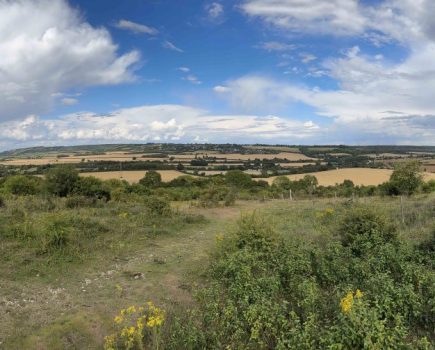
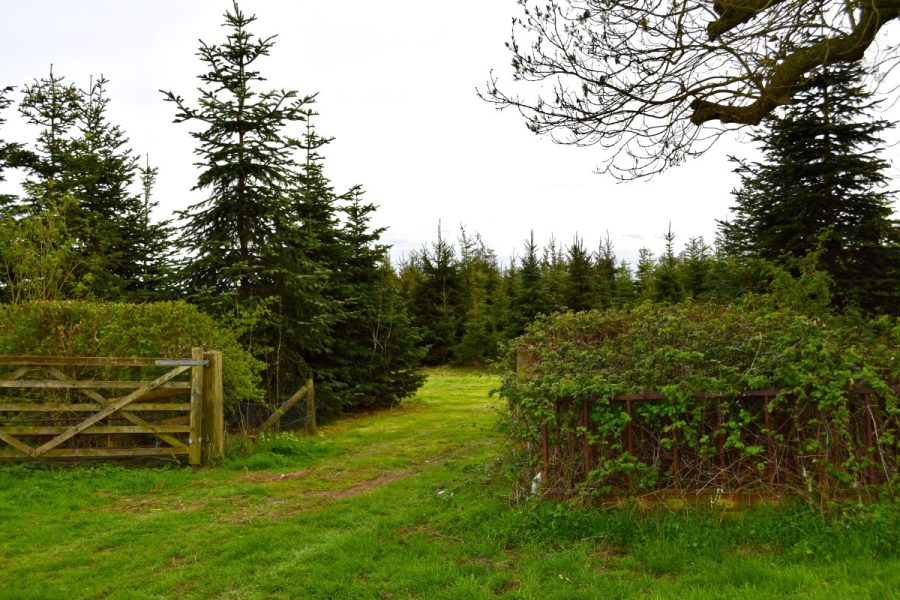
As well as managing around 135ha of cereal crops and 230ha of grass, Jim is now farming trees too. “We started planting our own Christmas trees in 2003, establishing new stock every two years. This is supplemented by additional trees that we buy in to ensure we can meet demand.”
Currently, the farm plants around 4500 trees in each cycle, specialising in Nordman Fir and Norway Spruce, which Jim says appear to be the most popular varieties for domestic use. To help with management, he works with Festive Forestry – a specialist contractor that plants using GPS, as well as undertaking any pruning or tree health-related aspects.
This decision was made because as a family farm, it was taking too long to sufficiently look after the trees while overseeing the rest of the cropping rotation and bale business, he comments.
Jim’s son, Harry, agrees: “You’d think the trees could be left but they can’t. The biggest job is keeping on top of pruning to ensure an even and aesthetically appealing shape, and to help with harvesting later. This is essential to ensure a quality tree.
“We then fertilise by hand, working between the trees with a bucket to ensure precise application, placing a handful at the base of each tree. Contrary to what you’d perhaps expect, they don’t require much water,” explains Harry.
Other regular jobs include misting at the end of January to keep spider mite under control as well as growth regulation. “We manage the leader (upward growing stem) to encourage a wide, dense tree, as well as prune at the base to help with harvesting later. Usually, we can always make a mediocre tree a good one,” highlights Jim.
However, no tree is wasted, with any ‘over-sized’ examples used in the café or grotto areas. “We always find a use for unsaleable trees.”
Recognising the power of the public, Jim and his family are embarking on a new venture this season – a 12ha pick-your-own flower field. “All I want to do is be a farmer, but we’re giving this a go,” he jokes. “I’ve no idea how to grow flowers, but will hopefully learn.”
The inspiration came during a visit to Yorkshire where a similar set-up was achieving success. “It’s not about actually picking the flowers as such, it’s about the experience. That’s what you have to take advantage of – farming people, rather than the land.”
Jim adds that the flower field concept was fast-tracked following part-funding from his local council, which was distributing grants for tourism activities. “We’ve used the money to pay for the fencing to keep wildlife out; it really pays to apply for such grants. I hope it’s a success, we’ll see how it goes.”
But, it wouldn’t be complete without Christmas trees – as well as sunflowers and other colourful flower species, the field has been squared off with trees to make the most of the area.
Considering how to market this new enterprise, Jim admits he’s become reliant on skills from younger members of the family. “We have a good following on social media for the Christmas Barn, which should help with building momentum for the flower field. Word of mouth in the local area has also been powerful; so far, interest in the flowers seems high.”
But adding value doesn’t stop at Christmas trees and flowers – the farm has thriving container storage and lettings businesses, and is about to embark on caravan storage. With these aspects being more hands-off, it means the family can concentrate on core activities – farming, Christmas trees and selling bales.
“We’re so busy on the bales, which are all delivered within a 15-mile radius. We’re busy all of the time,” states Jim. “Then once we reach November, it’s all hands to the pump for Christmas.”
Hutchinsons’ farm business consultant, Carrie Marshall, has been working with the family to help bring these new diversification ideas to life. She says there are five factors that she encourages all of her clients to consider before starting a new project, big or small.
“The first is to ask yourself what you’re interested in? We often see projects fail because they begin with enthusiasm that soon wanes. Really look at your labour profile and assess the skill sets that already exist within the business, particularly in regard to dealing with the public,” she advises.
Her second point involves looking at the assets within a farming business that could be utilised further, for example, large shed spaces for padel courts or car storage, or yard areas for caravans. “It could even be a lake for wild swimming or fishing. Everyone will have assets that aren’t gaining any income, and while you may look at these and not want to manage them yourself, you could work with others to do it on your behalf,” proposes Carrie.
She then recommends observing where the farm is located. “Many people who aren’t on the edge of a village or town might assume there aren’t diversification options suitable for them. But, I have clients who are on the side of A-roads and have considered options such as truck stops, electric car charging stations or meeting rooms for companies with remote workers. There are options that don’t depend on tourism to become successful.”
Carrie’s fourth factor is to then take this to another level, by assessing what’s missing from the local area. “However, you won’t find good ideas on your doorstep, because it’s highly likely someone has already done it. Travelling the country is a great way to do some research and identify new concepts.”
Finally, she advises being honest about appetite, whether that’s for potentially borrowing money, being involved with planning and the council, or working long hours. “What appetite do you have for sharing your focus with the enterprise you’re currently running?
“But otherwise, I think I’d take home that it’s not too late to start just because it’s not been done before. Seek advice and don’t do it alone – this could be professionals, consultants or simply others who are undertaking similar projects.
“And, don’t let the public scare you. That’s often the sticking point, but not every project has to involve the general public,” she concludes.
This article was taken from the latest issue of CPM. Read the article in full here.
For more articles like this, subscribe here.
Sign up for Crop Production Magazine’s FREE e-newsletter here.