
While current premiums aren’t at the highs of the past, with the correct variety choice, attention to detail and sensible marketing, milling wheat varieties should still stack up on farm, believes KWS’ Matt Bull.
He adds that generally, premiums for Group 1 varieties will want to be at least £20-25/t over the feed wheat price to be viable. And although the milling premium is a little low at the moment – determined by market dynamics – sensible contracts are available today, he adds.
“With increased input costs continuing, greater attention to detail is required to make economically viable decisions on farm, but this isn’t confined to just milling wheats. As base prices remain relatively low, more and more growers appear to be looking for wider opportunities to obtain a premium.”
Decision tree-style thinking
A decision tree-style approach can help to provide clarity on which market segment growers should target, he suggests. “Growers know their farms better than anyone else and will be best placed to look at average yields and ability to hit specifications, alongside their input costings to calculate what makes most economic sense.
“If margin calculations suggest Group 1 is viable, and a grower is accustomed to pushing wheat in this way, then in today’s climate it’s critical to choose a variety that not only hits the protein specifications, but does this reliably and efficiently,” he stresses. “Ideally, a variety that has inherently good ability to assimilate protein into its grain.”
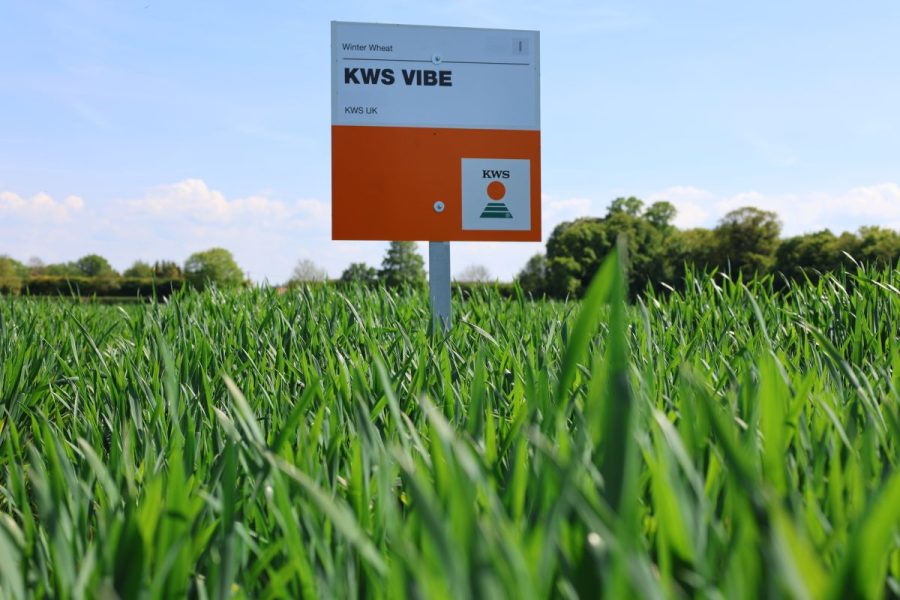
Looking at specific Group 1 varieties, Matt highlights KWS Vibe as the ideal variety for those targeting top milling premiums. “Vibe is expected to take over as the market leader due to its quality credentials, specifically protein assimilation. Plus with the increasingly dry springs we seem to be experiencing, this makes fertiliser uptake and utilisation even more challenging, hence Vibe has proven itself as a front-runner.
“But critically, it’s offering added security with best-in-class, durable yellow rust resistance (8) and a good septoria score (6.5). It’s also relatively short (89cm) and stiff. Its growth habit lends itself to early drilling and that added drill date flexibility holds strong value on farm” says Matt.
Factoring in flexibility
For more marginal situations where the numbers perhaps aren’t in favour of growing a Group 1 variety, Matt believes other options are available, and so the Group 2 market may draw further appeal. “If a variety has the potential to achieve a milling premium alongside high yield potential, then it presents options depending on what happens with crop quality and market dynamics at harvest.”
He adds that Group 2 KWS Arnie sits in that camp – an allrounder that offers feed wheat-level yields (UK 104%) but with the quality required for milling. “Arnie is an Extase cross and brings a lot of similar features that saw Extase gain its popularity, but has been further finessed for the UK market, with improved yield, disease resistance and shorter and stiffer straw.
“It has very early maturity – the third earliest on the RL – with good physical grain qualities. If we compare Arnie with the current hard Group 4 options, it outyields 50% of them plus boasts improved agronomics, so certainly makes a strong feed wheat option too.”
Matt notes that Arnie has looked clean in the field this season, including keeping yellow rust at bay (resistance score 7). “Feedback has been very positive on farm so far,” he concludes.