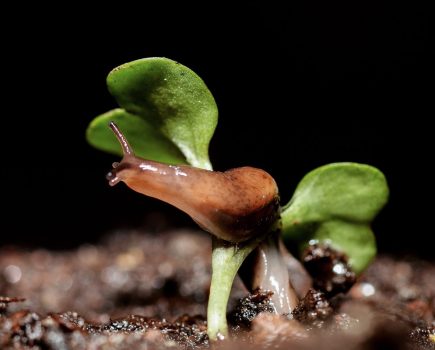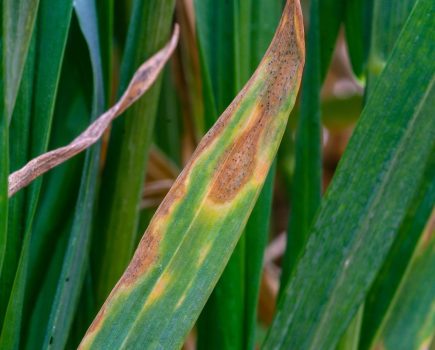

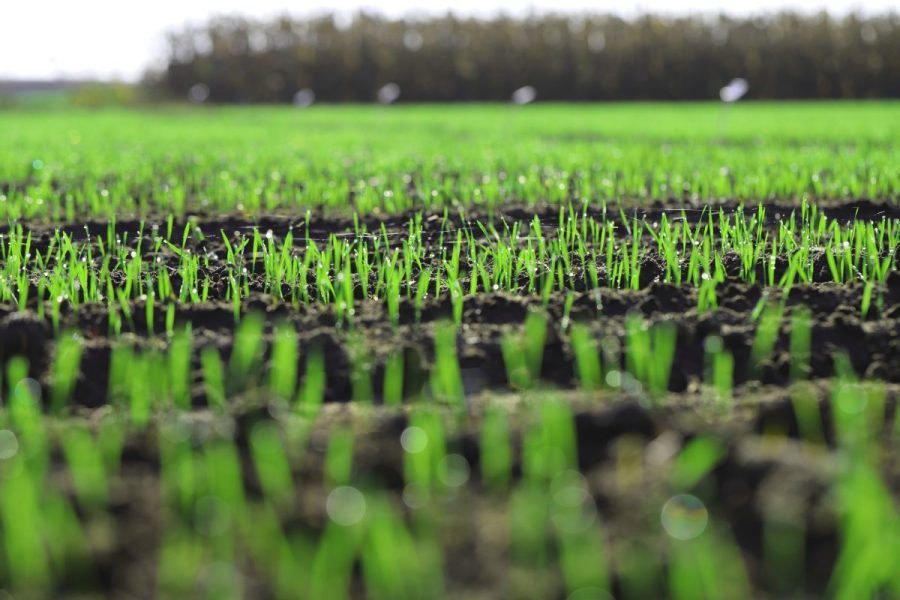
Seed treatments are crucial to early plant growth, but at a time when every input is being scrutinised, are they still worth the money? CPM takes a look the value they’re bringing, including the role of biological options.
“We require seed treatment products that effectively control disease threats.” DAVID LEAPER
By Andrew Watts
Once upon a time, seed treatments provided broad-spectrum protection against numerous pests and diseases but now, their activity has become increasingly specific. For the grower, this means identifying the greatest threat to their individual crop, and selecting a product accordingly.
Part of this shift in mindset has been down to the withdrawal of products like Jockey (fluquinconazole+ prochloraz) and Deter (clothianidin), and expectations have had to change accordingly, notes consultant and former seed technical manager for Agrii, David Leaper.
“25 years ago, seed treatments were regarded as the beginning of a new era in crop protection. They delivered concentrated, targeted activity against a broad spectrum of pests and diseases.
“However, new regulations introduced in response to environmental concerns, together with increasingly stringent approval processes, have prompted manufacturers to move away from synthetic pesticide chemistry and towards biological products based on living microorganisms and naturally derived active substances,” he explains.
CHANGING LANDSCAPE
The withdrawal of systemic products altered pest management considerably, increasing the importance of accurately identifying individual pest risks. In their place has come a range of biological seed treatments, many of which claim to enhance germination and crop establishment through improved root development. While these benefits are valuable, David argues that what growers require more are biological products capable of delivering reliable pest and disease control.
“We’re fortunate to have several effective synthetic seed treatments for controlling seed-borne pathogens,” he says. “However, there remains a shortage of biological products offering comparable activity against these diseases, or against soil-dwelling pests.”
This isn’t to diminish the value of existing synthetic chemical seed treatments, he urges, as without them, the incidence of seed-borne diseases would increase substantially. But unless manufacturers develop biological alternatives capable of addressing this gap, grower confidence is likely to diminish, requiring the industry to reconsider its overall approach to seed treatment.
“We require products that effectively control disease threats; we continue to rely on fungicides such as fludioxonil, triazoles and SDHIs, even though they’re coming under increasing regulatory scrutiny,” he comments.
“While there are biological products claiming activity against challenges such as fusarium in wheat, their practicality in commercial production remains to be demonstrated. In oilseed rape, the situation is somewhat more encouraging,” adds David.
David estimates that almost the entire UK OSR seed is treated with Integral Pro, a biological product containing Bacillus amyloliquefaciens. This claims activity against seed-borne phoma, alternaria and rhizoctonia, while also providing suppression of low to moderate cabbage stem flea beetle populations.
“The popularity of Integral Pro demonstrates that growers are willing to adopt biological products when they deliver reliable performance and address a genuine need.”
There’s also a strong case for biostimulant seed treatments, he believes, particularly as autumn-sown cereals are frequently established under challenging conditions.
“Anything a grower can do to encourage early growth and improve crop vigour will help to establish a stronger crop before winter and better prepare it for spring growth. Drought tolerance, both above and below ground, has understandably become a major focus, and biostimulants have a role to play.
“In my experience, however, these treatments generally provide a modest return, typically increasing yield by around 0.2-0.3 t/ha. A biological product capable of protecting crop quality would be considerably more valuable because it could reduce the risk of crop rejection,” suggests David.
LONG-ESTABLISHED
As a concept, biostimulants have been used in crop production for many years. Chemical biostimulants, including the stabilised phosphite and pyroglutamic acid found in Take Off ST, aim to improve winter hardiness and drought tolerance by promoting greater root development and more uniform crop establishment.
Furthermore, true biological treatments aren’t a new concept at all – the Victorians were among the first to use seaweed extracts, recognising the value of naturally-occurring humic and fulvic acids in promoting crop development.
As such, modern non-microbial biological products have built upon this principle. Products such as Corteva’s Ympact are formulated with chelated zinc, copper and manganese to encourage rapid seedling establishment while remaining fully compatible with conventional seed treatments.
More recent developments include microbial products such as Syngenta’s Nuello iN, which contains the endophytic bacteria Pseudomonas siliginis and Curtobacterium salicis. These organisms can capture atmospheric nitrogen and convert it into plant-available forms, effectively providing a supplementary nitrogen source throughout the crop’s lifecycle.
“Generally speaking, most modern biostimulant treatments work,” suggests David. “Some perform better than others, some are more consistent across varying conditions, and some contain greater nutritional value. Each should be judged on its own merits, but there’s certainly a case for their use.”
He says in most situations, the yield benefit more than covers the cost of application. “Growers can therefore have confidence in using these products, but there’s little evidence to support combining multiple biostimulants in the expectation of accumulating their individual benefits.
“In my experience, they deliver the greatest value when autumn establishment conditions are difficult, particularly in later-sown crops. Earlier-drilled crops established under favourable September conditions generally derive less benefit.”
ASSESSING EVIDENCE
Overall, David believes biological and non-biological stimulants often produce comparable results. “I found that growers were often attracted to biological stimulants for reasons other than performance; it wasn’t necessarily because they believed they were superior to conventional products such as phosphites.
“In my experience, chemical stimulants generally produced more consistent results than biological alternatives. I believe this is because chemical products induce a direct physiological response within the plant, whereas microbial products depend upon favourable environmental conditions – including adequate soil moisture, suitable temperatures and appropriate soil pH – to function effectively,” he explains.
This reliance on environmental conditions could partly explain why biological products have achieved greater success in horticultural systems, particularly protected crops grown in glasshouses. By contrast, arable rotations are routinely exposed to environmental extremes, including drought and waterlogged soils, both of which can significantly reduce the effectiveness of microbial treatments.
“This is why nutrient-based products often perform more consistently than some biostimulants. Where nutrients are readily available, the plant can absorb them immediately. Biologicals seek to improve root development so the plant can access more water and nutrients, but if adequate nutrition is already available, the plant will achieve much of this naturally. It becomes something of a chicken-and-egg situation,” argues David.
The nutrients most commonly included in seed treatments are manganese, zinc and copper. Some manufacturers offer high-loading single-nutrient products while others provide lower-rate combinations of all three. According to David, the choice reflects individual company strategy rather than clear evidence that one approach consistently outperforms another.
“Each company has its preferred approach, based on its own priorities and the information provided by suppliers. I don’t place too much emphasis on the exact formulation because they all aim to achieve similar outcomes and generally perform well. In my experience, these products are almost always worthwhile even though differences observed in trials are often smaller than the least significant difference required to demonstrate a true statistical advantage,” he raises.
QUALITY OVER QUANTITY
As a well-known advertising campaign states: ‘If 80% of your drink is tonic, make sure it’s a good one,’ David believes the same principle applies to nutritional seed treatments. “At Agrii, we concluded that applying a high loading of a single nutrient was preferable, whereas others opted for lower-rate mixtures. Some products contain only trace quantities of nutrients. The obvious question is: what benefit does that provide?”
For some growers – and particularly their agronomists – the use of micronutrient seed treatments may appear unnecessary, especially where foliar nutrition programmes are already planned.
According to David, many agronomists prefer to manage micronutrients separately through foliar applications, particularly in spring barley, even though tissue analysis consistently indicates that nutritional seed treatments and foliar nutrition complement one another.
Evidence also suggests that nutritional seed treatments provide benefits regardless of the underlying soil nutrient status.
“We searched extensively for a relationship between soil nutrient deficiency and plant response but found none. Crop response appeared to be independent of both soil nutrient indices and soil texture. Initially this seemed surprising, but we concluded that the immediate availability of nutrients during early establishment provides young plants with an important physiological advantage,” comments David.
There is, of course, a broad range of biological products that perform strongly as foliar applied fungicides. One notable example is Polyversum WP, a biological fungicide containing the beneficial microorganism Pythium oligandrum M1. The product is authorised for use in Great Britain for the control of black leg, sclerotinia stem rot in OSR, and fusarium head blight in cereals.
Although Polyversum WP isn’t authorised in GB as a seed treatment, experience from Poland and the Czech Republic suggests it has considerable potential for this application, highlights Harry Edwards of Russell Bio Solutions, the UK distributor.
“We already have GB authorisation for Polyversum WP as a foliar fungicide and have used it this season to determine where it fits best within integrated disease management programmes to maximise its effectiveness,” he says.
“We’re yet to fully evaluate its potential as a seed treatment under GB conditions. However, European trial data have demonstrated efficacy comparable with formulated seed treatments containing tebuconazole+ fludioxonil for the control of fusarium head blight in winter wheat, and superior performance to products containing difenoconazole+ fludioxonil against common bunt.
“While these results are highly encouraging, we haven’t determined whether there’s sufficient market demand to justify the investment required to generate the comprehensive trial data package required for an assessment by the UK Health and Safety Executive – Chemicals Regulation Division (HSE-CRD),”concludes Harry.
This article was taken from the latest issue of CPM. Read the article in full here.
For more articles like this, subscribe here.
Sign up for Crop Production Magazine’s FREE e-newsletter here.