
With cereal crop margins being increasingly squeezed, experts are urging growers to weigh up the value of herbicides on grassweed control versus the potential yield penalties from cutting back. CPM tackles the conversation as part of this month’s Common Ground.
“Although there might not seem to be too many blackgrass plants, it’s beneath the canopy where the damage is being done.” DR SARAH COOK
By Janine Adamson
Following effective applications of pre-emergence chemistry plus weather conditions conducive to herbicide uptake, weed control last autumn appeared successful for many growers. However, with just one blackgrass plant/m2 equating to 1% yield loss, last season’s battle may be won, but the war against grassweeds very much continues.
This is because cumulatively, it takes very few blackgrass plants to create a significant problem. Therefore, with a currently challenging economic climate for farming businesses, the potential financial impact of grassweeds shouldn’t be downplayed.
To tackle this topic further, CPM brings together Norfolk grower, David Hurn; principal research consultant at ADAS, Dr Sarah Cook; and BASF’s business development manager for herbicides, Stuart Kevis.
David oversees 160ha of cropping, comprising winter wheat, sugar beet, spring barley and vining peas. With blackgrass his primary problem weed, David has implemented a robust, integrated strategy for its control.
Investing in control
To open the discussion, Stuart asked David whether the investment in weed control was something that he proactively considered. In response, David shared that while herbicide programmes require significant spend, it’s something that has to be tolerated in order to maximise wheat in the farm’s rotation.
“Our soil type will support second and third wheats and we can get good yields. Although I’d like to have a more diverse rotation than I do, the economics of break crops at the minute don’t stack up. Last year we grew a small area of spring barley at 8.8t/ha and it barely scraped a profit due to cost of growing it and poor returns from the market price at that time,” he explained.
To reply, Stuart said he acknowledges that unlike cereal fungicides, it’s not so easy to cut back on herbicides. “If you’re growing the right varieties that look healthy enough, and disease pressure is low, you can make an informed decision on risk and level of fungicide input.
“But if you have grassweeds, it’ll cost no matter what. Firstly there’s the price of the herbicide, but then, if you do nothing or cut back, you’ll lose yield. There’s a balance to consider between how much level of control you’re achieving versus the cost of that control – so what the programme is delivering for you.
“Applying something cheap and gaining 70% control for example, might not cost much herbicide-wise, but will cost a significant amount in yield reduction. Equally you can go belt-and-braces and achieve fantastic control with little blackgrass return and minimal yield loss, but it’ll involve greater investment.”
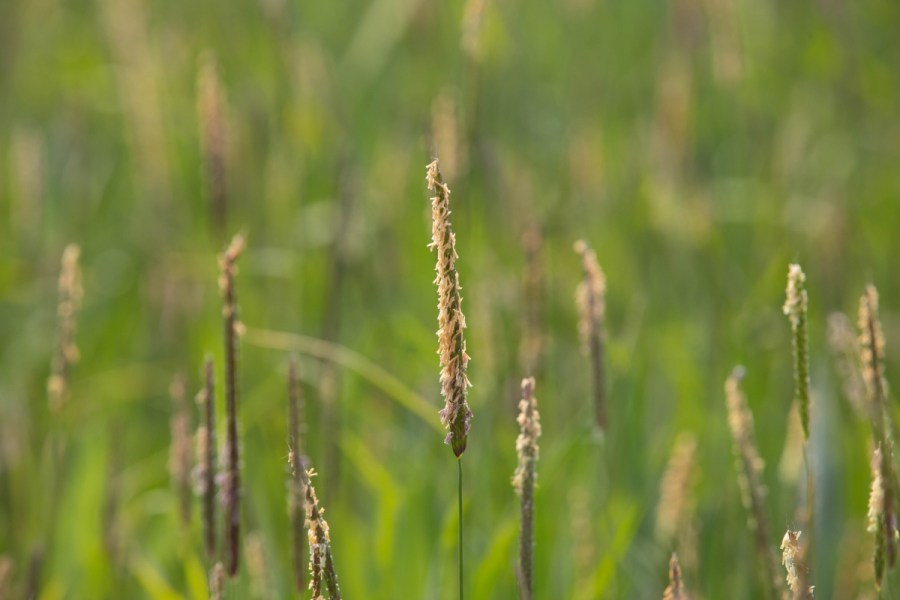
Sarah highlighted that unlike David, many don’t necessarily realise what damage weeds – particularly blackgrass – can do to yields. “It’s present and you can see it, particularly the heads at this time of year. Although there might not seem to be too many blackgrass plants, it’s beneath the canopy where the damage is being done.
“The roots are competing with the crop for water and nutrients, and they’re better than the crop at doing this. There’s also the effect of the denser crop on humidity levels and light interception. And there are long-term effects too – seeds can last 7-9 years in the seedbank.”
Maximising the hit rate
Recognising that herbicides remain a critical aspect of his cropping inputs, David explained that he’s been paying attention to how to get the most from what’s applied. For him, this has meant sequencing chemistry rather than creating complicated tank mixes with many active ingredients.
Stuart added that hitting blackgrass as hard as possible, as early as possible, is key. “Research suggests that the first flush of grassweeds is always the biggest flush, although that’s not to say other flushes won’t come throughout the season into the spring.
“So maintaining a residual layer of control throughout that period is very effective, which is why sequences can work. But where things get difficult is where there’s only one opportunity to travel due to inclement weather – that’s when people have to go for more complicated stacks.
“However, if you know there’s the option to apply a pre-em and then come back with an early post-em residual, trial data shows that this works well. Also, the sequence window does have to be quite tight – in the past this would be 2-3 weeks, but now it’s more around 10 days,” he explained.
Looking at specific products, Stuart highlighted that trial data also indicates the value of using Luximo (cinmethylin) at pre-em, when the flush of grassweeds is at its greatest. “That gets the best out of Luximo meaning you can use other chemistry such as flufenacet or DFF in an early post-em slot because the pressure on them will be less.”
Sarah agreed that cinmethylin is a valuable active. “Use it wisely, at label rates and within the programme where it works best. But don’t put all your eggs into one basket – there are other options and a range of actives (and HRAC groups) will help to minimise the development of herbicide resistance.”
Adding to this, David said application techniques should be finessed too. “The quality of the seedbed is so important. If you don’t have that for the first application, you won’t achieve quite the efficacy. The same goes for nozzle choice too.”
Sarah commented: “Whatever you favour, sequencing or stacking, good application is critical – targeting the right growth stage in optimal conditions. Blocked nozzles or missing bouts will be punished severely. Equally, we’ve been experiencing strange weather patterns which can increase the risk of crop damage from complicated tank mixes so is something to be aware of.”
False economies
For Stuart, making cuts on chemistry often proves a false economy in the end. “Certainly, if you’re letting seed return back into the seedbank, that becomes problematic very quickly. Although there’s an optimum target of 95% blackgrass control to just stand still with the seedbank population, achieving this, even in areas with lower weed counts, is a challenge.
“Our trial work indicates you can’t reliably do this without having Luximo in the programme, unless you’re spending more than £150/ha on a heavy stack of other solutions. Plus, all cultural control methods are vitally important.
“And actually, you require good control in all pressures of blackgrass, not just heavy situations, to ensure wheat remains a profitable crop every year. Staying vigilant and using the best chemistry is key – if you look at the impact of poor control on yield, you’re better off spending a little more on a herbicide that’ll do a better job.”
For Sarah, making short-term decisions on weed control will have long-term impacts. “Reducing herbicide rates is not only a false economy, but leads to herbicide resistance.
“Multiple applications of the same active – even if this is allowed under regulation – is against all we’ve been told, as overdosing also leads to herbicide resistance. Instead, make the most of opportunities to use glyphosate and combine this with added cultivations,” she said.
Beyond blackgrass
Taking a step away from chemical intervention, David highlighted that cultural control methods are critical for not only blackgrass management, but in helping to keep Italian ryegrass at bay. “We don’t have the weed at the moment, but I’m conscious it could easily come in.
“We have a 1.2m flail mower on a small tractor that we use to cut the perimeter of every field at least three times from spring until harvest, to remove seeding heads. I’m certain that with the big combines we use these days that once it’s in the header, it can travel metres into the field on the first pass.
“For me, removing those seeding heads next to the crop is an important part of integrated weed management.”
Stuart added that it can be a similar scenario for brome too. “Many believe brome has crept in from edges and margins into fields. But with all of these weeds, the yield loss can be huge. For blackgrass one plant/m2 is 1% yield loss, but for ryegrass, one plant/m2 is 5% yield loss. So it’s five times more robbing and if you see one, you have to remove it because you don’t want that problem on the farm.”
David raised that he’d noted meadow brome appearing on the farm following a move away from ploughing. “Other than after sugar beet, everything was based around the Sumo. So to help bury the meadow brome we’re re-introducing the plough back into our seven-year rotation. I’m convinced that’s why we were seeing it, because we’d moved so far away from the plough.”
Other drivers
To continue, David stressed that weed management is a primary driver behind his approach to cultivation. “I feel we’ve had better control across the farm with mixed cultivation – strategically using the Sumo, sometimes the plough. Every year is different and I think it’s important not to get stuck in a rut.
“Equally, I’ve always tried to delay drilling. With the size of the farm we have a big drill capacity so can cover a lot of ground quickly if we have to. This autumn, we planted into early November. I think if you have good seedbeds and the weather is fine, it’s always best to wait to avoid not only grassweeds, but diseases like septoria too.”
Sarah’s advice is also to mix things up as well as pay particular attention to on-farm hygiene. “Don’t get fixed on one method of establishment. There’ll be fields that are clean or have low populations. Concentrate on cleaning up the bad fields but make sure you don’t then spread weed seed around the farm. Clean machinery on leaving a field, then clean it again on entering the next,” she stressed.
David then added that other aspects he considers are crop variety, ensuring field drainage is functioning properly, and what’s in the rotation. “Not drilling our vining peas until the end of April or May provides a fantastic window for blackgrass to grow, including spring germinating plants. That’s why I try to grow peas after second or third wheats.
This article was taken from the latest issue of CPM. Read the article in full here.
For more articles like this, subscribe here.
Sign up for Crop Production Magazine’s FREE e-newsletter here.