
With this season’s conditions and management decisions proving a potential perfect storm for take-all proliferation, growers are being urged to tackle the pathogen head-on utilising all preventative measures. CPM explores why an integrated approach to take-all management is essential ahead of drilling this autumn.
By Janine Adamson
While focus primarily swings between managing key foliar diseases yellow rust and septoria, are growers neglecting the significant threat of take-all? As estimates suggest it affects half of UK wheat crops, with average yield losses of 5-20%, what can growers do to get a handle of this soil-borne pathogen?
CPM brings together two industry voices – Luke Alexander from Frontier Agriculture and Leanne Fowler from Certis Belchim – to further discuss the magnitude of this underground threat.
Does take-all remain a threat in today’s production systems?
Luke: With very limited control options, take-all remains a significant threat to UK cereal crops.
It’s caused by soil-borne fungal pathogen Gaeumannomyces tritici, and attacks the roots and stem base of plants. Take-all strikes plant roots early in the season, often without visible symptoms above ground, reducing water and nutrient uptake and lowering yield.
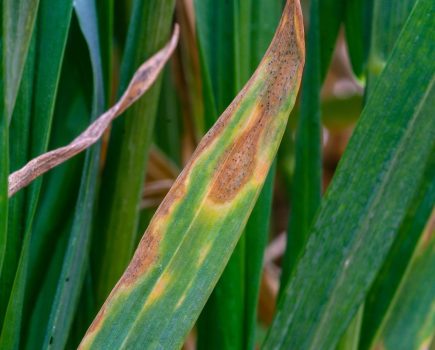
What makes its control a challenge, is that detectable signs such as patchy growth, black brittle roots and whiteheads appear only after significant damage has already taken place.
Second to fourth wheats offer growers a primary take-all risk – the pathogen is the main cause of ‘second wheat syndrome’ when yields are around 10–15% less than those of first wheats. Looking ahead to this autumn, second wheats will be important due to the large wheat crop in the ground coming to harvest. In addition, with the rise in the number of higher yielding varieties in the Group 1 segment, when grown as a second wheat, these should be treated appropriately to diminish risk.
How are current farming practices enhancing the problem?
Luke: There are major risk factors when it comes to mitigating take-all, some of which are more prevalent following recent seasons and subsequent crop management decisions.
- Soil type – risk is highest on silty clays, sand and organic soils because the fungus spreads more easily; well-structured, water-retentive soils present lower risk. Therefore, understanding soil type is critical
- Sowing date – In 2025, an early harvest and concerns regarding a potentially wet autumn led to an increase in early-sown wheat. For take-all, the first week of September through to mid-September sowings give the highest risk, meaning this year could increase soil-borne inoculum
- Crop rotation – High risk situations involve tight wheat and barley rotations, particularly second through to fourth wheats. Equally, including break/cover crops or SFI options with take-all hosting species will increase the risk further
- Climate – Warm, damp soils in winter followed by wet springs and early summers deliver the greatest risks to take-all. Dry conditions during grain filling exacerbate the effects of the disease on root function
How can growers manage take-all as part of wider production decisions?
Luke: Unfortunately, take-all can’t be controlled using foliar fungicides because infection occurs below ground. Therefore, management must be preventative and integrated, prioritising cultural control methods.
- Varieties – All varieties are susceptible to take-all, so focus on options with early vigour
- Cultivations – Be wary of direct drilling or min-till as firm seedbeds pose a higher risk of take-all. Ploughing buries most take-all inoculum
- Rotation – Select crops carefully including SFI options, paying additional attention to the species within blends. Broad-leaf crops will form an effective take-all break
- Drilling Date – The pathogen is active when soil temps are above 10-12oC. Ideally, delay sowing second wheats until soil temperatures are below 12oC
- Seed Rate – Reducing seed rates can increase yield where take-all pressure is severe as this reduces root density
- Nutrition – Apply early nitrogen and rectify any nutritional deficiencies quickly as deficient soils favour take-all
Are there chemical solutions to manage take-all?
Leanne: Latitude (silthiofam) from Certis Belchim is the only registered crop protection product with proven efficacy against take-all. As a fungicidal seed treatment, it can be used on winter and spring wheat seed, and winter barley; it also has EAMUs for rye and triticale.
Latitude is a proven, practical tool to help manage second and subsequent wheats and barley, without delaying crop emergence.
Because Latitude is the only chemical option available, it should always be used in conjunction with cultural approaches as part of a wider IPM strategy. This means it can add another layer of take-all risk management, reducing primary infection and protecting yield potential.
How does Latitude work?
Leanne: As a seed treatment, Latitude targets the early stages of crop establishment, acting as a fungistat and forming a zone of protection around developing crop roots. This means the seed is protected from the take-all pathogen from the moment it’s planted. Although this doesn’t cure the disease outright, its development is slowed, enabling the plant to grow away from the infected area.
Furthermore, trials consistently indicate that Latitude effectively reduces the impact of take-all. While specific yield responses vary depending on the disease pressure presented, data suggests the average response is +0.55t/ha in wheat after wheat situations.
The Latitude calculator on the Certis Belchim website quantifies the benefit of using Latitude seed treatment, based on estimated crop price, the cost of the seed treatment and the seed rate being used.
This article was taken from the latest issue of CPM. Read the article in full here.
For more articles like this, subscribe here.
Sign up for Crop Production Magazine’s FREE e-newsletter here.