
An early harvest has created a valuable window for weed management, but experts warn that success this autumn will depend less on speed, and more on timing, moisture and discipline. CPM reports…
“A good stale seedbed and October drilling are the easy wins for grassweed control in cereals.” CHRIS MARTIN
By Andrew Watts and Janine Adamson
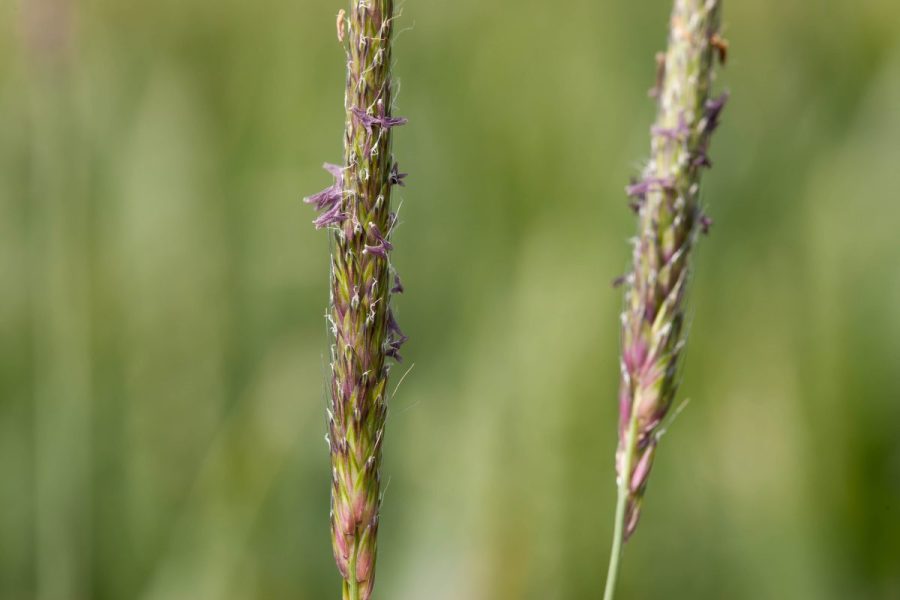
Herbicide resistance continues to complicate grassweed control across a range of species, raises Dr Will Smith, ADAS senior weed management consultant. And while blackgrass has dominated programmes for decades, it’s Italian ryegrass that is increasingly being viewed as the greater emerging threat.
Unlike blackgrass that’s established across much of England, ryegrass remains more regional, with significant pockets in Essex, Kent and South Yorkshire. But according to Will, those boundaries are shifting.
“Ryegrass is starting to spread outwards from these hotspots and onto farms and into regions where it previously wasn’t detected,” he says. “Growers have to be mindful of the routes to transmission, be it on machinery or in straw.”
The cultural controls used against blackgrass — balanced rotations, delayed drilling and strong crop competition — all remain relevant, but ryegrass brings different growth characteristics and how best to manage it is still being understood, notes Will. The challenge is that profitable rotations often rely heavily on winter wheat, leaving weed control competing with commercial priorities.
RESISTANCE CONCERNS
Equally, glyphosate resistance has been confirmed in Italian ryegrass, with cases reported in Kent, Somerset, Essex and North Yorkshire. Then, more worrying for many programmes is reduced sensitivity to flufenacet, raises Will.
“This active is fundamental to most programmes and yet there are instances where it’s providing limited control. It pays to know your enemy, so when you suspect reduced performance, send samples for testing.”
As widely reported, brome is increasing too, encouraged by establishment changes, narrower rotations and reduced use of spring ALS herbicides such as Atlantis (mesosulfuron-methyl+ iodosulfuron-methyl-sodium). “Brome remains particularly difficult in barley, where tri-allate is likely to offer the most useful control,” suggests Will.
Although broadleaf weed resistance attracts less attention than grassweeds, a narrowing choice of herbicide modes of action means the risk is increasing. This is potentially a dormant issue as far as growers are concerned, but the length of time that ALS herbicides have been used on farm means selection pressure has been high, and resistance is starting to be detected in some species.
“Where you suspect that resistance could be an problem then I’d recommend growers check the status of their own populations with a resistance sample, allowing for proactive management if issues are identified,” says Will.
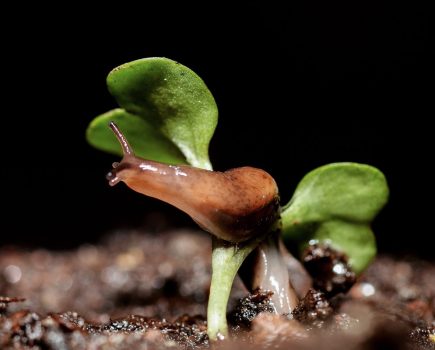
For oilseed rape growers, dry soils are only part of the decision-making challenge, highlights Agrovista’s Chris Martin. Pre-emergence herbicides and products with strong residual activity remain the best starting point, but poor establishment and cabbage stem flea beetle risk mean many growers are reluctant to spend before they know they have a viable crop.
“Growers know that pre-em sprays are the best means of weed control, especially in OSR. But the risk of losing a crop means few are willing to contemplate the spend, or the following-crop restrictions, unless they’re confident of establishment,” he says.
Where there’s enough moisture, residuals such as clomazone remain a relatively inexpensive pre-em option for broadleaf weeds including chickweed, hedge mustard and cleavers. However, where soils are dry, many are likely to wait until the crop has established before switching to post-em contact herbicides.
Critically, CSFB pressure will be the tipping point, says Chris. “Given the conditions, most growers will wait for germination. Once they’re confident of even establishment, then they may opt for a metazachlor or quinmerac mixture at expanded cotyledon stage before potentially following up with a contact.
“Growers will also want to have a handle on CSFB populations; if there’s chance that it’ll wreak havoc, then growers may well decide to delay herbicides until its clear how much damage the crop suffers before either opting for post-emergence contact sprays, or abandoning it and re-sowing it with another crop.”
CLASSIC APPROACH
Belkar (halauxifen-methyl+ picloram) remains the mainstay of post-em contact programmes in OSR, while Corteva has introduced LaDiva, which combines halauxifen-methyl with aminopyralid and picloram to broaden options.
“Belkar is the obvious go-to product,” raises Chris. “Where chickweed is a problem, LaDiva offers some added activity, but the objective has to be control earlier rather than later. After this, it’s the propyzamide products such as Kerb or Astrokerb, remembering that they can’t be applied before 1 October.”
If no pre- or peri-em spray has been used, control may hinge on a small number of fast-establishing weeds. Chickweed, for example, can become too large for later-applied propyzamide products.
Chris says the lesson from autumn 2025 is to not wait too long for ideal soil temperatures. “For maximum efficacy, soil temperatures have to be at 8oC, but in an open autumn this may not be until December. I’d rather apply it [propyzamide] in late October or early November and accept reduced control than risk not getting it on at all.”
Broadleaf weed timing must also be balanced against grassweed control. That’s particularly important where Centurion Max (clethodim) is used, because many other herbicides can’t be applied within 14 days before or after it.
Looking beyond the can, in cereals, delaying drilling after mid-September remains one of the simplest ways to improve grassweed control. “For grassweeds, mid-September drilling is a disaster,” stresses Chris. “It’s tempting after an early harvest, but where ryegrass, blackgrass and bromes are a problem, early drilling does nothing to help.”
Dry soils may limit the value of stale seedbeds, but even early October drilling still improves the chances of success, he adds. “No herbicides work consistently under high pressure, but give them a chance and they all work well. A good stale seedbed and October drilling are the easy wins for grassweed control in cereals.”
Equally, later drilling usually improves the performance of residual herbicides by providing more moisture in the upper soil profile and cooler temperatures to support persistence. Cinmethylin and aclonifen can be highly effective, but only when conditions allow them to work.
This means in many respects, cultural controls should come first; fields with a high grassweed burden should where possible be drilled later to allow weed flushes to be controlled before sowing.
ACCUMULATION
It’s then allowing the smaller gains then add up: choosing vigorous varieties such as Bamford, Beowulf or KWS Arnie, raising seed rates to offset losses from stacked residuals, preparing a better seedbed and drilling slightly deeper. In fact, trials suggest drilling at about 4cm can reduce crop effects from cinmethylin and some other residuals on crop development.
Programme shape will then depend on the weed spectrum present. Avadex (tri-allate) is often the preferred partner in blackgrass, brome and wild oat situations, while Fundatis (bixlozone+ beflubutamid) is better suited to ryegrass. These will support the main players Luximo (cinmethylin) and aclonifen, with other selective residuals such as flufenacet, prosulfocarb or pendimethalin used according to the species present.
“It’s important to use as many modes of action as possible,” urges Chris. “Tri-allate, flufenacet and prosulfocarb are from the same mode of action group (Group 15), but they work in different ways, complementing each other, so it’s worth incorporating them where possible to give yourself the best chance of success.”
From a wider rotational perspective, this autumn may also offer an opportunity to improve soil structure, adds Chris. “On self-structuring land that has cracked open, a light cultivation to about 5cm can flick small clods into cracks which will lodge at different depths throughout the soil profile.
“As these clods shrink and swell through winter, this can provide more natural structuring than any metal can ever do while also encouraging a weed flush once moisture arrives. On heavier or high-magnesium soils, it may be the only cultivation required this season, saving fuel and labour,” he concludes.
This article was taken from the latest issue of CPM. Read the article in full here.
For more articles like this, subscribe here.
Sign up for Crop Production Magazine’s FREE e-newsletter here.