
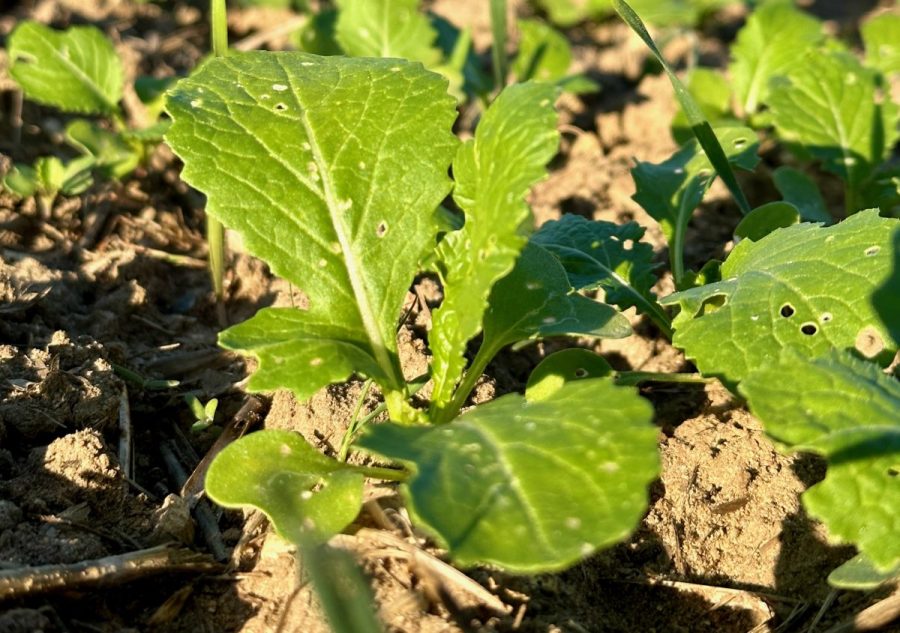
Oilseed rape, at least on paper, is appearing to be a good break crop option again. CPM looks at the economics and latest advice for successful establishment.
“There’s an old adage that when OSR seed is twice the value of feed wheat, it’s a good sell.” NICK HOBSON
By Mike Abram
Following a decade in the doldrums, oilseed rape appears to be making a comeback, and while economics are a key driver, confidence in successfully growing the crop seems to be rising.
This is backed by Andersons’ latest crop area forecast, which estimates the current planted area has risen 22% year-on-year to an estimated 306,000ha. That’s lower than AHDB’s planting and variety survey, which estimated 358,000ha, although some believe this may be overzealous. Perhaps equally as important is AHDB’s late May crop condition report, which suggested 78% of crops were good or excellent.
Despite the recent uplift, the area remains far below the pre-neonicotinoid ban era when up to 755,000ha was planted, and still less than the 391,000ha grown in 2023 when prices spiked following the start of the war in Ukraine.
IMPORT RELIANCE
Subsequently, the reduced area has left the UK in an emergency situation with edible oil food security – dropping to just 15% – and imports costing the nation approximately £1bn annually in net trade, according to United Oilseeds managing director, James Warner.
“We have a strong domestic demand and a crushing industry ready to process, but now we’re importing more than half of the OSR we consume,” he highlights.
With around 2m tonnes of demand for UK OSR, current production of around 1m tonnes means the country is structurally short. However, increasing the area, certainly back to neonicotinoid era heights, risks inviting back pests like cabbage stem flea beetle to levels that make establishing crops even more challenging.
That conundrum has led industry campaign group ‘OSR Reboot’ to set a target of around 500,000ha as the optimum for sustainable UK OSR production, notes Liam Wilkinson, head of technical for Limagrain. “It’s unusual for an industry to be setting limits, but the reality is we don’t want too big an area as that’s when problems begin.”
SOUND PROSPECTS
Economically, the crop’s prospects look positive, even if Australia looks to be heading for a record crop. This is because OSR has been trading around 2.7 times feed wheat value during the past year, says United Oilseeds’ Nick Hobson, with price supported by global energy instability in the Middle East and biofuel mandate demands.
“There’s an old adage that when OSR seed is twice the value of feed wheat, it’s a good sell,” he adds.
Contracts of around £415/t delivered, which oil bonuses could potentially push into the region of £450/t for 2027 harvest, were available in June, offer the possibility the crop could be the best performing option on farm, beating first wheats, he says.
But that’s dependent on establishing the crop, with CSFB remaining the primary concern for many growers, although weather, slugs, pigeons and some other pests all potentially impacting success.
As such, choose carefully where OSR is grown, advises Indigro agronomist, Damian McAuley. “We know CSFB come in from neighbouring fields, so if you can, maintain some sort of geographical distance from previous OSR crops.”
Swedish research suggests distances of at least 0.8km, although that might not be practical on many farms, especially where OSR is grown every season. “If you have management of those fields, then early cultivation disrupts flea beetle pupae before they emerge,” says Damian.
Research into the life cycle of CSFB has revealed that the majority pupate within the top 30mm of the soil, so cultivation doesn’t have to be deep. NIAB / AHDB trials have shown at least 50% reduction in flea beetle numbers, although previous research found in excess of 3m adults emerge from soil per hectare
Any cultivation should be weighed carefully against moisture loss, notes Damian. “Direct drilling is better for establishing a crop because it helps to retain moisture.”
Furthermore, direct drilling into established cover crops, for example coming out of environmental stewardship schemes, can also help to trap moisture, adds Liam, while zero-till can help to visually mask emerging OSR plants from CSFB, that seem to be attracted by a green-on-brown background.
There’s also debate over the role of companion crops. Liam believes they can be detrimental as they compete for moisture, while others suggest growing companions like berseem clover, buckwheat and fenugreek help to mask the crop.
COMPANION BENEFITS
Cambridgeshire farmer Tom Martin is in favour, partly because of fenugreek’s curry scent reputedly disguising the attractive cabbage smell for CSFB, while Damian points to berseem clover’s ability to potentially fix 10kg/ha of nitrogen, as well as support soil biology, including mycorrhizal fungi that don’t thrive in brassica crops. “Some will be getting a payment of £55/ha if you’re in an SFI option too,” adds Damian.
Early nutrition is helpful for achieving good establishment, he stresses. Positive impacts from organic sources such as digestate or poultry manure, can help to mask the smell of OSR from CSFB, says Damian.
Equally, Liam advocates placing fertiliser. “If you’re looking to apply nitrogen, concentrate it in the smallest area possible around the seed so you get the biggest bang for your buck from your NVZ regulation limits.”
As for drilling date, there are two schools of thought around drilling date – early to get crops established before the main migration of adult CSFB, or delaying until after that’s happened, although the consensus is soil moisture is more important than drilling date.
Whichever is chosen, management decisions should be tweaked. For example, while seed rates can be reduced when drilling earlier with better plant establishment, the result can be thicker canopies too, explains Liam.
“That might mean thinking about growth regulator products in the autumn. If you have a big canopy and leave it until spring, it’s too late. You have to be proactive.”
Earlier drilled crops will have different disease susceptibility to the ratings on the AHDB Recommended List too, he highlights. “Light leaf spot becomes the most important disease in early drilled crops because you’ll likely have thicker canopies.”
Like yellow rust in wheat, the disease cycles quickly, but it’s the later stages when it infects stems and pods that cause yield loss. Therefore, early control, even if resistance to fungicides is increasing, should be the aim.
Equally, weed control can be more challenging in early drilled crops, as fewer plants will be controlled with glyphosate applications. “That could lead towards Clearfield varieties if you know you have problem weeds that aren’t controlled using a stale seedbed,” concludes Liam.
This article was taken from the latest issue of CPM. Read the article in full here.
For more articles like this, subscribe here.
Sign up for Crop Production Magazine’s FREE e-newsletter here.