
A new guide has been launched to help growers improve the efficiency of phosphate fertiliser to not only maximise crop performance, but protect the environment too. CPM takes a look at the science behind P, as well as the recommendations from the guide.
“Phosphorus supplies are not fully available to the crop, they are stored in multiple forms which are strongly controlled by soil chemistry and conditions.” DR CHRISTINA BAXTER
The curious case of P – an essential nutrient for crop growth that in many cases, is already abundant in UK agricultural soils, yet much of it isn’t in a plant-accessible form. In fact, up to 90% of phosphate fertiliser applications can become locked up within days, resulting in a nutrient that’s as elusive as it is inefficient.
According to ADAS’ Dr Christina Baxter, this is because large pools of phosphorus are often stored in inorganic and organic forms, which includes P fixed to positive ions in the soil. Only the P within the soil solution is immediately available to plants, which is a small proportion of the total soil P reserve. This means the crop struggles to access a large proportion of soil P, including what’s been applied.
“Essentially, phosphorus supplies are not fully available to the crop, they are stored in multiple forms which are strongly controlled by soil chemistry and conditions,” she explains.
Among the influencing factors are pH, with 6.5-7.0 being the optimum range. Temperature also affects root activity and availability, while sandy soils can hold less P due to lower organic matter. Then, moisture has an impact and controls uptake, because as a mineral P is immobile, relying on water to diffuse through the soil.
“Phosphorus has a very low diffusion rate,” highlights Christina. “This means that it tends to remain where it’s been placed due to its low solubility, unlike nitrates which move more freely through the soil. To compensate, roots must physically grow into contact with P, meaning fertiliser applied away from the root zone is more difficult for plants to access.”
Critically, research has shown just why P access matters – evidence from the Yield Enhancement Network (YEN) has shown a significant variation in grain phosphorus content, despite soils containing sufficient reserves.
Furthermore, the data indicates that up to 60% of cereal crops fall below the critical grain P concentration (0.32%). In real terms, this suggests crop performance is limited by poor uptake of P, rather than a lack of supply.
And during a time when every drop and ounce of crop input counts, this can have a significant impact on the bottom line. “It’s widely recognised that phosphate fertiliser represents a significant input cost on farm, with applications typically ranging from 20-100kg/ha, depending on the crop and soil status.
“If only 10-20% is being taken up by the crop during the year of application, and crop response is often inconsistent, this is a major efficiency problem for growers. Equally, repeated applications leads to build-up of unused ‘legacy P’, which poses significant environmental risks,” says Christina.
Hutchinsons’ Tim Kerr believes in some instances, soils may have several years’ worth of P in reserve. “With a current fertiliser industry that’s high risk and beholden to geopolitics beyond our control we have to understand how to access the nutrients that are already present in our soils,” he stresses.
RISK MANAGEMENT
“As a system, soil is a reserve that’s currently relatively rich in P. If we can ‘mine’ that more effectively, we could potentially reduce our reliance on imported fertiliser products and therefore manage those risk levels better.”
So what’s the answer? Rather than simply ask growers to ‘do better’, De Sangosse has collaborated with Christina and the team at ADAS to create a phosphate stewardship guide. Launched at Cereals, its purpose is to raise awareness around poor phosphate efficiency and highlight the various ways growers can address it.
The guide has a bold strapline – ‘Protect it. Place it. Unlock it.’, which De Sangosse’s Rob Suckling hopes will reinforce the message that to truly solve the P-problem, a full system approach is required.
“Phosphorus management is a system, not a single input, and will require a chain of actions to help manage availability, access and reserves,” he states. “This means maintaining its availability after application, improving early root access, and finally, utilising the existing soil reserves.”
However for Tim, the first step before even thinking about the behaviour of phosphorus, is to check soil pH. “If you look at a map of the UK, there’s a band of high-pH soils across the main arable growing region, therefore, checking pH is a must. While for those with low pH, liming will help, although it’s concerning that lime use on-farm has been decreasing recently,” he notes.
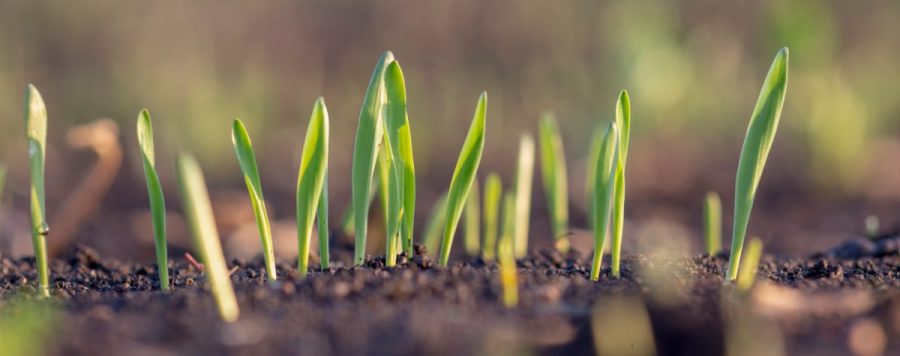
Rob adds that then, it’s important to understand whether P is actually being limited, which can be achieved through grain analysis. Equally, the visual signs of this can be clear, he says. “Early P supply is critical as it helps to set the foundation for the crop’s final performance. Without it, root systems can be small and underdeveloped, there can be a loss of early plant vigour versus what’s expected, and consequently, yield potential is reduced.
“Because later applications often can’t compensate for these effects, it means improving early P availability is critical. But remember, supply does not guarantee uptake,” he stresses.
As for calculating what P is currently being held in soils, methods such as Olsen P can be used to assess phosphorus status in calcareous types, while the Bray method is used in acidic situations. These results then form the P Index and can guide what action is taken next.
Christina raises that depending on the resulting indices, this will inform what aspects of ‘Protect it. Place it. Unlock it.’ are required. “For high P indices, this means improving the access to that nutrition (unlock and protect). Conversely, for low P indices and maintenance scenarios, the solution is to better protect what’s being applied (protect and place).”
For the ‘protect’ aspect of the guide’s recommendations, Rob highlights that one way to achieve this is to use phosphate protection technologies (PPT). These work on the proviso of reducing the fixation by soil minerals to maintain P in its plant-available form, he says.
“One delivery mechanism for PPT is to use a coating which is applied to the surface of starter fertiliser granules. When the granules dissolve and phosphate moves into the soil water, it’s the coating that enters the water first, sequestering cations that fix phosphate in the soil. These cations are then unavailable to react with the phosphate, extending its window for crop uptake,” explains Rob.
Then for ‘place’, this involves better targeting of P from the off, to increase early root interception and boost subsequent crop establishment. “These are typically protected microgranular fertilisers such as De Sangosse’s Primary P, PrimeStart or the Microstar range. Placed underneath the seed within the developing root zone, this helps to overcome the fact that phosphate is immobile once in the soil.
“And of course, by improving early establishment and rooting, this increases the crop’s ability to capture phosphorus and other nutrients from the soil throughout the rest of the crop’s life,” he highlights.
When it comes to ‘unlock’, this can be achieved by using products such as soil nutrient activators. Applied at the same time as conventional plant protection products such as pre-em herbicides, Rob says when applied to soil, cations preferentially bind to the product components, rather than phosphate or soil particle surfaces
“The cation complexes formed allow more phosphate to enter into the soil solution, but these complexes also enable plants to assimilate other cation nutrients such as zinc, copper and manganese that may be unavailable due to chemical fixation or multi-dentate bonding with soil particles. Soil nutrient activators are particularly relevant in moderate- to high-P index soils,” he notes.
Finally, other aspects such as in-season targeted nutrition, protected P seed treatments, biological stimulants and bacteria-based products can also be used to support the improved uptake of P and complement the soil-based supply.
For Christina, an essential part of the guide is that it highlights the impact of legacy P in soils, and its potential to be lost through run-off, erosion or drainage pathways. “Phosphate is an environmental concern as well as agronomic, and should be tackled head-on rather than simply accepted,” she stresses.
“P that isn’t captured by a crop remains in the system, and when it’s in surface water, it becomes a pollutant driving a process called eutrophication where excessive algal and plant growth degrades aquatic ecosystems. These are commonly known as algal blooms,” explains Christina.
Currently, 25-40% of phosphorus entering watercourses comes from agriculture, predominantly from soil erosion. Preferential flow sources include from mole drains, field drains and macropores in clay soils. Equally, high risk scenarios include applying P to bare or recently cultivated soil before rainfall, fields with steep slopes or compacted soils, and soils with a P Index of 3+.
For Tim, both the agronomic and environmental negatives associated with poor P uptake require a shift in behaviour from the whole sector. “But, I believe we’re starting to recognise the challenge and act accordingly. If we consider the story of placement fertiliser for example, 10-15 years ago that was barely in practice, while now, it’s commonplace. We require consistent cross-industry messaging to achieve a similar outcome for phosphorus use,” he stresses.
This all loops back to the demand for stewardship guidance, believes Rob. “By being proactive – testing soils, conducting grain analysis and using the techniques in the guide – phosphate applications can be better targeted and the crop’s access to the nutrient will be improved.
“It’s also critical that all mandatory buffer zones are adhered to, as well as Farming Rules for Water, plus general best practice for application. This will mean that as an industry, we can get phosphorus management right, for better crop performance and to protect water quality.”
To conclude, Tim believes the stewardship has the potential to make a significant impact. “Formalising a strategy and stewardship for phosphorus is a great way to devise an effective framework. The better we all understand how phosphorus behaves in the soil is a win-win for me, reducing our reliance on inefficient P and capitalising on existing soil resources.”
This article was taken from the latest issue of CPM. Read the article in full here.
For more articles like this, subscribe here.
Sign up for Crop Production Magazine’s FREE e-newsletter here.