

Hosting Cereals at Diddly Squat Farm marks a first for the event and potentially a shift in how it’s seen beyond the farm gate. But alongside the headline act, a strong technical line-up remains at its core. CPM explores what’s in store.
“We hope to shine a spotlight on farming in the UK and educate people about the challenges farmers face.” JEREMY CLARKSON
By Charlotte Cunningham
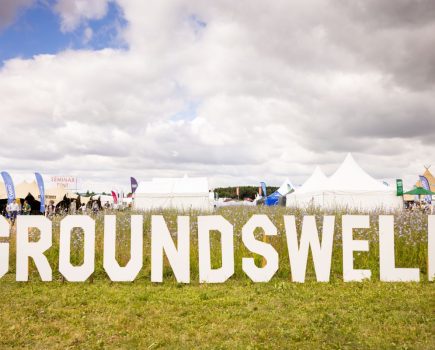
It’s not often that the location of Cereals Event 2026 becomes the talking point. Usually, attention is firmly on the plots, the kit and the conversations happening between them, but this year feels different.
For the first time, the event heads to Diddly Squat Farm – better known as the base for Jeremy Clarkson’s farming venture. And while that might sound like a novelty, there’s a sense it reflects something broader about the industry and where it’s heading.
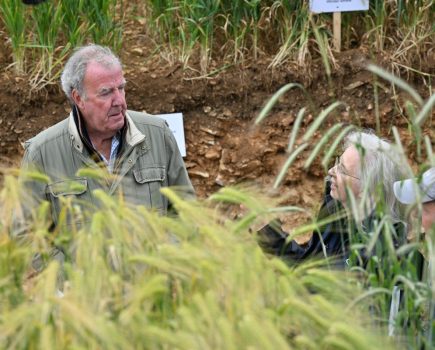
“Honestly, it’s an honour. To have such a big, prestigious event want to come to Diddly Squat fills my heart with gladness,” says Jeremy.
But beyond the setting, he’s clear on what the event represents. “To have an event like Cereals where farmers can come together; we’ll put a beer tent up and then everyone can sort of chat – that’s where ideas come from.”
That emphasis on bringing people together is central to the thinking behind the move. As Cereals’ Jonathan Backhouse explains, the shift west is about more than just a change of scenery.
“Historically, for the 20 years or so that I’ve been a visitor to Cereals, it’s alternated between two sites – one in Cambridgeshire, and one or two in Lincolnshire. It’s felt like the right time to bring it to a wider audience, slightly further west, and hopefully open it up to some different visitors. It’s representative of this area.”
There’s also a recognition that the venue brings a different level of visibility – something that has to be balanced carefully. According to Jeremy’s agronomist ‘cheerful’ Charlie Ireland, the priority remains firmly with the core audience.
“We know many fans of Jeremy’s show will want to attend the event, but we’ll ensure this remains a farmers-only affair,” he says. “Cereals has been around for years and is a major event on the agricultural calendar, allowing farming communities from across the UK to come together.
“Away from the cameras, Diddly Squat is like any other farm in the UK and is just as vulnerable to the maelstrom of issues that batter the agricultural sector – from the weather to the political climate,” he adds.
Jeremy echoes that point, highlighting the pressures facing the sector and the role the event can play in addressing them. “Farmers are facing so many issues at the moment and hosting Cereals was our chance to do something positive for the industry and showcase some practical advice and ideas for food producers. We hope to shine a spotlight on farming in the UK and educate people about the challenges farmers face.
“Cereals is an opportunity for us to come together and find the solutions we all require. We’re really looking forward to welcoming farmers from across the UK to this celebration of British farming.”
As well as a new venue, there are a number of new features at this year’s Cereals Event 2026, alongside several returning elements that continue to anchor the show’s technical offering. Among the new additions is a dedicated livestock zone, reflecting growing interest in integrating grazing into arable rotations. Whether driven by soil health, nutrient cycling or environmental schemes, the inclusion points to a broader move towards mixed systems thinking.
Knowledge exchange also takes a step forward, with expanded seminar and discussion areas focusing on regenerative systems, policy, and business resilience.
At the centre of the agronomy offering, the Ceres Rural winter wheat and barley feature brings trials into a working farm context. By comparing untreated, low-input and standard systems side by side, it offers a clearer picture of how varieties and agronomy perform under real-world pressure.
Across more than 600 crop plots, that same theme continues – not just what works, but how it works in practice. Alongside these developments, several established features return for 2026.
The NIAB Soil Hole remains one of the most visual demonstrations on site, exposing how rotations, cultivations and grazing influence soil structure and rooting. The NAAC-backed Land Drainage Hub also returns, bringing focus back to fundamentals – such as the fact that drainage still underpins trafficability and timeliness on many farms, and its impact on crop performance is often underestimated.
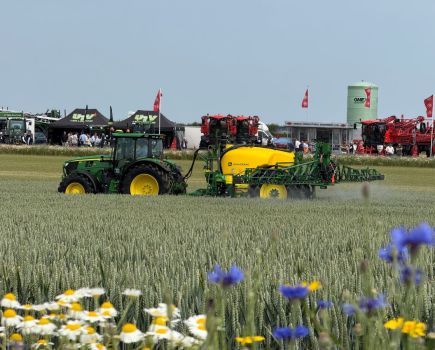
Meanwhile, the Sprays & Sprayers Arena continues to provide a live demonstration space for application technology. The winner of the Farm Sprayer Operator of the Year (FSOOTY) will also once again crowned here, recognising the skill required to deliver modern crop protection programmes effectively.
On the stands, here’s a look at just some of the newness at this year’s Cereals Event.
Establishment
Across establishment systems, the direction of travel remains towards reducing soil disturbance while maintaining output.
Horsch continues to develop low-disturbance systems based around wider row spacings and minimal soil movement. The move towards 25cm spacing is gaining traction, particularly in larger drills, where the balance between crop competition and reduced disturbance is becoming better understood. Feedback from growers suggests that while crops can appear open early on, canopy development evens out through the season, with little yield penalty but reduced herbicide reliance and improved rooting.
Alongside this, Amazone will debut the Condor 02 direct drill. Building on its established tine-based platform, the new machine introduces a more compact chassis while maintaining high-output capability. The addition of a rear harrow improves seedbed finish and extends the drill’s versatility across both direct drilling and min-till situations.
Crop protection
In crop protection, the focus remains on maintaining efficacy and managing resistance under increasing pressure.
Adama’s Gilboa introduces a new FRAC Group 32 mode of action in fungicides. In practical terms, this should represent a significant step forward, as it provides a new biochemical pathway for disease control at a time when resistance to existing modes of action is a growing concern.
For growers, the value lies not only in its standalone performance, but in how it can be integrated into programmes to extend the life of existing chemistry, says Adama.
Data
Digital tools continue to move towards greater integration and practical application, and this will be on display in abundance at this year’s Cereals Event.
Among them, Agrii’s Smart Connected Farm concept focuses on linking data streams across the farm – from soil sampling and crop scanning to drone imagery and historical field performance. Platforms such as Contour bring these datasets together, allowing decisions around variety choice, nutrition and application to be made within a single system.
Varieties
Genetic development continues to respond to changing disease pressures and evolving market demands. As such, RAGT will showcase varieties combining yield potential with traits such as BYDV resistance and virus yellows tolerance.
Meanwhile, Senova is focusing on varieties that aim to remove compromise between yield, disease resistance and agronomic performance. Candidate wheats such as NOS Beast combine high untreated yields with strong disease ratings, offering the potential to reduce fungicide reliance while maintaining output.
Across barley, the development of varieties with built-in virus resistance is becoming more prominent, while improvements in specific weight and standing power continue to drive performance. In oats and pulses, the focus is on increasing yield potential while maintaining quality for end markets, giving growers more flexibility within the rotation.
There’s also renewed interest in alternative break crops as part of that resilience drive. Premium Crops will be highlighting winter linseed as a credible option where oilseed rape is no longer an option. Unaffected by cabbage stem flea beetle and carrying lower overall input requirements, the crop offers a different risk profile within the rotation.
Machinery
Machinery development continues to focus on precision, efficiency and operator usability, with an array of kit set to be on display at this year’s event.
This includes John Deere’s 500R sprayer which combines high-capacity application with advanced precision technologies. With tank capacities up to 5000 litres and boom widths up to 36m, the machine is designed for large-scale operations where work rate and consistency are critical.
Technologies such as targeted spraying and telematics integration aim to improve accuracy and reduce input use, while also simplifying operation. The move towards subscription-based precision packages also reflects a broader trend, offering a more accessible route into advanced technology without significant upfront investment.
On the stage
Alongside the field-based features, the seminar programme is set to play a bigger role in 2026. Bringing together more than 100 speakers across the two days, the knowledge exchange programme focuses on some of the most pressing issues facing UK agriculture – from regenerative farming and policy change to business resilience and succession.
Sessions are spread across several stages, including the mainstage, BASE-UK regenerative stage and the Farmers Weekly stage, which will feature a Question Time-style format alongside practical discussion.
Key sessions to look out for:
| Session | Location | Day | Time | Focus |
| The business of regen: Scaling profit and resilience in the arable supply chain | BASE-UK Stage | Wednesday 10 June | 08:30 | How regenerative agriculture can deliver measurable returns. |
| Success stories: You couldn’t make it up | Young Farmers Programme | Both days | 9:00 | A candid, real-world look at farm succession. |
| Biologicals in modern farming: Do more | BASE-UK stage | Both days | 11:00 | An introduction to on-farm biologicals, exploring how they can improve soil and crop health. |
| Zero-till benefits | Seed to Shelf stage | Thursday 11 June | 09:00 | A practical overview of zero tillage systems. |
| From precision data to autonomous decisions: Making connected machines work | Young Farmers Stage | Thursday 11 June | 13:00 | How connectivity and real-time data are enabling precision farming and automation. |
The full programme can be found on the Cereals Event website.
This article was taken from the latest issue of CPM. Read the article in full here.
For more articles like this, subscribe here.
Sign up for Crop Production Magazine’s FREE e-newsletter here.