
After months of drought, the return of rain may be welcome, but it brings a new set of considerations for growers looking to make the most of organic manures ahead of autumn drilling. CPM explores how careful timing, planning and application could help turn a challenging window into a valuable nutrient opportunity.
“It’s not an easy situation, and there’s a risk that we could lose potential from the slurry from a farming point of view and risk run-off on particularly hard fields and on slopes.” HARRY HENDERSON
By Charlotte Cunningham
After one of the driest summers in recent memory, the sound of rain hitting shed roofs and the forgotten sight of puddles in yards has been welcomed across much of the country.
But while the change in weather may finally offer some respite for parched soils, for growers preparing to spread slurry and farmyard manure onto stubbles, the transition from one extreme to another creates something of a conundrum.
Apply onto ground that remains baked hard and slurry may sit on the surface rather than infiltrate, but wait too long and continued rainfall could quickly leave soils vulnerable to compaction, damage and nutrient run-off – all while the autumn drilling window edges closer.
This is according to BASIS’ Harry Henderson, who says this challenge makes the coming weeks something of a fine balancing act. “Farmers have to consider that there’s some rain coming to wash some slurries in, rather than let it sit on the soil surface,” he says. “But then again, there’s always that risk where we’ve seen before in past years, where in mid-September it starts raining and doesn’t really stop, and then you’re in a bigger situation where you have poor ground conditions and risk of run-off even more so.”
BEING PREPARED
Consequently, rather than simply waiting for the perfect opportunity, Harry believes this autumn is about having a plan and being prepared to act when conditions allow. For him, that means assessing fields individually and working out where the spreading window is likely to close first.
“Soil type, drainage, topography and current ground conditions should all feed into the decision, with those most vulnerable to deteriorating conditions pushed towards the front of the queue,” he advises. “Identify fields that you’re going to use, consider how quickly the field conditions could degrade, and get the poorest draining or the lowest lying fields identified first to receive manures and slurries, because the conditions could change quite quickly.”
He adds that it’s almost like prioritising harvest. “Know the fields that you need to deal with first, and have a plan.”
That field-by-field approach is particularly pertinent after the prolonged dry spell, and although recent rainfall should begin to soften ground, Harry says growers shouldn’t underestimate the potential for run-off where intense rain falls onto soils which remain hard and unable to readily absorb water. “There’s a risk of run-off on hard soils and torrential downfalls. That’s probably more so with slurry, that’s a bit more potent than FYM.
“I think we are where we are. It’s not an easy situation, and there’s a risk that we could lose potential from the slurry from a farming point of view and risk run-off on particularly hard fields and on slopes.”
NUANCES
The distinction between slurry and FYM is important, he adds. Whereas slurry requires particularly careful consideration because of its ability to move across the soil surface, FYM may offer greater flexibility where ground conditions remain suitable for travelling.
That said, making the most of either starts with understanding exactly what’s being applied, he notes. “I think you always need to know what you’re applying from a farming and plant nutrition point of view, and from a regulation perspective, that you have yourself covered and know what you’re applying.”
Analysis can therefore help growers to understand both nutrient content and appropriate application rates, particularly where manures or digestates are being imported onto an arable unit, he advises.
However, for Harry, there’s a bigger opportunity at stake than simply finding somewhere suitable to spread before drilling begins. With bought-in inputs remaining a significant cost to arable businesses, he believes organic manures should increasingly be viewed as a nutrient resource capable of contributing to crop requirements – although he acknowledges there’s still work to do in changing attitudes.
“I think we still have some way to go before we really see it as a resource. I think we’re still thinking it’s a product to be disposed of rather than a product that could help reduce a synthetic fertiliser bill and help to reduce your carbon footprint.”
FYM also brings organic matter benefits, while slurry, digestate and other organic materials all have a potential role within a wider crop nutrition strategy. As such, Harry stresses the key to getting the most from these resources is putting a value on them. “Get a cup of coffee and do some analysis. Get the results in, sit in front of a computer and consider the fields that you know best, and work out a plan of utilising the slurries to their fullest value.
“Push yourself to make better use of it and better understand plant nutrition, and the end result is the reduction of your synthetic fertiliser bill.”
Once the nutrient value is understood, attention turns to getting as much of it into the soil – and ultimately the following crop – as possible. Vogelsang’s Andy Hayhurst says that’s especially important during warm post-harvest conditions, when poor storage and application can result in valuable nitrogen being lost.
He suggests thinking of post-harvest slurry management as a two-stage process rather than assuming everything has to be applied to bare stubble in one pass. Applying a proportion now can begin returning nutrients to the soil, while retaining some slurry for application once the following crop is established may allow growing plants to make greater use of those nutrients, he adds.
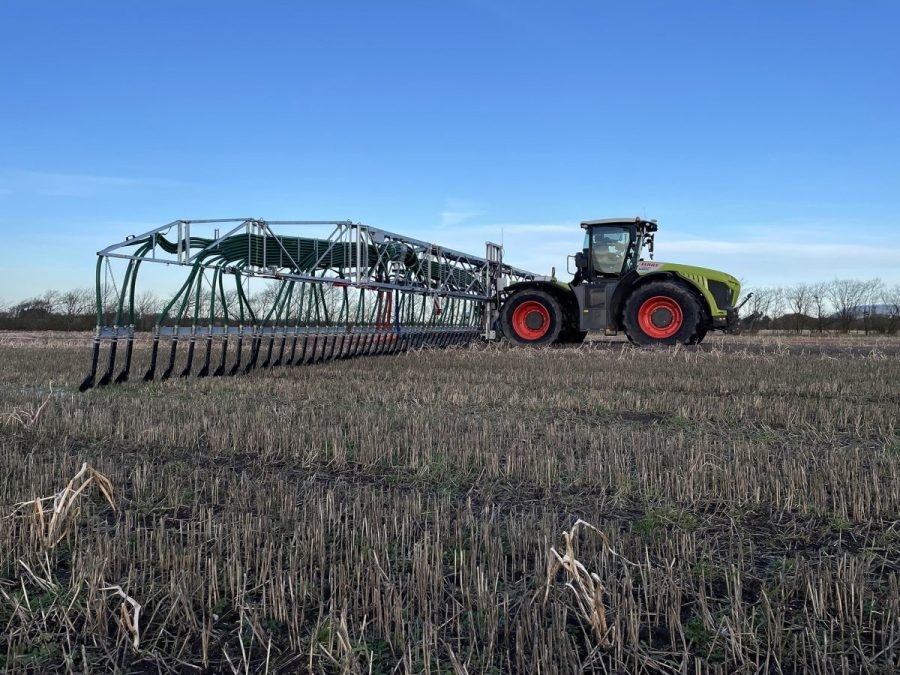
Slurry condition matters too and Andy says effective separation and covering stores can help to retain nutrients, while well-separated material is easier and cheaper to pump and lends itself to more accurate application through dribble bars or trailing shoes. The liquid fraction is also absorbed more readily, helping to reduce the potential for ammonia losses where warm conditions persist, he raises.
Matching application to individual fields is equally important. Different soil types have differing capacities to absorb slurry, says Andy, making soil and slurry analysis, field mapping and – where available – variable rate application useful tools for matching applications more closely to requirements. This becomes particularly valuable if slurry is applied after establishment, where excessive volumes could swamp both soil and young plants.
NUTRIENT PLANNING
Harry continues that precision shouldn’t end when the tanker leaves the field. Where application technology is capable of monitoring slurry constituents or mapping application rates, he encourages growers to retain that information and use it within wider nutrient planning. “If there’s technology that can monitor either the slurry constituents or the application rates of FYM on a field mapping basis, get the maps.
“Look at the application rates. It’s always good to improve farm management and nutrient management, and it’s always good to be able to record what you do generally and build up a picture of your application rates.”
Where contractors are carrying out the work, growers should also discuss the application system available, with low-emission equipment such as dribble bars, trailing shoes or injection helping to reduce ammonia losses. Practical considerations shouldn’t be forgotten either, adds Harry – particularly as slurry equipment has become larger. “Access, gateways and bridge capacities all have to be considered before machinery arrives on farm,” he advises.
Ultimately though, this autumn may come down to timing and Andy says the ideal opportunity is neither the bone-dry conditions experienced through much of the summer, nor the heavy rainfall which has followed. Instead, the target should be cool, cloudy conditions after enough rainfall to improve soil absorption without leaving ground saturated.
But with autumn conditions capable of changing rapidly, Harry’s overriding message is to not wait until the spreading opportunity has already arrived before deciding what to do. That means knowing which fields are priorities, what nutrients are available, the rates required and whether soil conditions are capable of receiving them – then being ready to move.
“It’s an approach which fits into a wider need to scrutinise autumn expenditure following another challenging season, he concludes. “All the businesses that a farm will buy from are hard-nosed businesses. All the businesses that you will sell to are hard-nosed businesses. It’s very high time to be the same.”
This article was taken from the latest issue of CPM. Read the article in full here.
For more articles like this, subscribe here.
Sign up for Crop Production Magazine’s FREE e-newsletter here.