
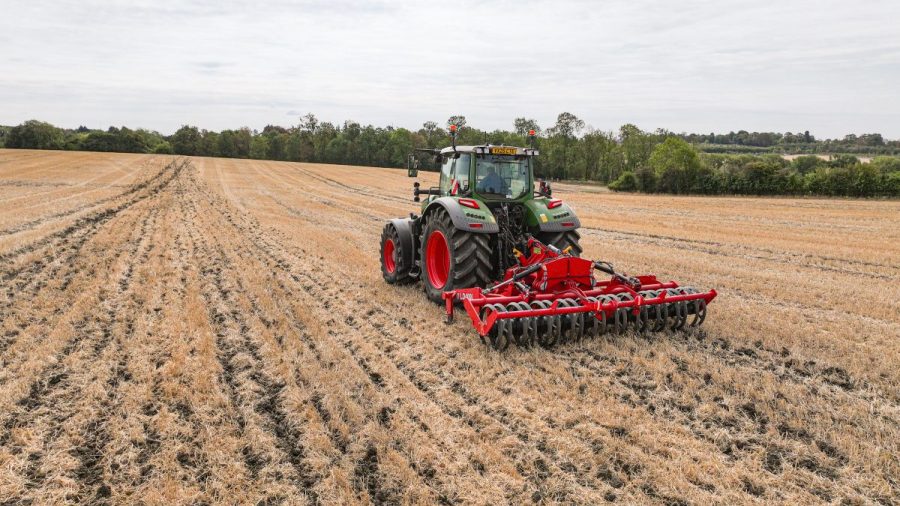
Reducing soil movement has transformed establishment systems on many farms, but heavy land continues to present unique challenges. CPM explores how research and on-farm experience suggest low disturbance subsoiling can relieve compaction, improve rooting and maintain the benefits of reduced tillage.
“The important thing with a properly set-up low disturbance subsoiler is that you really shouldn’t be able to tell it’s been through.” JOHN MILES
By Charlotte Cunningham
For growers farming heavier land, direct drilling has often presented something of a contradiction. While the benefits of reducing soil movement are well understood – improving soil structure, conserving moisture and lowering establishment costs – maintaining crop establishment, managing blackgrass and overcoming compaction without reverting to more intensive cultivations has proved considerably more difficult.
It’s a balancing act many businesses continue to grapple with – leave compaction unchecked and rooting, drainage and crop performance can all suffer, but tackle it with aggressive cultivations and there’s a risk of undoing years of progress by disturbing weed seeds, drying the soil profile and compromising the surface structure that reduced tillage systems rely on.
Finding that middle ground has become a major focus at Agrii’s Stow Longa technology centre in Cambridgeshire. Situated on the heavy, high-silt soils that account for an estimated third of England’s arable land, the site’s long-running cultivation trials have spent more than a decade exploring how growers can alleviate compaction while preserving the benefits of reduced cultivation.
According to Agrii’s John Miles, Stow Longa’s findings are relevant well beyond the trial plots themselves. “Stow Longa is representative of an estimated 30-35% of the arable area,” he explains. “You’re looking at heavier soils with impeded drainage, relatively high silt and clay contents, which are common across much of the Midlands and Eastern Counties.”
Those soil characteristics create a unique set of establishment challenges, adds John. Heavy soils naturally hold more moisture, making drilling windows tighter, while high silt contents can wash down through the profile to create a naturally occurring compacted layer beneath the surface.
Add machinery traffic, crop residues and blackgrass into the equation, and successful establishment becomes increasingly difficult. “Direct drilling has always been more challenging on heavy soils because it’s moisture- and tilth-related,” says John. “Compaction, whether it’s mechanical or caused by the silt layering down, is always going to be prominent – and then residue management has a huge impact as well.”
He adds that blackgrass is often the factor that turns a small establishment problem into a significant financial one. “When you have those heavy soils with a blackgrass burden, the last thing you want is a suboptimal plant stand. You lose twice over because the crop won’t yield, and because the blackgrass has an absolute field day in the light, heat and space that’s created.”
That understanding has evolved through the Stow Longa rotations project, which has compared a range of cultivation systems over more than 12 seasons. Originally centred around continuous ploughing, deep one-pass cultivation and direct drilling, the trial has evolved as the team’s understanding of residue management, soil structure and establishment has improved.
“In the early days, the plough always came out on top,” recalls John. “But that wasn’t because the plough was inherently better. It dealt with the structure and the trash and gave us a good establishment, while the way we managed it meant we minimised any further soil movement before drilling.”
As the project progressed, the focus shifted from comparing cultivation systems in isolation towards understanding why direct drilling sometimes struggled on these heavier soils. Over the years, the team worked through virtually every variable affecting establishment – from straw management and cover crop destruction to slug pressure, drilling technique and residue handling. “We’ve learnt all the lessons there are around these variables,” says John. “Once we’d improved those areas, we started looking much more closely at the underlying soil structure.”
One recurring issue was the combination of machinery traffic and the site’s naturally high silt content. Around 60% of the trial area experiences some level of trafficking each year due to research activity, while fine silt particles gradually wash down through the profile to create a dense layer approximately 13-15cm below the surface that restricts rooting and drainage.
To tackle that without undoing the benefits of reduced tillage, Agrii introduced low disturbance subsoiling during the 2020/21 season. “The key was finding a way to address those structural issues without making the blackgrass worse,” explains John. “As soon as you start moving the soil and bubbling it up, you unlock the perfect conditions for blackgrass.”
Instead, the objective was to fracture the compacted layer while leaving the soil surface largely untouched. “The important thing with a properly set-up low disturbance subsoiler is that you really shouldn’t be able to tell it’s been through,” he says. “If you can see lots of disturbed soil on the surface, you’ve probably moved too much.”
However, Stow Longa’s work has also shown that timing is equally as important as machinery choice. Ideally, John recommends operating immediately after harvest while some moisture remains within the soil profile. That allows sufficient fracturing beneath the surface without creating excessive disturbance above it, while leaving time for any weeds that do emerge to be controlled before drilling.
Last season provided exactly that lesson, he says. “We knew it was too dry and didn’t really think compaction would be an issue because we hadn’t had the rainfall,” he explains. “But we decided to use a low disturbance drill on one block as a learning point.”
John adds that while establishment improved thanks to better drilling conditions, the downside was equally clear. “We nearly doubled our blackgrass ear numbers where we used the LD compared with where we didn’t in the direct-drilled plots. They were still relatively low numbers, but the difference came purely from moving too much soil.”
While at the Huntingdon site, where previous work has shown every 100 blackgrass ears/m² can equate to around 1t/ha of lost wheat yield, even relatively modest increases matter, he adds.
For John, the key lesson from more than a decade of work at Stow Longa is that successful establishment on heavier soils depends less on committing to a single cultivation system and more on understanding when intervention is genuinely required. “We’re not really talking about direct drilling anymore,” he says. “We’re talking about an adapted establishment system.”
That means combining careful residue management with targeted soil loosening where necessary, while recognising there’s still a place for a rotational plough when blackgrass pressure or soil condition demands it. “It’s about using the right tool, in the right conditions, for the right reason.”
This is a philosophy increasingly reflected in machinery development, with manufacturers focusing on relieving compaction where it’s required while leaving the soil surface largely undisturbed.
That thinking prompted Weaving Machinery to develop its Low Disturbance (LD) subsoiler in 2017. According to managing director Simon Weaving, the aim wasn’t simply to produce another subsoiler, but a machine capable of fracturing soil beneath the surface without excessive movement above it.
“We felt that by using a smaller point and wing to lower disturbance, you needed the legs to be closer together because you want the fracturing underneath the ground,” he explains.
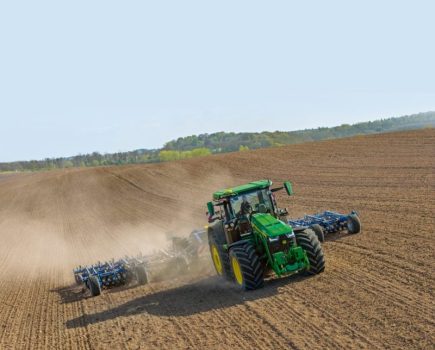
Unlike many conventional designs, the LD subsoiler dispenses with a front cutting disc, instead relying on two rows of legs set 1.2m apart. According to Simon Weaving, the wider spacing reduces draft requirement while limiting interaction between the legs, helping to achieve the desired underground shatter without unnecessary surface disturbance. “The legs aren’t fighting against each other,” he says. “You get the fracturing underneath, but you’re not bringing a lot of soil to the surface.”
A 700mm press roller behind each leg then gently reconsolidates the disturbed strip while leaving most of the surface intact.
As more businesses adopt reduced tillage and direct drilling, Simon Weaving believes growers are increasingly looking for ways to improve soil structure without reverting to full-width cultivations. However, he cautions against viewing low disturbance cultivation as an overnight route into no-till. “If you’re someone looking to lower your disturbance on farm, going from moving a lot of soil to no cultivation is like turning off a tap,” he says. “For good crop establishment, you still require tilth.”
Instead, he sees low disturbance subsoiling as part of a gradual transition, relieving compaction while maintaining surface residue and moisture. “Our best customers use it as part of a rotation,” he explains. “They’re just going into the soil, getting a bit of air in, lifting it like a carpet, gently rolling it back down and then drilling into it.”
He adds that many growers now operate a low disturbance subsoiler alongside shallow discs, selecting whichever tool best suits field conditions rather than relying on a single cultivation strategy. “If there’s plenty of natural ground fracturing, you might just use a short disc,” says Simon Weaving. “Whereas if there’s enough tilth on top but compaction underneath, you’ll just go in with an LD.”
As with any cultivation, success depends on understanding soil conditions before entering the field. “It’s very important that customers assess their soil first,” he advises. “Look where the compaction is, make sure the machine’s set correctly and make sure it actually needs doing.”
That measured approach is one Simon Cottle has adopted on his mixed farm in Wiltshire – a 324ha arable enterprise plus 243ha of grass supporting a 300-cow suckler herd.
Historically, the business ploughed and power-harrowed virtually every hectare before drilling across its mixed soils, ranging from Cotswold brash through to sandy loams and heavier clays. However, rising establishment costs prompted a gradual reassessment of the system and Simon Cottle says the arrival of the LD subsoiler marked a significant step forward.
“It’s just a marvellous piece of machinery,” he says. “It moves the ground underneath with the micro wings, but doesn’t break the top too much so you don’t lose your moisture.”
That’s proved particularly valuable on the heavier clay areas of the farm, he notes. “If you have some clay ground, it doesn’t bring all of those hard clay lumps to the surface which can then dry out. It’s moving everything underneath without creating surface disturbance.”
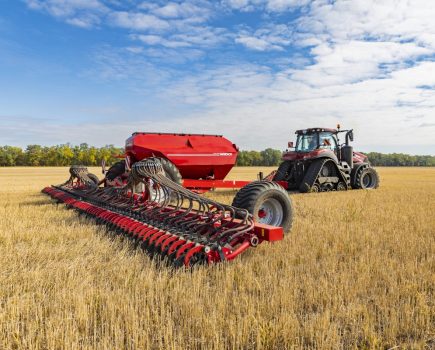
The farm operates a 4m LD subsoiler behind a 240hp Case Puma, typically working at 8-9km/h and depths of around 18-25cm depending on field conditions. Rather than maintaining a fixed working depth, Simon Cottle deliberately adjusts it to avoid creating another cultivation pan lower in the profile.
This season, the machine has already been used behind winter barley, where retained residues have helped protect soil moisture despite the dry conditions. “It’s done a fantastic job,” he says. “We were literally down to 10 l/ha with the 4m machine, which was great.”
Following cultivation, the farm allows volunteers to chit before drilling directly with its Weaving Sabre Tine drill. “I think people misconstrue the idea of a tine drill,” says Simon Cottle. “When you’ve loosened the soil properly, you can run the tines a bit deeper and create a rooting zone for the crop rather than just scratching the surface.”
Importantly, despite reducing cultivation intensity, crop performance has remained consistent. “I don’t think the yields have dropped off,” he concludes. “We’ve reduced our cultivation costs, conserved moisture and we’re still maintaining productivity, which is exactly what we wanted to achieve.”
This article was taken from the latest issue of CPM. Read the article in full here.
For more articles like this, subscribe here.
Sign up for Crop Production Magazine’s FREE e-newsletter here.