
Integrating livestock, lowering inputs and building healthier soils are helping to reshape the farming system at one Gloucestershire estate – with collaboration proving an important part of the equation. CPM finds out more.
“Change essentially came as a way of mitigating our exposure to risk and the large capital investment upfront.” – PETER CLIFFORD
By Charlotte Cunningham
Mixed farming may be one of agriculture’s oldest concepts, but perhaps what’s more interesting is how that’s now evolving physically on farm.
Because bringing livestock back into an arable rotation doesn’t necessarily mean buying a herd or flock, investing in handling facilities or completely restructuring a business. Sometimes, it can simply be about looking over the hedge and considering what resources already exist locally.
COMING TOGETHER
That’s certainly proving to be the case at Frampton Court Estate in Gloucestershire, where a relationship with neighbouring dairy farmer Ed Spencer has helped Peter Clifford transform what was once a relatively intensive arable system. “We’ve effectively created a mixed farm out of our arable farm with his input,” says Peter.
It’s a simple statement, but one which rather neatly sums up what’s happened at Frampton during the past three years. Peter runs the 607ha estate in partnership with his parents, with around 162ha of arable cropping and a further 243ha of grassland, alongside lakes, woodland and a diverse range of other enterprises including holiday lets, weddings and events, and rental property.
But while the business is diverse, until relatively recently the arable enterprise was considerably more conventional. “There were more intensive cultivations and a little bit of ploughing, but also quite a lot more variable inputs – synthetic fertiliser, pesticides and herbicides,” says Peter. “It was a lot more fuel, machinery and time.”
Then, around 2023, his thinking began to change. The motivation wasn’t necessarily to pursue a particular system or environmental ideal, but to look more critically at what it was costing to establish and grow crops – and the level of risk attached to that investment, he explains. “Change essentially came as a way of mitigating our exposure to risk and the large capital investment upfront.”
Peter says that meant questioning which parts of the system were really necessary and where costs and intervention could be stripped out, while still retaining the flexibility to react when conditions required it. “What we found is that for us, less is more,” he says. “We’re now low input and concentrate on keeping costs and soil disturbance to a minimum.”
In the field, that can now mean direct drilling straight into stubbles or using a stubble rake beforehand. Discs haven’t disappeared altogether and remain an option where they’re genuinely required, he adds. “We’re pretty flexible, depending on the year and the cropping.”
He says this is a particularly important ethos of the system – rather than swapping one prescriptive system for another, the aim is to use as little intervention as conditions allow.
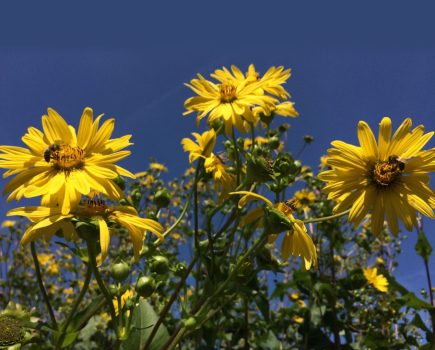
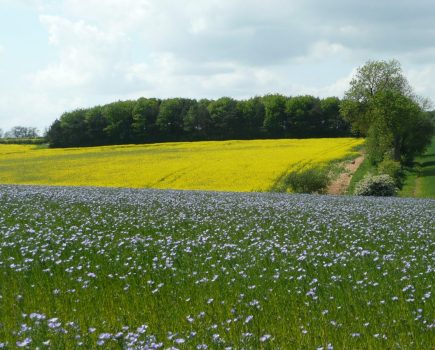
The rotation itself is diverse, encompassing milling rye, winter and spring rye, maize, sunflowers and field beans, alongside winter and summer cover crops and herbal leys. And while machinery and establishment have clearly played a role in the transition, arguably one of the biggest changes to the arable system hasn’t involved cultivations at all…
For the past three years Peter has been working closely with neighbouring dairy farmer Ed, whose family previously farmed organically and therefore brought experience which has proved useful as Frampton has reduced inputs and disturbance. At first glance, the basis of the relationship is simple. “Ultimately, it’s just a handshake between me and him,” explains Peter.
MUTUALLY-BENEFICIAL
In more detail, through a muck-for-straw swap, cereal straw leaves Frampton Court while Ed’s farmyard manure or slurry travels back in the opposite direction. For Peter, it provides another source of fertility as he attempts to reduce the arable enterprise’s reliance on synthetic inputs. For Ed, there’s a use for the cereal straw being produced next door.
But what could simply have remained a convenient transaction between two neighbouring businesses has developed into something considerably more integrated. “We plan the rotation together and make any key management decisions together – sales, purchases and crop types,” explains Peter. “For the past three years we’ve been working with Ed and he’s been key to the transition we’ve made from an intensive arable system to fully extensive.”
In effect, livestock fertility has returned to the arable rotation without Peter having to own the cattle which produce it – while Ed’s experience has also become part of the decision-making process. And cattle aren’t the only livestock now playing a role. A second relationship with local grazier Scott Finley sees sheep brought onto Frampton Court to graze both winter cereals and cover crops, with up to 500 ewes and lambs moving across the farm.
Again, it’s not simply a case of opening the gate and letting someone else get on with it. Peter says communication between farmer and grazier is fundamental to ensuring the crops aren’t pushed beyond the point at which grazing remains beneficial. “He’s very well organised and has a good electric fencing set-up,” he explains. “Communication between us is key and he’ll know exactly when to move his sheep on when the plants have been grazed enough.”
As they move, the sheep are doing more than simply removing biomass, he adds. “They’ll muck steadily across the field, so that fertility is being brought in. They’re obviously light as well, so their feet will push that in without poaching the ground.”
Then there’s what happens to the crop itself, points out Peter. “By grazing leaf material from the growing winter cereals we can avoid a fungicide treatment later in the season, providing another opportunity to take cost out of the system. There’s a saving there, and there’s also a small income from the tack.”
Put the two livestock arrangements together and a rather different version of mixed farming begins to emerge. Frampton doesn’t have to carry the capital cost or infrastructure associated with owning the animals, while neighbouring businesses gain access to straw or grazing. Meanwhile, muck, slurry and grazing become tools within the arable rotation, helping Peter move towards the lower-input system he’s aiming for.
And while the transition is still relatively young, he says there are already indications that changes are taking place beneath the surface too. “We measure our organic matter, which has steadily been going up over quite a short space of time.”
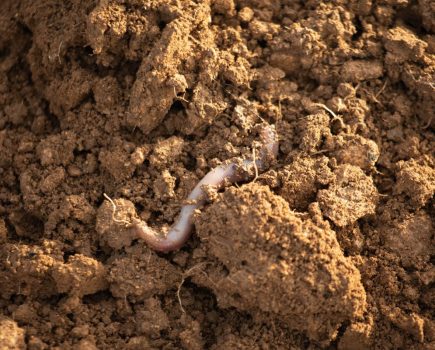
For Peter, this focus on soil health is becoming an increasingly important part of how he thinks about both the productivity and longevity of the farm, and he believes that growing interest in what’s happening beneath the crop may also explain why similar approaches are attracting more attention across the industry. “I suppose there’s more of an awareness now of what’s going on under our feet,” he says. “There’s a whole other world under there that we don’t really know a great deal about.”
However, at Frampton that thinking doesn’t stop at soil. The wider estate encompasses a diverse range of land uses and habitats. Alongside the arable ground and grassland are woodland and lakes, while around 40ha is being managed for the creation of wood pasture. Species-rich ancient hay meadows and the restoration of ‘ghost’ ponds are also among the features being managed across the estate.
BEING MINDFUL
For Peter, those habitats form part of a broader recognition that the way land is managed has consequences beyond the crop being harvested from it. “There’s an awareness of species decline in what is not a very long space of time – perhaps 50 years,” he says. “And an awareness of what we’ve done to our planet.”
But importantly, the environmental side of Frampton isn’t being viewed separately from its role as a productive farming business. The estate has a Higher Tier Countryside Stewardship agreement covering much of its land, while SFI options across the arable fields and hedgerows include cover crops, hedgerow management, no-pesticide options and maintaining winter cover following maize.
In many ways, those measures sit alongside the same thinking which has driven the changes within the arable rotation – reducing unnecessary inputs, keeping soil covered and considering how different elements of the farm can work together.
And it’s that combination of productive farming and environmental management which recently earned Peter national recognition. He was named winner of the 2026 Farming and Wildlife Advisory Group National Silver Lapwing Award, selected from five finalists for his approach to combining commercial farming with a broad range of habitats across the estate. The award recognises farmers who go further to protect and enhance the countryside while demonstrating that food production and environmental management can sit alongside one another.
At Frampton, judges particularly highlighted the breadth of habitats being provided, however, Peter admits the win wasn’t something he saw coming. “I was very pleasantly surprised to have won it.”
Perhaps fittingly, Ed was alongside him when he collected the trophy – reflecting just how collaborative the changes at Frampton have become.
But there’s still plenty Peter wants to achieve, and looking 5-10 years ahead, one of his main aims is to remove synthetic fertiliser from the arable enterprise altogether. “I’d love to get the arable off synthetic fertiliser so we’re more self-sufficient here in Gloucestershire,” he says.
Doing so would inevitably place even greater emphasis on the muck and slurry coming from Ed’s dairy enterprise, as well as continuing to build soil health. But reducing inputs is only part of the plan. “We want to keep increasing profitability,” he stresses.
There are other ideas in the pipeline too, including what he describes as an ‘interesting agroforestry experiment’, which would involve establishing native trees from seed within arable fields. The hope is to find a way of establishing those trees without irrigation, while Peter would also like to see the local community become more involved with the estate in future.
However, for all of the changes being made, there’s a fairly simple reason why the longer-term resilience of the farm matters to him. With two young children, Peter hopes they’ll have the opportunity to take on the business themselves one day – and believes looking after the soil now is an important part of making sure that option is there for them.
“I want to be in a place where I can give them the opportunity to run the estate,” he concludes. “So to do that, the ethos has to be about sustainability and longevity, and I see soil health and integration between enterprises as key to that.”
his article was taken from the latest issue of CPM. Read the article in full here.
For more articles like this, subscribe here.
Sign up for Crop Production Magazine’s FREE e-newsletter here.