
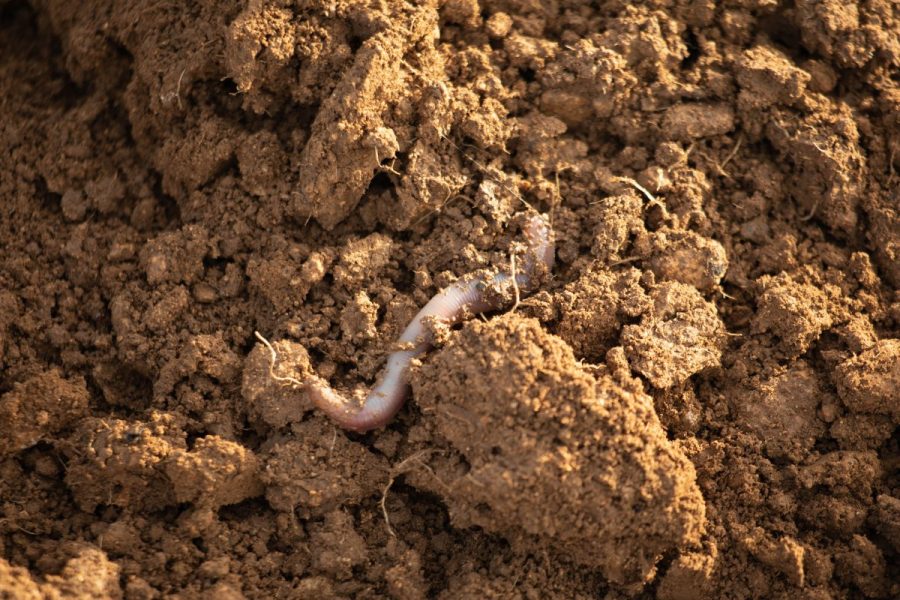
Data from a long-term tillage and traffic research project confirms that leaving the soil undisturbed gives the greatest soil health benefits. CPM talks to the researcher who’s painstakingly monitored soil fauna and carbon levels during the past three years.
“It’s in the hands of the farmer to create an environment for soil organisms to flourish.” MAGDA KACZOROWSKA-DOLOWY
By Mike Saull
According to Harper Adams researcher, Dr Magda Kaczorowska-Dolowy: “Soil biology is our best friend, but you have to create favourable conditions for fauna to thrive and be aware that traffic and tillage markedly shape that environment.”
Those views are based on her recently published research – outcomes of a long-term study initially focused on the physical condition of soil, crop yield and the cost/benefits across a range of cultivation and soil trafficking systems.
Established in 2011, the work confirms significant improvements from minimising trafficked areas as well as cultivation depth. Three tillage systems (no-till and operating to 25cm and 10cm depth) were subjected to three traffic systems, namely traffic with standard and low inflation pressure tyres, and no traffic from the non-wheeled zones of Controlled Traffic (CTF) plots.
As a continuation of this initial work, Magda’s research has now assessed soil biology and health as well as soil organic matter (SOM) content on the site.
ORGANIC MATTER
Her work shows that 10 years in, soil organic matter content varies greatly according to cultivation practice, with levels at 0-10cm depth at 4.44% and 4.35% on zero and minimally tilled soil, but just 4.11% where deeper loosening had been the norm. In addition – contrary to research elsewhere – these carbon improvements weren’t associated with a depleted carbon content down the soil profile.
“By breaking down soil aggregates through more aggressive tillage, we’re opening up the soil to the breakdown of organic matter and soil carbon loss,” explains Magda. “While the 0.3% magnitude in change in OM between treatments may appear small to some, it’s highly important in terms of the capacity of the soil to store nutrients and hold water.”
Magda points out that with global warming, rainfall event intensity is increasing, combined with longer, dry spells. Therefore, such a rise in organic matter will bring an increase in water holding capacity of the soil, increasing moisture availability throughout the growing period.
Higher levels of organic matter also improve storage of applied fertiliser nutrients in a soil that’s less at risk of erosion from run-off, water course pollution or eutrophication issues, she raises.
Furthermore, on the back of this increased organic matter content and better soil porosity, Magda has recorded higher numbers of springtails where traffic was controlled, and more earthworms under zero-tilled systems compared with those that had been tilled.
Using plastic sticks dotted with holes every 5mm and filled with bait, she was able to record the overall soil fauna feeding activity by assessing the level of food consumed. This soil metric demonstrates a 100% improvement on un-trafficked CTF soils compared with trafficked plots, regardless of tyre pressure.
“Soil is very abundant in soil organisms like springtails or mites, as well as microorganisms like bacteria. These organisms readily feed on plant residues and return nutrients back to the soil but aren’t strong enough to create the porosity they require to survive.
“So, it’s in the hands of the farmer to create an environment for them to flourish. They require space and oxygen, so by increasing porosity, populations increase,” she explains.
Magda concludes that the higher volume of soil pores in the un-trafficked soil – with its free movement of air and water – increases the feeding rate and number of springtails .In the looser soil under controlled traffic farming, numbers of these specific springtails averaged around 4000/m2 compared with just 2700/m2 under a random trafficked soil where cultivations were carried out using standard tyre pressures. In trafficked soil plots with cultivations carried out at low tyre pressures, springtail numbers were around 3300/m2.
With earthworms, there was no significant difference between traffic systems; increased topsoil compaction had little effect on population numbers. However, tillage treatment is significant, with the greatest number of earthworms found where the soil had been tilled less aggressively.
WORM COUNTS
Under deep cultivation, earthworm numbers were as low as 78/m2, rising to 128/m2 under shallow cultivation. But in zero tillage plots, the earthworm population was significantly higher at 183/m2.
Magda also assessed total earthworm biomass, finding that under zero-tillage this was more than double that measured under deep tillage. “Earthworms are our greatest helper in terms of structuring and improving drainage of soils, and this beneficial effect isn’t something any famer should ignore,” she says.
“Reducing the amount of mechanical damage and leaving the soil undisturbed promotes longer feeding periods and cocoon production.”
Looking at physical soil condition, bulk density values and penetration resistance were highest under the more intensive trafficking systems. This mirrored assessments of porosity which on the other hand were much greater in un-trafficked plots, raises Magda.
In addition, under controlled trafficking, infiltration rates measured by hydraulic conductivity were 5-8 times greater than on the compacted soils under wheel passes with standard tyre pressure plots. “This is important, not just from our need to store water in soils and capture it for crop growth, but also to prevent run-off and soil loss,” she urges.
Magda argues that the sandy loam soil of the long-term experiment site is typical of a large area of the UK’s nationally farmed land and that similar effects on other soils should be expected. “Research by others on a clay-based soil in Cambridgeshire are pretty much in line with what wev’e seen,” she notes.
“It’s possible that a sandier soil than the one we used at Harper Adams would be even less structurally stable and so would require even greater care and attention to maintaining organic matter and soil fauna in order to maintain good soil health.
“Looking at the complete picture and acknowledging the need to restructure serious compaction where it’s seen, it really is important to minimise soil disturbance and reduce operations that re-compact the soil particularly once it’s been loosened.
“Any level of soil disturbance degrades the environment, reducing soil health and the number of soil organisms critically important for maintaining the soil carbon pool,” says Magda.
She adds that early conclusions by other researchers on the site prove that in the long-term, once soils have stabilised, it’s uneconomic as well as unnecessary to use regular deep tillage from the farm gross margin point of view.
While there are initial yield loses from reduced cultivations, reduced inputs mean that farm gross margins are comparable, and with minimal or zero cultivated soil for five years, the soil health benefits soon build.
Controlled Traffic Farming (CTF) offers additional benefits when it comes to soil health and it’s a case of matching machinery operating and track widths to suit farm size and maintaining the traffic lanes, says Magda. “However, this approach requires discipline from all farm workers and subcontractors,” she concludes.
This article was taken from the latest issue of CPM. Read the article in full here.
For more articles like this, subscribe here.
Sign up for Crop Production Magazine’s FREE e-newsletter here.