
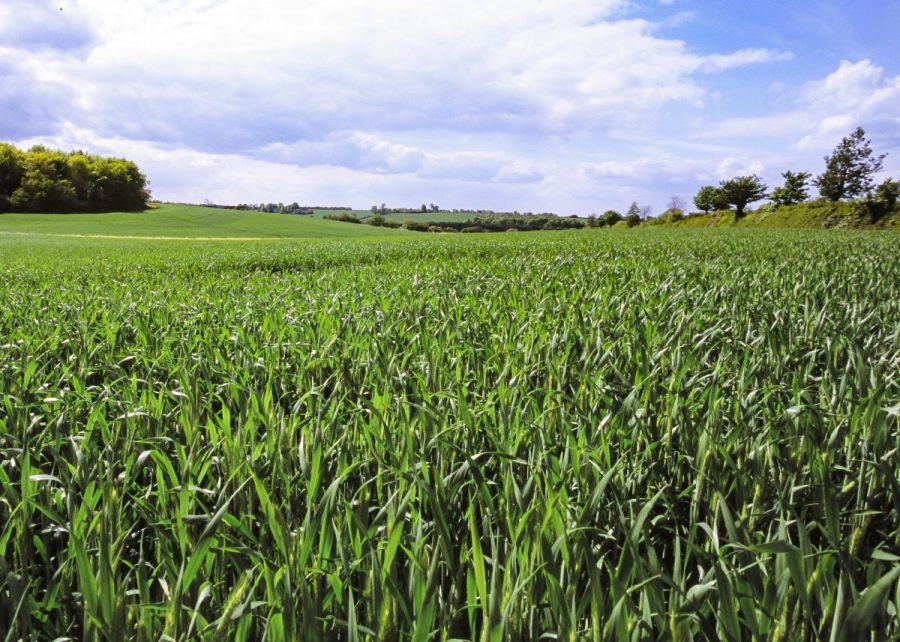
As margins tighten and rotations come under increasing pressure, growers are looking beyond individual crops. CPM explores how well-chosen break crops can unlock productivity across the whole rotation.
“There’s increasing recognition that some of the biggest gains come from carefully selected break crops.” HARRY COTTON
By Charlotte Cunningham
For many growers, ’resilience’ has become one of the most overused words in agriculture. Yet after another season shaped by prolonged dry conditions, fluctuating commodity markets and continued uncertainty around future support payments, it’s arguably never been more relevant.
Independent agronomist Harry Cotton says the challenge is that resilience isn’t something which can be engineered through variety choice or fungicide programmes. Instead, it’s built over time through carefully considered rotations, with every management decision contributing to the long-term performance of the farming system.
“Resilience is about building a system that performs through wet years, dry years, volatile markets and all the ups and downs that come with producing global commodities. Every crop should have a purpose, whether that’s financial, agronomic or environmental. There has to be a reason why it’s there.”
THE BIGGER PICTURE
It’s a philosophy that reflects a broader shift in thinking across many arable businesses. Rather than judging crops purely on the margin they generate in a single season, there’s increasing recognition that some of the biggest gains come from carefully selected break crops and the way they influence the wider rotation, says Harry.
“Whether that’s improving soil health, disrupting weed, pest and disease cycles, or creating opportunities for the following crop, their value often extends well beyond the year in which they’re grown.”
As he points out, diversity almost always reduces risk. “Whether that’s growing different crops, introducing companion cropping or simply increasing diversity within the rotation, every additional crop gives you another tool in the toolbox,” he explains. “It helps break disease cycles, disrupt pest populations, improve nutrient cycling, alter rooting patterns and gives you more management options. Monocultures generally increase risk, whereas diversity spreads it.”
That diversity extends beyond crop choice alone. Longer rotations can improve soil biology, organic matter and moisture retention over time, while different drilling and harvest timings help spread workload and reduce operational bottlenecks. “Soil resilience underpins crop resilience,” he continues.
“Over several rotations you should be seeing improvements in organic matter, biological activity, earthworm populations, nutrient cycling, water infiltration and soil structure. Those are the things which ultimately support more consistent crop performance.”
Few crops perhaps demonstrate the value of a well-managed break crop better than oilseed rape. Following several difficult seasons dominated by cabbage stem flea beetle pressure, many growers questioned whether the crop still had a future within UK rotations. Yet experts believe the picture has started to change…
According to KWS product manager Rory Hannam, favourable establishment conditions last autumn, lower CSFB pressure and stronger market returns have encouraged many growers to reconsider the crop.
“Around 285,000ha of OSR was drilled last autumn, which represented around a 30% increase,” he explains. “People who had moved away from the crop decided to give it another go, while others who’d stayed with it increased their hectarage. Crops looked fantastic through much of the season and, although yields and oil content have been a little mixed because of the dry finish in some areas, in most cases the crop should provide a reasonable margin this season.
While profitability will inevitably vary between farms, Rory believes recent seasons have reminded growers just how valuable OSR can be within a predominantly cereal rotation. “I think people who’ve moved away from OSR have tried alternative break crops with varying degrees of success, and that’s probably reinforced just how important it is within the rotation,” he suggests.
FIRE-BREAK
However, its contribution extends far beyond gross margin alone. As one of the few true broadleaf break crops available to many arable businesses, Rory says OSR provides valuable opportunities to disrupt cereal disease cycles while helping tackle problematic grassweeds such as blackgrass and, increasingly, ryegrass. It also spreads workload throughout the season and, with harvest typically beginning ahead of wheat, creates valuable time for seedbed preparation ahead of first wheats, he adds.
Of course, establishing a successful crop remains management dependent and Rory believes variety selection now plays an increasingly important role in reducing risk before the crop even emerges. “Getting the basics right is still essential, but choosing varieties with the right traits helps de-risk the crop,” he explains.
“Strong autumn vigour supports plants to establish quickly, produce a robust taproot and grow away from early pest pressure, while good spring vigour helps the crop to recover after winter and continue developing even if conditions become challenging.”
Modern breeding has also introduced additional characteristics designed to improve reliability under increasingly variable conditions. “Traits such as TuYV resistance and pod shatter resistance have become important,” he highlights. “If it’s a high aphid year, TuYV resistance provides additional protection, particularly if growers are looking to reduce insecticide use. Likewise, pod shatter resistance helps to protect the crop right at the point where it’s at its most valuable, reducing the risk of losing yield through adverse weather immediately before harvest.”
Perhaps most importantly, Rory stresses that success starts well before drilling. “Attention to detail is key – you can’t simply decide at the last minute to grow a break crop and expect it to deliver. Planning ahead, selecting the right field and making sure the crop has the best possible start will ultimately help to deliver a stronger first wheat and a more productive rotation overall.”
Looking at other break options, and although winter barley isn’t traditionally considered a break crop, judging its contribution purely on grain price risks overlooking much of the value it delivers elsewhere in the rotation, suggests KWS’ head of product management and agroservice, Kate Cobbold.
She says its true worth lies in the opportunities it creates for the crops that follow. “The grain price isn’t wonderful at the moment,” admits Kate. “But when we’re looking at barley, we have to look beyond just grain yield.”
For many businesses, that starts with straw, she says. While yields vary between seasons and regions, straw can provide an important additional income stream – particularly where livestock demand remains strong.
Yet Kate believes some of barley’s greatest benefits are far harder to quantify – one of the most significant being is its ability to spread workload. “All of the key timings are slightly different for barley compared with wheat,” she explains. “If we have a catchy spring, for example, having different spray timings helps to spread risk rather than needing everything to be completed within the same narrow window.”
Harvest timing delivers similar advantages. As one of the earliest cereals to be cut, winter barley can ease pressure when combines roll while creating earlier marketing opportunities, helping relieve cashflow pressures at a time when many businesses face significant expenditure, she adds.
Perhaps more importantly, harvesting barley early also creates opportunities elsewhere in the rotation. “The early harvest frees land up sooner,” comments Kate. “Historically, winter barley has been the ideal preceding crop for OSR because it allows growers to establish the crop in good conditions. Increasingly, it also creates opportunities for cover crops or other management decisions. The earlier that land becomes available, the more options growers have.”
While confidence in OSR is beginning to recover, the challenges of recent seasons have also encouraged growers to explore alternative break crop options and among those quietly gaining momentum is rye.
Currently occupying around 47,000ha nationally, the crop has traditionally been associated with anaerobic digestion, with wholecrop production accounting for the majority of the market. However, Rory believes interest is continuing to grow across several sectors.
“There are more AD plants being built, and operators are looking to diversify because of increasingly variable weather,” he explains. “Rye gives them a winter sown crop which is harvested much earlier, while also providing farmers with a reliable contract and a more consistent income stream.”
For livestock producers, forage rye is also attracting greater attention for example in recent seasons forage crops have been tested by climatic conditions he adds. Harvested during April or May before maize drilling, rye provides valuable early forage while making efficient use of the growing season.
Then agronomically, it offers several advantages, particularly on lighter land where drought resilience has become increasingly important. “It has the deepest rooting system of all the cereals, allowing it to scavenge both nutrients and moisture much more effectively,” highlights Rory. “It also requires around 25% less water than wheat or barley to produce 1t of grain, which becomes valuable as dry springs and summers become more common.”
Input requirements are similarly modest, and with nitrogen rates typically lower than wheat, fungicide programmes are less intensive, and the crop often produces high straw yields bringing in extra income if being sold externally or adding value for internal livestock bedding – helping strengthen overall gross margins, he adds.
CONTRACT SECURITY
The caveat to this is securing a good market, warns Harry. “Alternative crops can improve resilience, but only if there’s a secure market,” he stresses. “Growing niche crops without contracts simply swaps one risk for another.”
Although often associated with mixed farming systems, KWS’ Andrew Cook believes maize is another increasingly attractive option for arable businesses prepared to identify the right market. “The opportunities for maize continue to increase,” he raises. “And the important thing is understanding why you’re growing it before you plant it.”
Whether destined for forage, anaerobic digestion, crimped grain or dry grain production, Andrew says market planning should always come before variety selection. “Growers must identify the opportunity first and make sure they have an agreed outlet before committing to the crop.”
Once that market has been secured, maize offers several rotational advantages, he explains. Spring drilling provides another opportunity to tackle blackgrass, while the crop breaks many cereal pest and disease cycles. Nitrogen requirements are also relatively modest, helping reduce input costs at a time when fertiliser prices remain volatile. “It occupies different drilling and harvest windows too,” adds Andrew. “That helps to spread labour requirements and makes better use of machinery and existing overheads.”
Selecting the correct maize variety is equally important and rather than focusing solely on yield, Andrew says growers should consider site, drilling date, target harvest timing and intended end market, ensuring crops reach maturity consistently within their own farming system. “It’s always better to take a slightly lower yield from a crop that reliably reaches maturity than chase maximum output from a variety that doesn’t quite fit your farm,” he says.
“Take advice, understand your environment and choose varieties that complement the rest of your rotation.”
For Harry, that’s ultimately the thread connecting every successful break crop. Whether it’s OSR improving first wheat performance, barley creating valuable establishment opportunities, rye introducing greater drought resilience or maize opening new market options, no single crop provides the answer in isolation. Instead, it’s how those pieces fit together that determines the long-term strength of the rotation.
“Resilience isn’t just about agronomy,” he concludes. “It’s about soils, marketing, environmental management and building a system that’s tailored to your own farm. The most resilient rotations aren’t those chasing the biggest yields every year; they’re the ones delivering consistent profitability season after season because every crop has a purpose and every decision supports the wider business.”
This article was taken from the latest issue of CPM. Read the article in full here.
For more articles like this, subscribe here.
Sign up for Crop Production Magazine’s FREE e-newsletter here.