
Actioning soil sampling insights, using variable rate nitrogen and considering products that enhance the bigger picture, have the collective potential to improve fertiliser efficiency and in some circumstances, make savings. CPM reveals more…
“We want to know that what’s being applied is actually making a difference.” MARTHA RACEY
By Janine Adamson
There’s much value in the old adage: fail to prepare, prepare to fail. In the case of fertiliser use and crop nutrition, it’s the work that takes place now post-harvest that can in many ways have the greatest impact.
For Rhiza product manager Ben Foster, a non-negotiable in preparation is soil sampling, particularly checking pH, and it’s this that forms the foundation of what happens throughout the season, he stresses.
“Soil pH is essential for the accessibility of soil-based nutrients,” continues Ben. “And without a ‘full balanced diet’, a crop can’t effectively utilise the main nutrients such as nitrogen.”
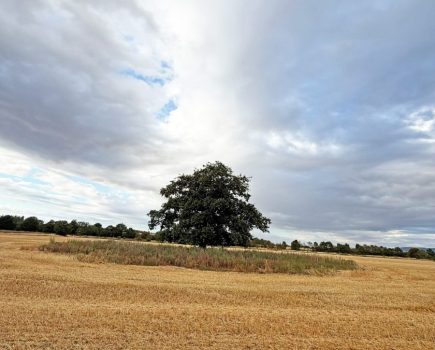
Perhaps fortuitously, right now could prove the perfect opportunity to undertake soil sampling ahead of the autumn drilling campaign, believes LimeX’s Glenn Carlisle. This is because according to AHDB, Harvest 2026 has been the earliest since records began in 2006.
Glenn adds that rather than rushing in and potentially compromising wider rotational challenges such as grassweed control, the additional time could indeed be used to soil sample and correct pH. “Now is the ideal opportunity to take stock of soils, sample each field and prepare for the following crop,” he says.
RELIEVING PRESSURE
“While in a conventional season there are often workflow and time management challenges at this time of year, an early harvest can ease that crunch somewhat.”
Then, once results have been returned, if the data suggests pH needs rectifying, it’s also a prime time to consider applying lime, suggests Glenn. “LimeX in particular is created using a chemical process, so has a very small particle size. This means it’s fast acting once it’s spread onto a field, starting to correct pH in just 4-6 weeks whilst remaining long lasting, typically at least 3-4 years before retesting is required. No other agricultural liming products are as fine in particle or fast in action.”
Glenn believes that correcting pH can sometimes be unintentionally overlooked during more protracted seasons, yet is critical in enabling the uptake of nutrients, maximising yields and enhancing overall soil health.
“We know pH has a huge impact on nutrient availability and uptake by the crop, particularly affecting phosphate, nitrogen and potassium in acidic soils. Equally, because of its origins in the sugar filtration process, LimeX has nutrient value beyond its liming credentials. Each tonne of product contains 9kg of phosphate, 8kg of magnesium and 7kg of sulphur,” he highlights.
For Ben, the next step is to consider using variable rate applications, but rather than using the technology to potentially make cut backs or savings, the goal should be to improve NUE. “Variable rate is about making sure what’s applied is actually utilised by the plant and targeting spend accordingly. Essentially, more of the ‘fuel’ is then converted by the crop into yield,” he explains.
In the case of Rhiza, electroconductivity soil scanning and satellite data can be used to inform variable rate maps within the Contour digital farming platform. As many growers will be aware, in-depth soil sampling such as this is a paid-for service, but Ben believes it’s possible to off-set the initial investment and mitigate concerns regarding spend. “For variable rate, the SFI action PRF1 is worth £27/ha for each year of the agreement.
“If we consider the gold package including electroconductivity soil scanning costs around £30/ha once every four years, with the annual resampling between costing £15/ha, there should be a small financial benefit to the grower, before considering any potential yield uplifts.
For Huntingdonshire-based grower Martha Racey, maximizing SFI payments was the driver behind the 300ha farm’s move towards variable rate. She says with the farm having a technology-ready spreader already in action it seemed like an obvious step to take, with the payments an added bonus.
“My dad John was already manually switching rates as he went along, as farm experience often informs which areas require more nutrition and which don’t. Whereas before it was quite a simplistic approach, thanks to variable rate, it’s now precise,” she explains.
Working collaboratively with both her Agrii agronomist and wider members of the Contour/Rhiza team, she says last year, the farm grew its most even crop on the fen thanks to variable rate. This was achieved using the canopy levelling function in Contour along with zonal soil sampling, to inform key nutrient applications.
“We have different soil types within each individual field, ranging from heavy through to peat. As such, it’s important to be efficient with what’s applied, reducing where it isn’t required particularly on the fen. We want to know that what’s being applied is actually making a difference,” she says.
In terms of results from last season, the farm was able to reduce nitrogen on peatland areas of winter wheat fields, with an average final application targeted at 160-200kgN/ha total. Across all winter wheat fields, the average was 173kgN/ha, presenting a reduction in total N use.
Martha is also looking at other ways to reduce the farm’s reliance on bagged fertilisers, including trialling alternative foliar nitrogen sources, using seaweed blend products and introducing sheep to graze cover crops. The goal is to reduce nitrogen applications on the fen without compromising crop performance, she notes.
While both her and John are fully on-board with variable rate, Martha says she believes it’s works for them because it’s been supported by agronomic and farmer knowledge. “We’ve always wanted to vary application rates and now the technology is allowing us to achieve that. As a result, our crops are more even and we’re not just feeding blackgrass anymore. However, it has the be ground-truthed by humans, tweaking the plans accordingly.”
Considering what’s actually in the tank, another means of improving fertiliser efficiency could lie in carbon, highlights QLF Agronomy’s David Maxwell. “Adding a carbon source to any foliar feed helps with adsorption as it binds the nutrients to enhance uptake and reduce the chance of lock-up.
“When added to foliar nitrogen, carbon plays a particularly important role in protein synthesis and is a requirement to build amino acids from urea. Equally, if we’re providing carbon to a plant through a foliar application, it doesn’t have to run down its own stocks,” he explains.
An added benefit is that the carbon from the molasses in products such as L-CBF Boost is used by all aspects of the soil food web, supporting the health and productivity of soils. “Crop roots don’t just pull nutrients straight from the soil, they also work with microbes living around them in what’s called the rhizophagy cycle.
“In simple terms, roots draw certain microbes inside, take nutrients from them, then send them back out into the soil. The cycle keeps turning, providing the plant with a steady flow of nutrients but to keep that running, you want plenty of active, healthy microbes in the root zone. That’s where L-CBF Boost comes in – it feeds that soil biology,” says David.
However, while technology and supporting products exist to achieve potential fertiliser savings, Ben urges that nothing is guaranteed. “It comes down to the current system, environmental conditions and what the potential productivity of that field is. If an area yields 7t/ha, then feed it accordingly.
“Importantly, reflect back on what’s worked – keep records, and use yield maps and gross margin analysis to form a reference point for the future,” he concludes.
This article was taken from the latest issue of CPM. Read the article in full here.
For more articles like this, subscribe here.
Sign up for Crop Production Magazine’s FREE e-newsletter here.