
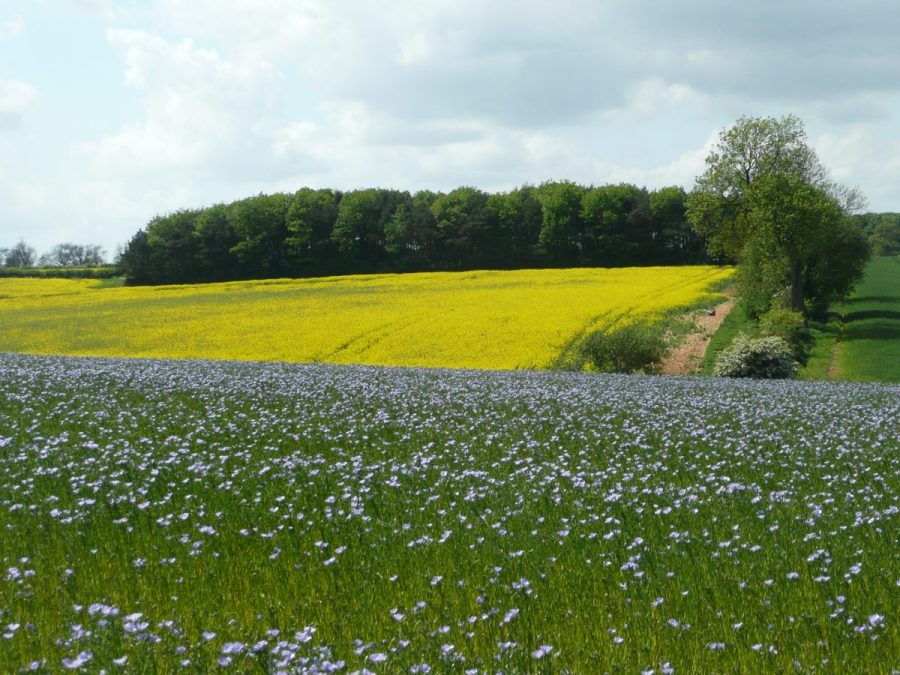
With so much at play when choosing the right break for a cereal-based rotation, where do priorities currently lie and which crops are coming out on top? CPM asks its readers for their thoughts during one of the toughest harvests of modern times.
“If in doubt, growers could consider diversifying some of their autumn break crop area with an alternative like winter linseed.” NIGEL PADBURY
By Janine Adamson
One minute oilseed rape is on the floor, the next it’s bouncing back like a phoenix from the flames… certain cropping options require specific environmental conditions to thrive, others particular equipment… and then there’s the simply weird and wonderful.
While there’s no magic one-size-fits all break crop, broad trends can be identified, as demonstrated by a recent survey undertaken by CPM and Premium Crops. The questionnaire aimed to explore the aspects that shape crop selection, to help build a clearer picture of how UK arable businesses are making rotational decisions for the future.
Of those that responded, 87% of participants were growers, representing 40,000ha of the UK’s farmed area. In terms of the results, firstly, and perhaps unsurprisingly, they suggest profitability and yield stability are the two most critical factors when it comes to deciding which crops to grow (see chart 1). Conversely, sustainability and environmental benefits were deemed the least important.
According to Niab’s Dr Lydia Smith, this is likely to have been compounded by two years of difficult conditions. “It’s still very raw and returns have been mediocre at best, so of course yield and profit are most important. In fact, I’d have expected profitability to be even higher than it is depicted here in honesty,” she says.
RETURN ON INVESTMENT
For Kent-based grower Eddie Henshaw, running a commercial business with 700ha of owned and contracted land, this inherently means that ideally, every crop has to deliver a profit. “Equally, pressure is increasing on growers to be more environmentally-mindful. But for many, we recognise we’re the custodians of the rural landscape so naturally aim to protect it as part of all we do, far beyond specific crop selection,” he explains.
Running closely behind the economic factors in third place is ‘rotational benefits’. This is probably the most obvious reason for growing a break crop, suggests Premium Crop’s Nigel Padbury. “By definition, a first wheat isn’t a first wheat if it doesn’t follow a break crop. Whether it’s soil structure, nutrient management, weed or pest control, break crops can and do bring benefits to the rotation that’s difficult to measure in cash value and it’s good to see that recognised in the survey.”
Looking at selection drivers further, when asked to identify the greatest single influencer behind crop choice, 48% of participants said financial considerations, seconded by farm-specific constraints such as machinery, labour, soils (26%), followed by agronomic aspects (18%).
Equally, respondents were asked which sources most influence their choices, with agronomists ranking 75% followed by independent trials (63%) and field days (39%). Eddie agrees that his agronomist plays a pivotal role in decision-making.
“We have a long-term relationship and work closely together to devise an effective rotation whereby crops are targeted to the specific field and its soil type,” he says. “However, I have to say that the market and available contracts also play a key part, to make sure the numbers stack up.”
Diving into specific crops, respondents are firmly pointing towards OSR being back in favour, voting it the highest ranking winter-sown break crop. In fact, 67% of participants said they’re planning to drill the crop this coming autumn, with 47% stating it’s a consistent part of their rotation and will remain so.
Then, 26% of participants noted they’re interested in returning to OSR, having grown the crop in the past (see chart 2). Nigel, who is also chair of the BSPB Minor Crops Group, says while encouraging, this may not translate to reality if conditions remain challenging.
This is because when asked the reasons behind why OSR no longer featured in rotations or was being phased out, 35% of respondents cited pest pressure while 25% said establishment reliability. “This summer’s drought has persisted well into August leaving many growers wondering when they will be able to sow their OSR crops,” raises Nigel.
CHALLENGES REMAIN
“In recent years the advice has been to sow before mid-August or after mid-September to avoid the peak of the Cabbage Stem Flea Beetle (CSFB) migration. For many parts of the country the dry conditions have ruled out the first of these options and, while the AHDB has recently updated its website with details of the autumn 2026 CSFB migration showing adult beetle numbers to be low, it’s worth bearing in mind that the weather will also be influencing beetle behaviour.
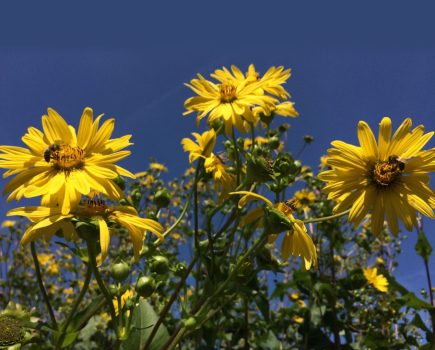
“If in doubt, growers could consider diversifying some of their autumn break crop area with an alternative like winter linseed, that can be drilled well into September and avoid the CSFB problem entirely.”
Lydia believes that the numbers of growers returning to OSR are very high: “Given the disenchantment with OSR during the past few years, even with a recent U-turn in performance, I’m surprised to see it above winter barley (65%) in the intended plantings for autumn. I’d assume that there are areas in the North that haven’t suffered the same way with establishment challenges.
“However, with appealing contract premiums available there’s a chance the crop will return well, so it’s understandable that it’s featuring highly.”
On the other side of the coin, when asked the reasons behind why OSR no longer featured in rotations or was being phased out, 35% of respondents cited pest pressure while 25% said establishment reliability.
Moving further down the popularity rankings and beans (33%) follow as the most popular winter-sown true break crop after OSR, with peas (10%) and linseed/flax (9%) coming in behind. For spring-sown break crops, peas come out on top (32%) followed by beans (21%) and sugar beet (17%).
For Lydia, this is a success story for pulses. “We know beans can struggle with establishment and don’t like a cold, wet start but they’re scoring well here. It’s also exciting to see other pulses beginning to trickle through such as lentils and chickpeas, which although don’t feature highly in this survey, are there.”
Another break crop increasing in popularity is linseed/flax. While just 5% said it’s a consistent part of their rotation and will remain so, 16% said they were considering it for the future. “That’s three times more than are currently growing the crop regularly, and shows the growing demand from farmers for another profitable break crop to diversify rotations,” notes Nigel.
Eddie raises that linseed is a firm part of his farm’s cropping rotation, having grown spring linseed for around 15 years as a replacement for OSR. With blackgrass pressure across the cropped area he says it’s been a useful tool for reducing weed populations.
However, last year was his first foray with winter linseed, and despite the challenging season, he’s been impressed with a 2.5t/ha yield average. Noting that in the survey some participants raised concerns regarding harvestability, Eddie says this hasn’t been the case for him.
“I’ve heard growers in the past have had challenges at harvest, but for all time we’ve grown spring linseed, we’ve never had a problem as long as the combine has been smooth, full and flowing. Albeit for the winter-sown crop, I was a little concerned as it was the first crop in the machine this season, but that also passed through without any issues.
“Overall, the crop grew and established well and it was a learning curve for us. But it’s seems to have been a positive year for winter linseed across the country,” he notes.
Lydia adds that while winter linseed/flax can be perceived as risky due to it historically not being as frost tolerant compared with wheat and barley, with improved varieties coming through, this is gradually being mitigated.
“As for spring linseed, around 20 years ago there was plenty being grown due to the government incentives being offered. Once these disappeared, so did the area being grown. I think in view of its history and challenges, the quantity of growers considering the crop in this survey shows the great potential for under-utilised crops,” she says.
Looking at the factors that would encourage more growers to take a chance on linseed or flax, and 39% said improved profitability, followed by proven local performance (37%) and market opportunities (28%).
Commenting on flax specifically, Lydia highlights that new harvesting equipment is being introduced from France that pulls rather than cuts the crop, laying it down flat for retting. “This is making a significant difference and is starting to make its way to the UK.”
As part of the tie-breaker question, respondents were invited to answer the following: ‘If you could introduce one new crop into your rotation, what would it be and why?’. Answers ranged from winter OSR, maize, linseed and forage crops, through to sunflowers, lupins, hemp and poppies. Some even stated money trees and simple, ‘something profitable’.
For Eddie, he believes with an ever-buoyant equine market, there’s potential in grass. “The public doesn’t seem to reduce its spend on hobbies and leisure, so I think producing hay is quite a compelling option,” he concludes.
This article was taken from the latest issue of CPM. Read the article in full here.
For more articles like this, subscribe here.
Sign up for Crop Production Magazine’s FREE e-newsletter here.