
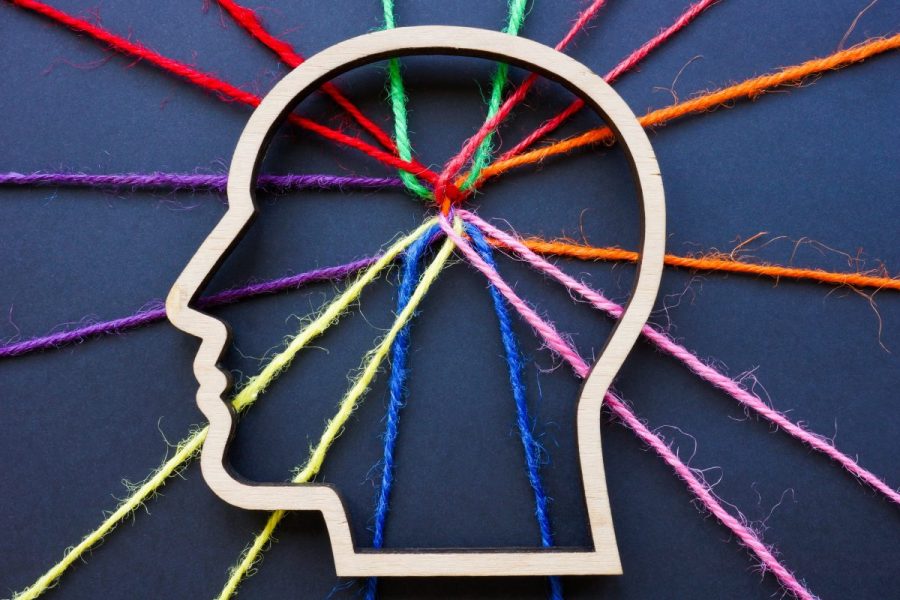
Neurodiversity may be entering mainstream conversations, but within agriculture it remains relatively unexplored. Yet with farming facing challenges around labour, wellbeing and the need to innovate, could understanding how differently-wired brains work help the industry to better support and make the most of its people? CPM explores…
“Quite often when I’m talking to someone about this, it’s that ‘I thought that was only me’.” – KAREN FISHER
By Charlotte Cunningham
Diversity is often described as nature’s insurance policy. From genetics and cropping rotations to habitats and ecosystems, agriculture understands perhaps better than most the value of variation.
But when it comes to the people working within the industry, has there traditionally been a much narrower idea of what ‘normal’ should look like?
It’s perhaps a particularly pertinent question given that neurodiversity has become far more prominent in everyday conversation during recent years. Terms such as ADHD, autism and dyslexia are increasingly familiar, while social media is awash with posts prompting people to recognise traits they may previously have dismissed as simply being ‘the way they are’.
For some, that growing recognition has been liberating. For others, it’s prompted scepticism that suddenly everyone appears to have a label for something which seemingly ‘didn’t exist’ a generation ago. Yet neurodiversity itself is nothing new, explains agricultural consultant and neurodivergent coach, Karen Fisher. “Neurodiversity is the natural variation in our brains and nervous systems – in how people communicate, learn, think, process information and generally experience the world.”
What has changed is the understanding of what those differences can look like, she believes. “Before I had an understanding, I thought ADHD was children in classrooms that couldn’t sit still and listen, but we now know that’s very much not the case.”
Autism too has historically been associated with a relatively narrow set of characteristics, while much of the research and diagnostic criteria around neurodivergence was based on its presentation in males, she adds. “I think that’s why we’ve had such a surge in women suddenly realising that they are some type of neurodivergent, because the traits often present differently in women.”
Then there are those characteristics which have appeared across generations of the same family and simply been accepted as ‘the way we are’. Social media, for all its shortcomings, has also given people greater opportunity to see their own experiences reflected back at them, notes Karen. “Quite often when I’m talking to someone about this, it’s that ‘I thought that was only me’.”
Perhaps then, the more interesting question isn’t why so many people suddenly appear to fall outside of ‘normal’, but how that definition was established in the first place. Because for all the attention now being given to neurodiversity, many of the structures surrounding work and productivity have traditionally been built around a fairly narrow idea of how people should operate. “As a society, we’ve been boxed into a way of showing up that suits certain neurotypes, but not others,” says Karen.
And that creates an interesting contradiction for agriculture…
On the one hand, farming remains an industry where doing things ‘the way they’ve always been done’ can carry considerable weight. Long hours and hard work are still badges of honour, while the tendency to push through physical ill-health, exhaustion or difficulty is deeply embedded. “There’s definitely that stoic attitude,” she says. “It’s not necessarily talking about it as labelling it as neurodiversity. I think we’re having more conversations and more awareness of things like burnout and those mental health conversations.”
ONLY THE BEGINNING
While farming has made considerable strides in talking about mental health, Karen believes the conversation around neurodiversity is much closer to the beginning. “There’s a lot more work out there within the education system and the health system, whereas this hasn’t really been looked at, researched or thought about in agriculture until recently. We’re only just at the tip of the iceberg.”
Yet on the other hand, could some of the very characteristics of farming make it an environment in which certain neurodivergent people have quietly been thriving for generations?
It’s a question Karen has arrived at through both professional and personal experience. Having studied and worked within agriculture for 25 years, she received her own ADHD diagnosis around six years ago. What followed was what she describes as a ‘deep dive’ into understanding her own brain, but it also changed the way she looked at the industry she’d spent her career working within.
“It was that interesting overlap between overworking the soil, overworking your farm without putting anything back into it,” she says. “I think it’s the same with the people that work on the land as well.”
Karen subsequently trained in neurodivergent coaching and established Harvesting Potentials, bringing together her interests in sustainable food systems, human behaviour and wellbeing. Now, that same curiosity has led her to undertake a PhD at Harper Adams University exploring neurodivergence specifically within agriculture – an area where she says formal research remains sparse.
Rather than starting with an assumption that farming is either inherently good or bad for a neurodivergent brain, she wants to understand what’s already happening on the ground. “There’s a lot of grey literature out there, but at the moment there’s no research that looks into people who work on the land, different types of neurotypes and where those hidden talents are,” she explains.
“Why do so many people thrive on the land and that kind of work? But also, it’s not a superpower. There are assets in the way people think and show up, but there are also struggles. I want to get people’s real-life experiences of where they love the way their brain works and where it’s really useful for them in their job, but also where they feel they could have more support.”
Certainly, there are aspects of agricultural work which Karen believes can suit some neurodivergent brains particularly well. “It’s practical and visual, with tangible problems to solve and, despite the unpredictability thrown up by weather and livestock, an underlying rhythm to the farming year. There can also be a degree of autonomy which isn’t always possible within a more conventional workplace.
“I do think a lot of neurodivergent brains really suit that,” she continues. “Within farming, quite often we thrive because there’s a lot of practical, hands-on and visual learning, and we quite often have special interests. That’s how I’ve navigated to where I am – that hyperfocus on particular interests.
“Being outside in nature is obviously a very natural nervous system regulator. You can have that autonomy of, to a degree, doing jobs at your own pace rather than having a fixed routine. And I also believe that thinking outside the box, curiosity and innovation, being able to actually have tangible solutions to problems that you’re seeing on the farm, can be strengths.”
That could be particularly pertinent for an industry grappling with how to attract and retain the next generation of workers, she suggests. “Rather than expecting people to mould themselves around a traditional idea of what an agricultural employee looks like, could there be value in looking more closely at the skills different thinkers bring?”
In terms of how this is approached practically in the work place, Karen says that every individual is different, so there isn’t a copy-and-paste ‘this is going to help everybody’ way of doing things. “Instead, it’s about being open to that two-way communication of what works both for the employer and the employee.”
In reality, those changes can be remarkably straightforward, she adds. “Take verbal instructions, for example. Someone who struggles to process or retain them might leave a conversation without fully understanding what’s been asked, then attempt to fill in the gaps themselves.
“If you give somebody verbal instructions but they haven’t quite understood it fully, they might go off and guess what you want, do half a job, and then you get grumpy with them because they haven’t understood.
“So it’s finding a solution to that. It might be making sure you WhatsApp message them afterwards so they can go back and check what you said, rather than being reliant on memorising it.”
For somebody else, breaking a larger job into smaller stages or using a visual checklist might remove the sense of overwhelm, notes Karen. “Demonstrating an unfamiliar task may work better than explaining it, while asking someone to repeat a job back can help to identify misunderstandings before they become mistakes.
“They might seem really obvious to you, but it could be: do this first, then that, then that, and then come back and see me. These things aren’t necessarily going to take a lot of time or money.”
The same thinking can apply when plans change. Rather than simply announcing a new way of working, Karen says explaining why something is changing and allowing time to process it can make a considerable difference. “If something is changing within the business or on the farm, it’s giving them that ‘why’. Why is this changing? Provide the chance to give feedback and time to absorb that, rather than just showing up that morning and saying: ‘Now we’re doing it this way’.”
Sensory differences may require equally simple adjustments, from appropriate hearing protection to somewhere quiet to step away from a busy environment. “Importantly, none of this is especially radical. In fact, much of it could arguably amount to good management regardless of somebody’s neurotype.”
Perhaps the more difficult hurdle is making it acceptable for someone to say that the standard way of doing something isn’t working for them. But that doesn’t necessarily require disclosing a diagnosis, Karen points out.
“For somebody who isn’t comfortable doing so – or who may not have one – it could simply begin with explaining where they’re struggling. Essentially, having a safe place to maybe feel it out and just explain what they’re struggling with. Could they work together to find a solution to that – find a way that’s easier for them?”
REFLECTION
Nor does the individual necessarily arrive at that conversation armed with the answer, she stresses. “I have people come to me and say: ‘But I don’t know what’s going to help me, and I don’t know what I need; I just know I’m struggling.’ So it’s all about taking a little bit of time for yourself and actually sitting down and thinking about it.”
Creating somewhere for those conversations to happen is also part of the motivation behind the Rural Neurodivergent Network, which Karen has co-founded with Liz Haines to provide a community for those working within rural industries to connect and share experiences.
Looking 5-10 years ahead, she hopes the growing awareness of neurodiversity will be matched by better research and practical tools shaped by those actually working within agriculture. “It’s like anything in farming, isn’t it? It’s no good people at the top doing a broad brush that every farmer must do this. It has to come both ways.”
Rather than judging somebody according to how closely their way of working resembles our own, Karen believes there’s value in becoming more curious about why somebody might approach a task differently – and what they might be particularly good at as a result. “I think people are very quick to judge and label it as lazy or ‘they don’t care’. It’s just finding a different way of doing that for them and the way their brain works.
“Take that fear away, so we can really utilise those areas where people have their strengths and where they excel, and then find ways to support the areas that they may struggle with more.
“It’s about what lights your employee up,” she concludes. “What are they good at? What do they enjoy? Where do you see them excelling? And then utilising those strengths within the team.”
This article was taken from the latest issue of CPM. Read the article in full here.
For more articles like this, subscribe here.
Sign up for Crop Production Magazine’s FREE e-newsletter here.