
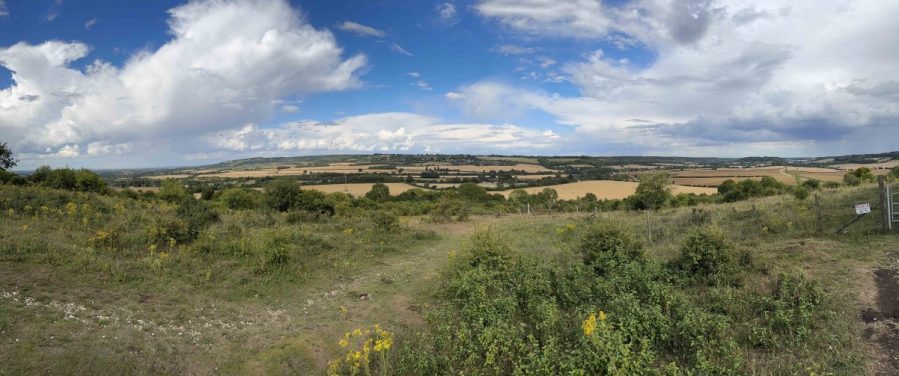
A group of farmers in the Chilterns with a shared passion for wildlife are taking proactive measures to help boost nature recovery in their region. CPM finds out what’s behind their success so far.
“The cluster has helped us to better understand the wildlife on our farms and how we can support it to thrive.” IAN WALLER
By Janine Adamson
For the Central Chilterns Farmer Cluster, it all started with a shared desire – an urge to learn more about the wildlife on their farms, to become excited by it, and to understand how to help it to flourish. And now, seven years later, evidence suggests the proactive measures they’re making are having a tangible impact.
Undoubtedly, the Chilterns National Landscape is a special place – a chalk escarpment covering 660m2 of Oxfordshire, Buckinghamshire, Hertfordshire, and Bedfordshire. However, with 60% of its area being farmland, this places the majority of its stewardship in the hands of farmers.
Recognising the significance of their role in nature recovery led 18 of these individuals to form the Central Chilterns Farmer Cluster, spanning 6500ha of the Buckinghamshire area of the Chilterns. Farmer-led, the group is chaired by passionate local farmer Ian Waller and facilitated by the Chilterns National landscape.
The cluster has been successful in securing significant funding to support its work – starting with the National Lottery Heritage-funded Chalk Cherries and Chairs Landscape Partnership Scheme, and more latterly by the Rothschild Foundation, Farming in Protected Landscapes and other supporters.
Nature recovery manager for the Chilterns National Landscape, Nick Marriner, says the original goal of the cluster was to break down any perceived barriers to engaging with environmental measures such as providing supplementary winter bird food, coppicing hedges or installing owl boxes. “There was an evident gap,” he continues.
“Farmers were interested and passionate about learning, but they required practical, responsive support and education. Equally, it had to be on their terms, when they were ready, and to fit in with their wider farm plans,” he explains.
According to Nick, at the point the cluster was formed in 2019, there was some support available, but it wasn’t necessarily joined-up or tailored to individual farming businesses. This made it difficult to implement and make solid plans, he suggests.
“If properly supported, farmers have the potential to make the huge difference we require for wildlife, environment and rural communities,” stresses Nick.
The cluster members range from a small 40ha beef farm to 900ha arable systems. However, there’s one characteristic they all share – a willingness to work together. “They’re bound together by the desire to make positive change for wildlife, while improving their farm businesses and producing high-quality food,” says Nick.
“Through the cluster, peer support and an element of competitiveness are married with expert advice, training and farmer-led initiatives. This is backed by a supportive community of more than 90 organisations, experts and contractors.”
Landowner Eleanor Cave from Old Callowdown Farm joined the cluster for help and advice on how best to manage the farm for wildlife, including its Site of Special Scientific Interest (SSSI). Working in partnership with Natural England and Buckinghamshire and Milton Keynes Environmental Records Centre (BMERC), a long-term chalk grassland restoration project was instigated.
For this, the cluster offered a package of support including a full SSSI management plan; inviting tenders, awarding contracts and project management of an eight week scrub clearance project; and arranging installation of new stock fencing, a stock pen and water supply to site. It also helped to facilitate a Whole Farm Plan which was used as the basis for successful Higher Tier Countryside Stewardship and SFI agreements.
“The cluster has connected us to all sorts of people: the consultant who helped to pull together our CS application, a wildflower expert for our wildflower meadow (see box), and Nick himself is an expert on birds,” explains Eleanor. “All of this support has been a massive help as it would have taken me much longer on my own.”
For the cluster members, the benefits stretch far beyond the obvious too, highlights Nick. “As well as improving their understanding of nature and accessing appropriate support, it’s about connecting with others and sharing ideas. Equally, it’s helping to champion farmers in the Chilterns – tracking the difference they’re making and shouting about it,” he says.
And critically, the results are tangible, he raises. “The local volunteer-run Bucks Owl and Raptor Group (BORG) has partnered with the farmers for several years. Together they’ve increased available nesting sites by installing more than 80 nest boxes made from recycled farm plastic. Annual checks have revealed around 35% of boxes are in active use, with barn owls and kestrels responding well,” says Nick.
Then, new Countryside Stewardship agreements should provide more than 60ha of habitat for small mammals to support the owls and raptors further.
Other highlights from the cluster include major projects to create new and rejuvenate more than 35km of hedgerows, and to establish and better manage over 75ha of species-rich grassland habitat.
The group has been engaging with the wider community too, notes Nick. Around 250 people have been helping to support the farmers’ work through a citizen science project that covers everything from bird, butterfly, plant and reptile recording, to bird ringing, botanical surveys and hedge laying.
The results can then be used to compare with regional and national trends, he adds. “This insight is a vital piece in the puzzle – enabling examination of the impact of farmers’ individual and collective efforts ‘on the ground’.”
In terms of bird surveys, the community volunteers have undertaken annual winter studies at a number of cluster farm feeding sites. Already, data suggests an increase in the abundance of yellowhammers during the past six years, contrasting the long-term national population decline, highlights Nick.
Now, it’s a case of getting other clusters in the region to adopt a similar model, believes Professor Kate Heppell, head of landscape for Chilterns National Landscape. “The great work of the farmers in the cluster has provided a blueprint and catalyst for our wider work with farmers.
“We’re excited by the opportunities this brings, not only for farmers, but for our wider nature recovery and climate adaptation plans. The opportunities to work at landscape scale are significant, and we’re working to secure resources to scale support packages for all farmer clusters.”
This is something that chair of the Chilterns cluster and member, Ian Waller, hopes will become a reality. “The cluster has helped us to better understand the wildlife on our farms and how we can support it to thrive; we have a support team we trust and the resources on offer are invaluable, getting expert advice, help designing projects, accessing funding and ongoing monitoring,” he says.
“The power of the cluster really comes through opportunities to work together on projects at scale. We each form a small part of the wider Chilterns jigsaw and by working together, are making an impact. I hope that in the future every farmer in the Chilterns has access to a similar support package – what a difference that would make,” he concludes.
This article was taken from the latest issue of CPM. Read the article in full here.
For more articles like this, subscribe here.
Sign up for Crop Production Magazine’s FREE e-newsletter here.