

A problem shared is a problem halved, but being able to talk about it in the first place is often the greatest battle. CPM explores the importance of being open to receiving help, and the positive impact this can have on mental wellbeing.
“Remember you matter, push the button early if you need help and speak to us.” STEVE JACKSON
By Janine Adamson
Farmers – the epitome of ‘keep calm and carry on’… the proud custodians of the stiff upper lip… it’s nothing a plaster and some blue spray can’t solve…
But what if the problem isn’t physical? What if it’s something that can’t be escaped – the voices and feelings inside? According to the Farming Community Network (FCN) Staffordshire’s Steve Jackson, whether it’s physical or mental, many farmers only get help when the situation is at crisis point.
“Farmers are renowned for not really looking after themselves and are often very closed books. But actually, behind the thin veil of a smile, there’s so much going on that no one will know about,” he says. “They just keep going, but there always comes a time when the tank is empty.”
Critically, he speaks from a place of experience. Steve is one of 400 national FCN volunteers, representing a charity that supports farmers and their families with both personal and business-related issues. The organisation runs a confidential helpline which is open daily from 7am-11pm with experienced volunteers on hand to listen and support. There’s also an e-helpline (farmwell.org).
KEY TOPICS
Steve raises that more than 2000 individuals connect with FCN every year, but broadly speaking, there are three key subjects that arise. “Problems tend to financial, relationship or mental health-based, and the three can be very much interwoven,” he comments.
“But regardless, being able to unburden and unload to someone impartial can be a massive help, particularly during difficult times. Men in particular seem think its macho to not talk or show weakness, after all, ‘big boys don’t cry’. But we have to get away from that myth,” stresses Steve.
Calls to FCN are often from women as well as men, he notes. “Farmers endure brutal working hours and expectations are high; we receive calls from both male and female farmers and family members. In some situations, women call the helpline because they say they feel they’re having to cope as single mums due to their partner’s long working hours. They’re always giving so much yet can often feel very tired and isolated.”
INTERVENTION
According to national statistics, around 40% of farmers say they are depressed at some point, yet despite this, the struggles continue, notes Steve. He stresses that while FCN provides help with a whole range of farming issues, it does have experience of engaging with individuals who feel they have no other place to turn and who are considering self-harm.
“We would rather intervene before that crisis point and would ask anyone to seek help as soon as they’re feeling overwhelmed; push the button early if you need help and speak to us. We all understand farming and its challenges specifically. Our mantra is to listen, support and connect.”
One reason why Steve believes farming is at a critical point, is that rural communities are shrinking with much less appreciation for farmers as food producers and custodians of the land. “We’ve lost so much of the ‘countryside community’. What used to be large teams of farm staff is now maybe one or two individuals who spend a great deal of their working life alone; rural isolation is a huge issue.”
Conversely, he champions the power of resilience. “How can you get yourself so there’s always something left in the tank and it’s never fully depleted? Whether that’s the business, finances or personal matters? We invite everyone to visit our Farmwell website, it’s a resource for farming people and will help individuals and families to prepare and to cope with difficulties.
“It doesn’t take much to fray around the edges, so we have to help each other through difficult times.”
Robin Hepburn of YANA (You Are Not Alone) highlights that with so much unknown currently occurring in agriculture – the government’s recent changes to inheritance tax being one example – there’s a level of uncertainty at a broad scale. “Uncertainty makes everything so much more difficult, and farmers have that in many shapes and forms right now.”
Unlike FCN, YANA specialises in offering free confidential rural mental health support for those working across East Anglia. But like Steve, he says conversations can often be about relationships. “We find it’s issues that can’t be freely discussed at the kitchen table, and they rarely emerge alone, often accompanied by financial, family or business matters.
“For YANA, the topic doesn’t matter, we’re simply here to listen and provide some options. After all, most accept that when it comes to mental health, they can’t solve that alone.”
As a service, YANA offers a counsellor-trained helpline that operates 10am-2pm Monday to Friday, with a call back service for outside of those hours. There’s also a webmail facility.
“We aren’t a crisis line and would always urge those in desperate need to contact the Samaritans who are available 24/7. However, that’s an important point, you don’t have to be at breaking point to need to talk,” urges Robin.
FREE SUPPORT SESSIONS
For those interested, YANA can offer a triage service for up to 12 free counselling sessions with therapists who are rural specialists. That’s because every aspect of YANA is with agriculture in mind, stresses Robin.
“We don’t judge anyone, we’re simply concerned about those who may be in a dark place and feel they have no one who understands. We will listen and try to help; we are here holding out the hand of friendship.”
For Harper Adams University’s Terry Pickthall, mental health isn’t just about the negative, and should always be given a level of awareness, just like physical health. Having struggled in the past, particularly during the past decade, he’s keen to share his story in hope it encourages others to open up.
“For me, it’s been a lifelong issue, but has mostly been related to struggling with my workload and challenges that can arise in a busy workplace. It’d slowly build, and while I could deal with most of it in isolation, eventually, something small would tip me over the edge.
“Now, having been through a couple of phases where it reached the stage where I simply couldn’t function, I can recognise when I’m on that slide. I spot I’m feeling more anxious, perhaps I’m being more snappy at home, or struggling to make simple decisions.
“That’s when I know I need to make my situation more manageable, taking a step back to alleviate the pressure and re-priortise my workload alongside my line manager. I appreciate that’s not always possible if you have a farming business to run, but sometimes, you have to let the less critical aspects go. The world still turns,” he explains.
Terry acknowledges that his mental wellbeing is something he’ll have to manage for the rest of his life, and can’t necessarily be fixed outright. “Feeling low can happen many times over, but it’s what you do about it that counts.
“I think with the current challenges facing British agriculture, it’s completely understandable that you might end up in a very dark place and feel there’s no way out.
“But there is so much support out there, including specialist organisations like FCN, YANA and Yellow Wellies. In ways, these are better than the NHS for offering the right kind of support – they’re specifically trained and close to the farming sector, so able to signpost to the appropriate help for you.”
Now in a stronger place, Terry highlights that his preference was to seek help from his GP and engage in talking therapy. “When you go through a deep trauma, it leaves a scar even though you feel better on the face of it. Every day I’m reminded that I was really unwell and thought there was no way out, and I can beat myself up over that.
“Talking to a professional helps to analyse, unpack and re-prioritise what’s going on in my life. Mental health can be a rollercoaster and cyclical, which in itself can be so tiring, but it’s about recognising when you need support before it’s too late.”
To that end, he hopes that any stigma surrounding suicidal thoughts can be quashed. “I think those sorts of thoughts cross people’s minds more often than we might realise. But you won’t be locked up or sectioned, it’s okay to discuss that you’ve felt those emotions. Not talking about it at all is a far more concerning outcome,” he concludes.
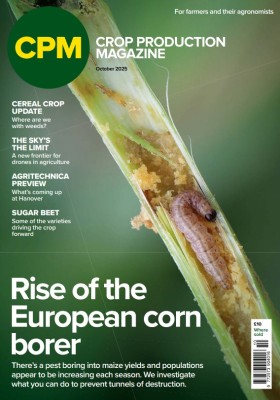
This article was taken from the latest issue of CPM. Read the article in full here.
For more articles like this, subscribe here.
Sign up for Crop Production Magazine’s FREE e-newsletter here.