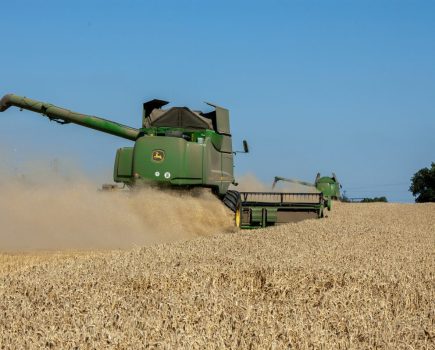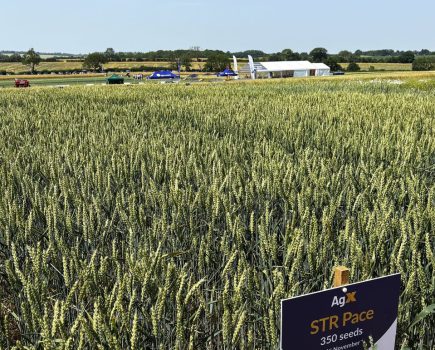

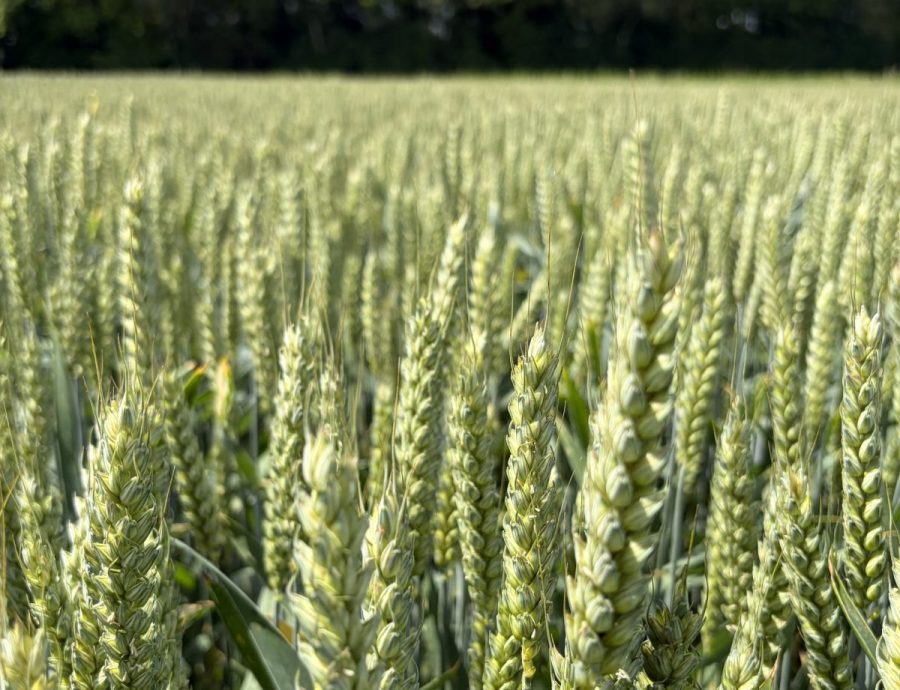
Two new high-yielding Group 4 wheat varieties are fighting for prime positions to become the latest on-farm favourites. CPM takes a look at the stats for LG Defiance and LG Challenger.
“Defiance has the highest untreated yield on the winter wheat RL full stop, which is a great asset to have.” RON GRANGER
By Janine Adamson
Widely recognised as both consistent and high yielding, Group 4 varieties – hard and soft – account for 53% of the total UK wheat area. Perhaps unsurprisingly, this makes for a crowded space when it comes to varietal choice, with 17 options battling it out on the current Recommended List.
Considering hard Group 4 options specifically, five new varieties joined the RL back in December. However, Limagrain believes its two latest offerings – LG Defiance and LG Challenger – have the potential to come out on top this season.
So what makes these two feed wheats such strong contenders? According to Limagrain’s Ron Granger, both have high yield potential and performed consistently in trials despite erratic conditions during 2023-2025. “Breeders have raised yield performance across all end group sectors and while that’s quite an achievement, hard feed varieties still have the edge for yield potential,” he says.
Looking at parentage, Ron comments that a variety’s pedigree appears to matter less now, although both options come from proven lines. “Defiance is a cross between KWS Extase and Gleam, whereas Challenger is (Gravity x SY Insitor) crossed with LG Skyscraper,” he explains.
The result? Top performing varieties, it seems. In fact, with a UK treated yield of 108.8 of controls, Defiance places second within the hard Group 4 category. “However critically, it has the highest untreated yield (95) on the winter wheat RL full stop, which is a great asset to have in any variety,” notes Ron. Following closely behind is Challenger, scoring 107 for UK yield with an untreated yield of 93.
While output remains a driving factor in varietal choice, more attention is being given to disease resistance, as demonstrated during the past 18 months or so. For yellow rust – the disease currently most talked about – Defiance scores 8 and Challenger 7, which Ron says are highly competitive ratings.
“Particularly if you compare these scores with existing popular varieties which have been knocked back due to the Yr15 breakdown. But equally, we mustn’t forget about septoria – there was a lot in crops during the winter. Plus, with thunderstorms across the country in June, there was the opportunity for it to really take off if fungicide inputs had been reduced at T2.”
For septoria, Defiance scores 6.3 and Challenger 6.1. Both rate 5 for brown rust, 7 for mildew, and [5] for eyespot, and offer orange wheat blossom midge (OWBM) resistance.
Ron says something that may be questioned by growers is that Defiance has a 5 rating for resistance to lodging with PGR, but he points out that this is based on very limited AHDB data. “In contrast, in breeder trials, we’ve not found this to be a particular issue and with good husbandry management, the variety certainly responds and shouldn’t be a problem.”
He acknowledges that Defiance is a tall strawed variety and as a result, will require a comprehensive PGR programme. “As my advice always is, a split PGR approach will deliver the best results. With the subsequent reduction in height, it should have no impact on the final yield potential of the variety – a similar story to LG Skyscraper or LG Redwald.”
In contrast, Challenger scores 7 for resistance to lodging with PGR, while both score 7 for resistance to lodging without PGR.
However, the most significant difference between Defiance and Challenger is sowing date, points out Ron. While Defiance is suited to drilling from late-September onwards, Challenger can be planted earlier, he adds, as it has the agronomic characteristics of being a higher tillering variety combined with a slower spring growth.
“Challenger has a wide sowing window from mid-September right through to post-November but performs particularly well in the earlier slot. Both varieties presently sit as two of the highest yielding varieties for the second wheat situation – although limited data, this is a strong attribute to have for on-farm placement,” suggests Ron.
Providing a perspective from the trade, Frontier Agriculture’s Dr Kirsty Richards says 80% of a crop’s potential is driven by putting the right genetics in the right place at the right time. “This helps to reduce risk and build resilience,” she adds.
“Defiance is a good high yielding option with proven performance in later drilling conditions. It offers excellent grain quality, including high specific weight, to meet market requirements even under tough conditions.
“Challenger meanwhile appears appropriate for northern sites that require earlier drilling dates, so should be planted in areas with low grassweed burdens. Being slower developing, it avoids being too lush and therefore at risk of lodging.
“The yellow rust scores for both really stand out on the current RL, as well as their mildew ratings.”
While Challenger makes the grade for early drilling, it also performs well when sown later too, as proven by Lincolnshire farmer, Ben Sharp.
Ben, who manages 250ha of his own cropping plus additional rented land, grew 20ha of a Challenger seed crop in 2025. Despite not being drilled until early November into difficult conditions, he says it went on to be his best-performing variety.
Yields hit a maximum 12t/ha and averaged around 8t/ha overall, which he describes as a ‘fantastic result’ given the wet autumn, followed by drought-like conditions through much of the growing season.
“It was on lighter soil as well, which wasn’t the best in a year like that, but the crop still produced a very good specific weight and overall, we were really pleased with it. It’s not a hugely vigorous variety, but still seems to tiller and cover the ground well, and once it gets going in the spring, it grows strongly.”
Having been impressed with Challenger’s performance last season, Ben is growing the variety again this year, as a first wheat after beans for his own use, sown in the main mid-October window on medium-bodied land.
“The crop established well last autumn, and looks fabulous so far, so I’m keen to see how it performs in a more normal growing season. If Challenger does well again this harvest, it’ll probably be the mainstay of our winter wheat area next year,” he comments.
Over at Rob Atkins’ farm in Uttoxeter, Staffordshire, 5ha of Defiance is being put through its paces. “Each year I like to try a new variety and if it ticks all of our boxes, we keep it,” explains Rob.
Having seen Defiance in trials and at Cereals Event last year, he says he thought he’d give it a go. “While I’m looking for a high yielding crop, it has to be clean so there’s the potential to cut input costs.
“This spring, we were able to stretch the fungicide applications a little on Defiance as we found minimal yellow rust or septoria in the crop. That’s exactly what I’m looking for to reduce costs and maximise yield,” he states.
Rob notes that following the crop being drilled on 29 September to combat the typically wet conditions the farm experiences, the crop demonstrated excellent vigour. Then by early May, it was the best crop on his farm, he says. “Genuinely, it was so clean,” he concludes.
This article was taken from the latest issue of CPM. Read the article in full here.
For more articles like this, subscribe here.
Sign up for Crop Production Magazine’s FREE e-newsletter here.