
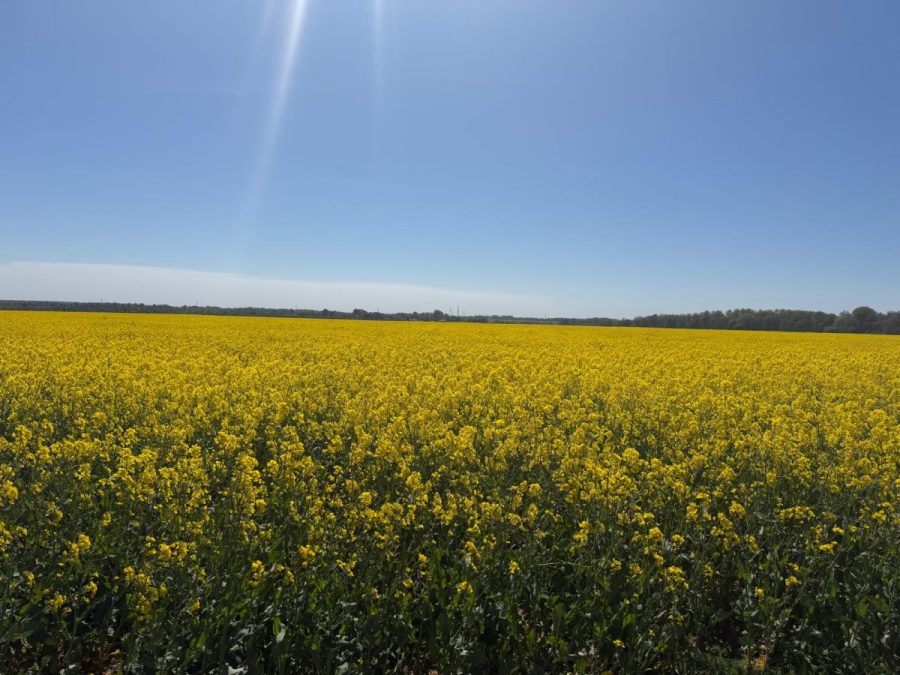
Having topped the latest AHDB Recommended List for gross output, DSV’s Dompteur has quickly attracted attention. CPM reveals more about this high performing oilseed rape variety.
“Yield remains important, but growers are looking at the bigger picture.” SARAH HAWTHORNE
By Charlotte Cunningham
A name meaning ’tamer’ in French might suggest a variety content to quietly get on with the job. Yet having topped the latest AHDB Recommended List for gross output, DSV’s Dompteur appears to have other ideas…
At a time when oilseed rape growers are once again looking at how to maximise the crop’s potential within the rotation, the hybrid has arrived with credentials that extend well beyond yield alone – and according to DSV’s Sarah Hawthorne, that’s increasingly where the conversation is heading.
“Yield remains important, but growers are looking at the bigger picture,” she says. “They want varieties that can establish well, cope with seasonal challenges and protect yield potential throughout the season.”
That demand for resilience has become increasingly important as production costs continue to rise and weather patterns become harder to predict. While confidence in OSR has improved in recent seasons, growers remain acutely aware that success often depends on a relatively small number of key decisions – with variety choice among the most important.
New to the 2026/27 AHDB Recommended List, Dompteur entered the market with some eye-catching figures. The hybrid achieved a UK gross output of 107% of controls, rising to 108% in northern trials, alongside an oil content of 46.3%.
But while those numbers may be what first catch growers’ attention, Sarah believes they only tell part of the story. “Performance is about much more than a single headline figure,” she explains. “Ultimately, growers require confidence that a variety can deliver across a range of conditions – not just in one season.”
Central to that is the variety’s disease package, and Dompteur combines turnip yellows virus (TuYV) resistance and pod shatter resistance with ratings of 8 for both light leaf spot and stem canker. It also carries DSV’s dual phoma resistance package, combining the RLM7 resistance gene with a second source of phoma resistance.
The approach reflects a growing recognition that disease populations continue to evolve, placing greater emphasis on stacking resistance mechanisms rather than relying on a single source of protection. “We know pathogens aren’t standing still,” says Sarah. “By combining different forms of resistance, we’re looking to provide broader protection and help maintain durability over time.”
Adding to Dompteur’s credentials is strong autumn vigour, combined with equally high spring vigour and high winter hardiness, creating a package designed to support crops through some of the most critical stages of development. “Establishment remains one of the biggest challenges for many growers,” highlights Sarah. “Strong autumn growth helps get crops away, while spring vigour supports recovery and canopy development as conditions improve.”
Importantly, that vigour doesn’t come at the expense of crop management, and Dompteur remains relatively early flowering while maintaining a mid-early maturity profile – helping to deliver an even and timely harvest without becoming excessively forward.
Sarah believes it’s this combination of traits that best reflects the direction of modern OSR breeding. “There was perhaps a time when growers felt they had to compromise between agronomics and performance,” she says. “Now the challenge is bringing those characteristics together in a single variety.”
From a wider industry perspective, Frontier’s Kirsty Richards believes the variety is arriving at a time when confidence in OSR is beginning to recover.
Better establishment during the past two seasons, combined with lower anecdotal pressure from cabbage stem flea beetle and pigeons, has renewed interest in the crop, she suggests. “OSR remains one of the strongest break crops available,” notes Kirsty. “It helps disrupt pest and disease cycles, provides an excellent entry for first wheat and spreads workload through the season due to its early drilling and harvest window.”
Beyond its rotational benefits, she highlights the crop’s contribution to soil health and biodiversity, with extensive rooting helping improve soil structure and drainage, while flowering crops provide a valuable source of pollen and nectar for insects.
However, she stresses that successful establishment remains fundamental to realising that potential. “Moisture at drilling will be the key factor this autumn,” she says. “Where growers can establish a strong crop quickly, they’re giving themselves the best chance of success.”
Against that backdrop, Kirsty believes the industry’s focus on genetics is well placed. “We’re seeing newer varieties combine higher yield potential with stronger agronomic characteristics,” she says. “Growers are increasingly looking for varieties that can help reduce risk while maintaining output, and that means traits such as disease resistance, vigour and harvest security are becoming just as important as headline yield figures.”
For Frontier, that combination of traits is one of the reasons Dompteur has been included within its OSR scheme, which focuses on selected hybrid varieties alongside management approaches designed to improve establishment success. “OSR still has a huge amount to offer within the rotation,” concludes Kirsty. “The challenge is giving growers the confidence to realise that potential. But varieties that combine yield progression with stronger genetics and greater resilience will play an important role in that.”
This article was taken from the latest issue of CPM. Read the article in full here.
For more articles like this, subscribe here.
Sign up for Crop Production Magazine’s FREE e-newsletter here.