
As Senova continues to dominate the winter oats Recommended List, can its latest offering finally entice growers away from stalwart Mascani and add much-desired diversity into the market? CPM reveals why hopes are high for this new release.
“All-in-all, from what we’ve seen so far, Rannoch is like Mascani but with better yields.” BRIN HUGHES
By Janine Adamson
When a variety ticks all of the desirables for both a grower and the end user, inevitably, it can result in firm staying power. In the case of time-honoured Mascani, that’s translated to more than two decades of dominance – driven mainly by its exceptional milling quality and consistency.
While there are many positives from growing something familiar, relying on one variety alone is risky business, particularly in the face of shifting pathogen and pest threats. Equally, where significant advancements have been made in other cereal crops – from yield potential to disease resistance – is it time for winter oats to play catch-up?
With a portfolio including stalwart Mascani and relative newcomer Cromwell, Senova believes it’s finally hit the sweet-spot in its latest release, Rannoch. Offering enough familiarity for growers plus an uplift in yield, and kernel content to catch the millers’ attention, sales manager, Hugh Harley, believes it deserves to achieve market breakthrough.
“Rannoch is a big step forward. When you consider that its untreated yield is virtually on a par with the treated yield of the country’s most popular oat variety, it highlights what this introduction represents and the breeding progress that has been made,” he says.
And arguably, the numbers speak for themselves – with a treated yield of 106 and an untreated yield of 92, Rannoch has a 4% advantage over Cromwell and a 10% advantage over Mascani. This is then combined with a kernel content of 74.5%, a specific weight of 51.7kg/hl, and low screenings of 3.3%.
So the question is can Rannoch succeed, to build on Cromwell’s progress so far, and finally break the Mascani spell? According to Brin Hughes of Richardson Milling, Mascani ‘just works’, therefore a new variety has to at least match and ideally exceed its performance.
“Mascani’s quality is what makes it a favourite, particularly those crops sourced within the mill’s immediate catchment. In ways, it’s boringly consistent – high spec weight, low screenings, gives up its hull easily with low hulling losses.
“From a miller’s perspective, we’d like to see Mascani but with higher yields for the grower, which we’re starting to see with Cromwell and now Rannoch,” he says.
In Brin’s opinion, Cromwell is a good variety with similar quality credentials to Mascani, but poses higher screenings through the mill. From a visual perspective, it also appears completely different, he notes.
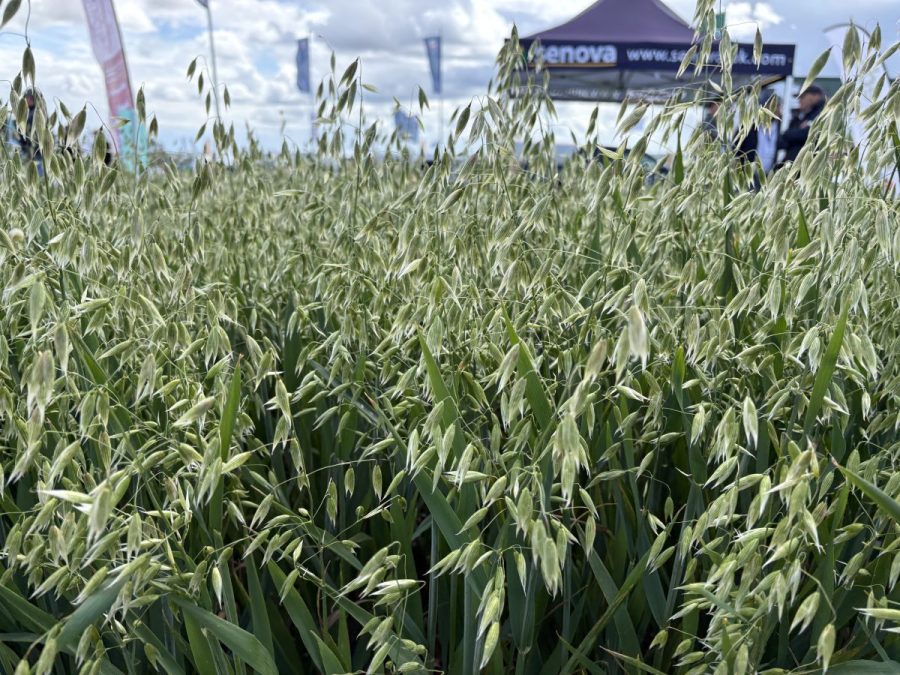
However, having tested Rannoch in the mill’s labs during the past few years, he says it appears promising. “In last year’s field trials, as a crop, Rannoch looked very similar to Mascani – it tillers the same and looks similar in height and colour.
“As for its quality, it has similar spec weight and screenings to Mascani, as well as good hullability and low hulling losses. But, it’s stand-out has to be the yield uplift – we recorded a 1t/ha improvement from a sensibly-drilled, early crop, with consistent yields across the entire drilling spectrum,” he adds.
While Richardsons will remain pro Mascani for now, Brin says confidence is high in Rannoch, and he’s looking forward to assessing the performance of commercial crops. “All-in-all, from what we’ve seen so far, it’s Mascani but with better yields.
“Importantly, we’re pleased that breeders are committed to bringing new winter oat varieties to the market. The quality is always there compared with spring oat varieties, as well as higher yields.”
Cefetra’s Kate Armstrong has also been impressed with Rannoch, with some of the company’s growers involved in a 1000t pilot crop for Richardsons Milling. She agrees that the variety looks similar to Mascani but with the benefit of improved yields.
“In terms of growing it on farm and crop management, it’s very similar to Mascani so will have a level of familiarity about it. We hope it’ll deliver security,” she says.
Among its agronomic credentials are a high crown rust score of 7 and a mildew rating of 4. It boasts stiff straw and scores a 7 in resistance to lodging.
According to Kate, growers want to see progression in winter oat varieties. “But without breeders investing in minority crops, we won’t see improvements on-farm, and then volumes will struggle even further.
“The winter oat area is smaller than spring oats, but end users remain committed to winter-planted crops. Hopefully Rannoch will appeal to millers with its quality grain, and reinforce that support of certified seed,” she concludes.
This article was taken from the latest issue of CPM. Read the article in full here.
For more articles like this, subscribe here.
Sign up for Crop Production Magazine’s FREE e-newsletter here.