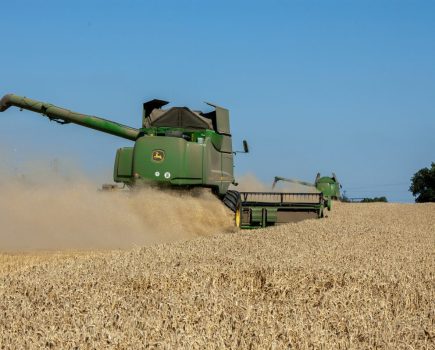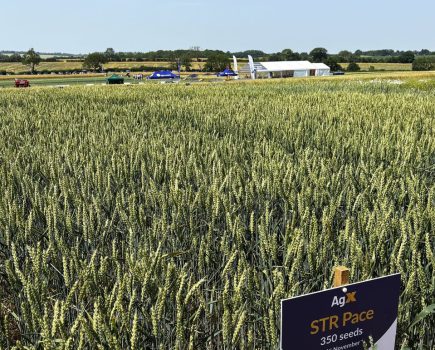

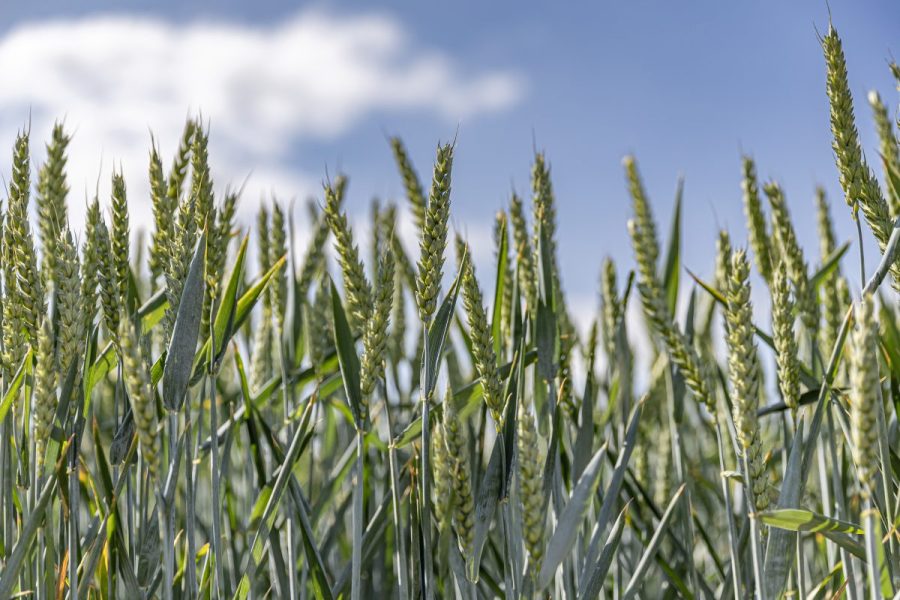
With wheat continuing to underpin many arable rotations, variety choice remains one of the most important decisions growers make. But as disease pressures evolve, premiums fluctuate and weather extremes become more common, is the highest-yielding option always the most productive? CPM finds out more.
“Wheat continues to offer one of the most reliable economic returns available to many businesses.” MATT BULL
By Charlotte Cunningham
For all the advances in agronomy, technology and crop protection, variety choice remains one of the most influential decisions made before a seed even enters the ground.
Yet while Recommended List figures often dominate discussions, growers are increasingly taking a broader view of what productivity really means. Yield remains critical, but in an era of tighter margins, shifting market opportunities and greater weather variability, consistency, resilience and flexibility are becoming just as important.
That’s particularly true following the recent changes in varietal resistance to yellow rust, which has prompted renewed discussion around variety selection and the dangers of over-reliance on any one source of resistance.
According to Agrovista’s Mark Hemmant, the industry’s response shouldn’t be to abandon affected varieties altogether, but rather to ensure a balanced approach to variety choice. “We’re not saying don’t grow varieties which might show some yellow rust, but don’t grow more than you can manage,” he explains. “The key is having a range of varieties and a range of genetics across the farm.”
MANAGING RISK
It’s a theme that runs throughout modern wheat production. Rather than chasing a single headline figure, productivity increasingly comes from managing risk, spreading opportunity and ensuring each variety is selected for the role it’s expected to perform.
Thinking about the coming season, and KWS UK agroservice manager, Matt Bull, believes there’s likely to be another substantial wheat area established across the country, reflecting the crop’s continued importance within arable rotations. “While questions remain around grain prices, fertiliser costs and premium availability, wheat continues to offer one of the most reliable economic returns available to many businesses.”
Against that backdrop, growers are increasingly looking for varieties capable of delivering across multiple measures of performance. “People are considering how they can improve margins, maximise marketing opportunities and ultimately reduce risk,” says Matt. “Variety choice has an important role to play in that.”
Importantly, those priorities aren’t necessarily the same on every farm, believes Zak McCelland, Agrovista’s southern seed sales manager. “Geography, market access, drilling strategy, disease pressure and rotational requirements can all influence which characteristics matter most, meaning variety selection is increasingly about matching genetics to specific farm objectives rather than identifying a single winner.”
Regional factors remain important too, he adds. In the North, distilling markets continue to influence variety decisions, while further south, proximity to mills and export outlets often drives demand for Group 1 and Group 3 wheats. “Elsewhere, feed wheat remains the dominant option, but even here growers are increasingly looking for opportunities to capture additional value where premiums exist.”
For growers targeting milling premiums, achieving specification remains one of the main challenges. While protein attracts much of the attention, delivering consistent quality has become increasingly difficult as weather patterns become less predictable and nitrogen utilisation more variable.
According to Matt, this is where genetics can play a valuable role in reducing risk. “Weather extremes can have a significant impact on nitrogen uptake and protein accumulation,” he explains. “Having a variety that’s inherently strong from a protein assimilation perspective helps to reduce the risk of missing contract specifications.”
It’s a key part of the rationale behind growers widely choosing KWS Vibe, which has been developed to offer strong protein production alongside improved agronomics. “For many years, Crusoe set the benchmark for protein achievement within the milling sector,” notes Matt. “However, growers are increasingly seeking varieties capable of combining both yield and quality with stronger all-round agronomics, which is why Vibe has attracted so much interest.”
According to Mark, that’s where the variety stands out most. “If milling premiums are tighter, consistency becomes even more important,” he says. “Vibe appears to outperform Crusoe when it comes to reliably achieving milling specification, while also offering a higher yield and stronger disease package.”
Alongside its protein credentials, Vibe brings a combination of good septoria resistance, strong yellow rust resistance and useful drilling date flexibility. Its relatively slow development through the winter means it can fit comfortably into a range of drilling situations, helping growers spread workload without compromising crop performance, says Matt.
Elsewhere, the conversation is increasingly turning towards flexibility. While feed wheat remains the dominant market for many growers, increasing pressure on input costs is encouraging growers to consider varieties which can achieve a premium to push profitability. That’s helped maintain interest in the Group 2 sector, where growers can combine strong yield performance with the potential to access quality premiums where market conditions allow.
According to Matt, KWS Arnie is a good example of how that balance is evolving. As the highest-yielding Group 2 on the Recommended List, it offers feed level yields, while retaining the ability to attract a premium where opportunities exist. “Arnie fits that slot really well,” he says. “It’s yielding at a level comparable with many popular hard Group 4 varieties but still gives growers the opportunity to access Group 2 premiums. KWS Arnie has looked exceptional all season.”
Zak believes that flexibility is becoming increasingly important as growers seek to balance risk and reward. “You could grow Arnie, achieve the premium and that’s great,” he says. “But if you don’t, you still have a very good wheat underneath it.”
Alongside its yield potential, Arnie has attracted attention for its consistency and disease profile, with strong performance in trials this season helping to reinforce confidence in the variety’s ability to deliver across different growing conditions.
A similar theme can be seen within the Group 3 sector. Although the domestic biscuit wheat market accounts for only a relatively small proportion of total UK wheat demand, Group 3 varieties continue to attract interest because of the breadth of end markets available to them.
Export opportunities, distilling demand and feed markets all contribute to their attractiveness, helping growers to avoid becoming overly reliant on a single outlet. “The beauty of the Group 3 market is its end-market flexibility,” says Matt. “Growers have multiple options available to them which helps find a home, and increases chances of achieving a small premium. With suitability for all soft end markets, including a high rating for distilling, KWS Solitaire is arguably the most marketable variety on the RL.”
That flexibility underpins interest in KWS Solitaire, currently the highest-yielding Group 3 variety on the Recommended List. According to Matt, the variety performs consistently across a range of situations, including first and second wheat positions, across a range of drilling slots, and is the top performing biscuit in both eastern and western growing regions, whilst maintaining strong performance in the North. “It combines competitive agronomics with orange wheat blossom midge resistance, helping simplify pest management later in the season.”
Matt believes Solitaire’s appeal extends beyond yield, helping growers to spread risk across different market opportunities while avoiding overreliance on a single variety or source of resistance.
However, while yield and quality often dominate variety discussions, some characteristics only become truly valuable when conditions turn against growers.
Standing power is a good example. After several seasons with relatively limited lodging pressure, it’s easy to overlook the impact a flattened crop can have on harvest efficiency, grain quality and final output. “We haven’t had a major lodging year for a while, but they do happen,” says Mark. “And the cost of a crop going flat can be significant.”
ADDITIONAL BENEFITS
It’s one of the reasons why KWS Scope continues to attract attention within the hard Group 4 sector. Although not the outright highest-yielding option available today, it combines exceptional straw strength with high specific weight and strong septoria resistance, creating a package focused on reliability as much as outright performance.
Under the high septoria pressure of 2024, Matt says Scope remained among the strongest-performing varieties in trials, highlighting the value of robust agronomics when conditions become difficult.
The variety also offers useful flexibility around drilling date. Its prostrate growth habit and relatively slow development through the winter make it particularly well suited to earlier drilling situations, helping growers to spread establishment workload across larger wheat areas.
Ultimately, all three experts believe variety choice is becoming increasingly farm-specific. According to Matt, growers should focus on selecting varieties that suit individual positions within the rotation rather than looking for a single solution across the whole business. “Having a mix of varieties on farm is really important,” he says. “Different varieties bring different strengths, different genetics and different market opportunities.
“Selecting the right variety for the right position on farm, rather than going wholesale into one variety, is becoming increasingly important given the challenges around farm economics at the moment.”
Mark agrees, adding that recent yellow rust developments have only reinforced the importance of managing risk. “There will always be risks people are prepared to take,” he concludes. “But it’s the surprises people don’t like.
“That’s why having a balanced portfolio of varieties matters. It’s about not having more of any one variety than you can comfortably manage and making sure you have the flexibility to deal with whatever the season throws at you.”
This article was taken from the latest issue of CPM. Read the article in full here.
For more articles like this, subscribe here.
Sign up for Crop Production Magazine’s FREE e-newsletter here.