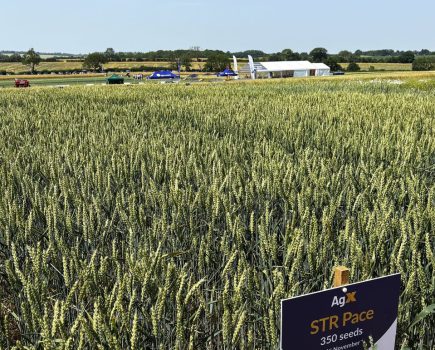

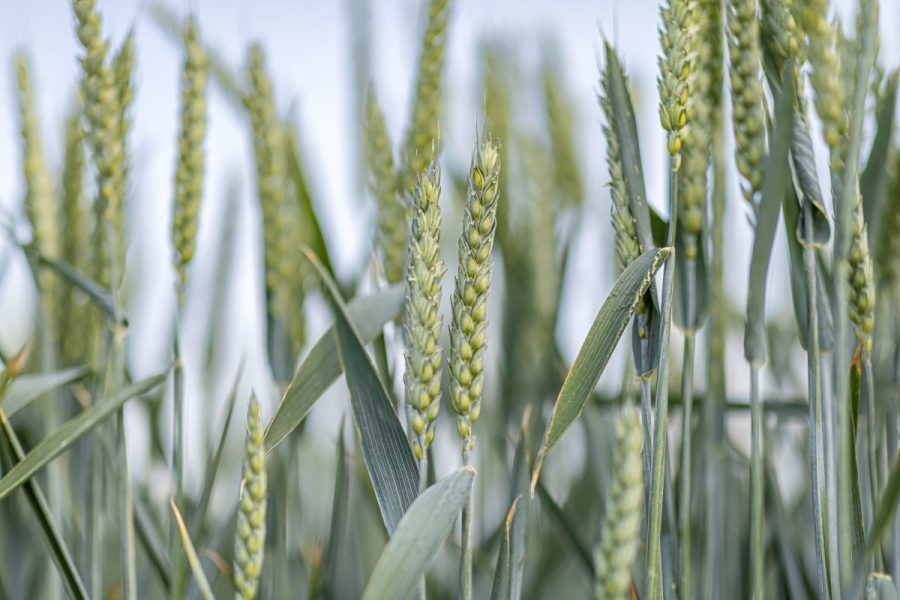
Combining feed-level yields with the potential of a milling premium, a new Group 2 wheat from KWS has been developed to build on the strengths of Extase while refining the package further for UK growers. CPM explores KWS Arnie.
“Arnie looks like a variety that can fit into a lot of different situations.” STUART ROWLEY
By Charlotte Cunningham
While outright yield still plays a major role in variety decision making, growers are increasingly looking for options capable of balancing performance with consistency, resilience and management flexibility – particularly within the competitive Group 2 sector, where end-market opportunities can fluctuate significantly from one season to the next.
Adding to the options is KWS Arnie – a Group 2 winter wheat from KWS combining feed-level yields with the potential for milling market flexibility. Spawning from a KWS Extase x Zyatt parentage, the variety has been developed to bring together the outright performance associated with Extase alongside a stiffer straw, improved eyespot resistance and a greater suitability for a wide range of farm scenarios.
But in an arguably crowded market, what exactly is it that makes Arnie stand out?
REFINEMENT
For KWS breeder Mark Dodds, the starting point was simple – take the strengths which made Extase such a success and refine the package further for UK growers. “Extase had been bred in France and then came to the UK and did very well,” he explains. “But we wanted to make it even more flexible for UK conditions.”
To achieve that, we crossed Extase with Zyatt, aiming to strengthen the variety’s suitability for UK conditions. “. “By crossing it with Zyatt we introduced improved eyespot resistance, shortened the straw and improved the overall yield.”
Disease resilience also remained a major priority during development. “There aren’t really any major disease weaknesses in the variety,” suggests Mark. “It’s one of the better varieties on yellow rust, even with the new races we’ve seen recently.”
And while yield progression was an important target, Mark says the wider KWS breeding focus continues to centre around delivering balanced varieties capable of performing consistently under UK conditions. “We’re continuing to breed across all the major market sectors,” he says. “But there’s definitely a focus on balanced varieties with strong disease resistance and improved resilience.”
For KWS agroservices manager Matt Bull, it’s that balance between output and resilience which makes Arnie particularly interesting commercially. “First and foremost, we talk about yield,” he says. “It’s delivering feed-level yields with the potential for a premium. In fact it outyields 50% of the varieties in the hard Group 4 sector.”
Currently the highest-yielding Group 2 on the AHDB Recommended List at 104% of controls, Arnie combines strong grain quality characteristics including high Hagberg falling numbers and excellent specific weights, while also performing particularly strongly in the eastern and western regions where much of the UK’s Group 2 area is typically grown.
That positioning reflects wider shifts within the Group 2 sector during recent years. During a prolonged period without new Group 1 introductions, demand for domestic Group 2 wheats increased significantly as millers searched for reliable domestic alternatives. “There were 13% protein contracts available for varieties like Extase,” explains Matt. “Growers were effectively achieving Group 1-style premiums on some Group 2 wheats.”
While the recent arrival of newer Group 1s such as KWS Vibe has changed that dynamic slightly, Matt believes strong-performing Group 2s continue to hold significant value because of the flexibility they offer. “With varieties like Arnie, growers can still comfortably grow them as feed wheats,” he says. “But if Group 1 quality drops away or harvest conditions create more demand from millers, there’s still the opportunity to capture a premium.”
UK-CENTRIC
Agronomically, Matt believes one of Arnie’s biggest strengths is its suitability for UK conditions. “Extase is a French type,” he raises. “It doesn’t really want to be drilled too early because it has a vigorous growth habit and hit stem extension quickly.”
While Arnie still carries vigorous growth characteristics, Matt says its overall profile gives growers slightly more flexibility on farm, particularly around rotational positioning.
Arnie appears to maintain performance strongly in second wheat situations. “It is the top performing Group 2 in both rotational positions and maintains the same relative performance as both a first and second wheat,” he says.
The variety also continues to perform strongly from a disease perspective, carrying an untreated yield of 87%, supported by a septoria tritici rating of 6.8 and a yellow rust score of 7.3. “That septoria score is actually above Extase,” notes Matt. “And importantly, the yellow rust resistance held up very well through the 2025 season despite the changes we saw in rust populations.”
Combined its early maturity with stiff straw, Matt believes the package offers growers a strong balance between output and risk management. The feedback from farm this season has been very positive and we expect the variety to grow in popularity quickly.
That balance between performance and resilience is something also being recognised commercially. According to independent grain and seed merchants James Mortimer, Arnie’s appeal extends beyond outright yield figures alone. From a trading perspective, managing director Stuart Rowley says grain quality characteristics are one of the first things catching attention. “We always start with bushel weight,” he explains. “And on paper Arnie looks very strong.”
Combined with a Hagberg of 296, Stuart believes the variety offers reassurance both for growers and grain buyers. “If crops end up sitting out slightly longer, that Hagberg gives confidence,” he says.
One area still being monitored closely, however, is protein performance under commercial conditions. “With such a high yield potential, maintaining strong protein would be exceptional,” says Stuart. “The breeders are confident, but we’ll really assess that once more commercial crops come through.”
DELIVERING YIELDS
From an agronomy perspective, Mortimers’ technical director Georgina Beevers says the variety initially stood out because it was delivering Group 2 quality alongside hard feed-level output. “It was yielding alongside varieties like Scope and Beowulf, but as a Group 2.”
Disease resilience has also impressed through Mortimers’ own on-farm trials. “We run large untreated plots alongside treated ones and Arnie looked spotless so far this season,” says Stuart.
That performance has become increasingly notable against the backdrop of changing yellow rust populations and visible breakdowns in some established varieties. “There are varieties struggling badly now,” says Georgina. “So growers really have to think carefully about spreading varietal risk.”
Rather than relying heavily on a single wheat, she believes growers are increasingly selecting several varieties as part of a wider farm strategy. “You can’t really afford to be just growing one variety across the whole farm anymore,” she says.
That philosophy is also influencing how Mortimers sees Arnie fitting alongside existing wheats. For example, while varieties such as Palladium may still retain advantages around protein achievement and earlier drilling opportunities, Georgina believes Arnie complements those profiles particularly well. “Palladium works well earlier drilled, whereas Arnie probably suits more of a late-September onwards drilling slot,” she explains. “So actually they complement each other really well.”
Despite the positive feedback, both Stuart and Georgina stress that no variety is without management considerations. One obvious watchpoint remains orange wheat blossom midge resistance, a trait that Arnie lacks. “In our area there are farms where midge resistance is very important,” notes Stuart. “So that’s something growers still have to think about.”
DRILLING DATE
Similarly, while the variety appears slightly more flexible than Extase, Georgina says its vigorous growth habit suggests still means it isn’t ideally suited to very early drilling. “It tillers well and produces a thick canopy,” she explains.
That said, both believe its versatility across soil types and regions remains one of its biggest strengths. “So far it appears to be performing across a really wide range of situations,” says Stuart.
And with disease pressure remaining high, Georgina believes robust all-round packages will only become more important moving forward. “Yellow rust has obviously dominated conversation recently,” she says. “But septoria is still the major yield-robbing disease for winter wheat and growers must keep that in mind when selecting varieties.”
For that reason, she believes varieties combining strong resistance across multiple diseases are likely to become increasingly valuable in the years ahead.
And while it remains early days commercially, both Stuart and Georgina believe Arnie’s overall balance of yield, quality and disease resistance is ultimately what could secure its place on farm. “Nothing’s ever perfect,” concludes Stuart. “But Arnie looks like a variety that can fit into a lot of different situations – and I think that versatility is going to be important moving forward.”
This article was taken from the latest issue of CPM. Read the article in full here.
For more articles like this, subscribe here.
Sign up for Crop Production Magazine’s FREE e-newsletter here.