
Scientists have identified the gene complex which controls germination in cereal crops, believing it could help to develop varieties that are more resilient to climatic extremes. CPM takes a look at pre-harvest sprouting and how genetics could unlock greater control.
“We found barley germination isn’t primarily governed by a single gene as was once thought.” PROFESSOR ROBBIE WAUGH
By Mike Saull
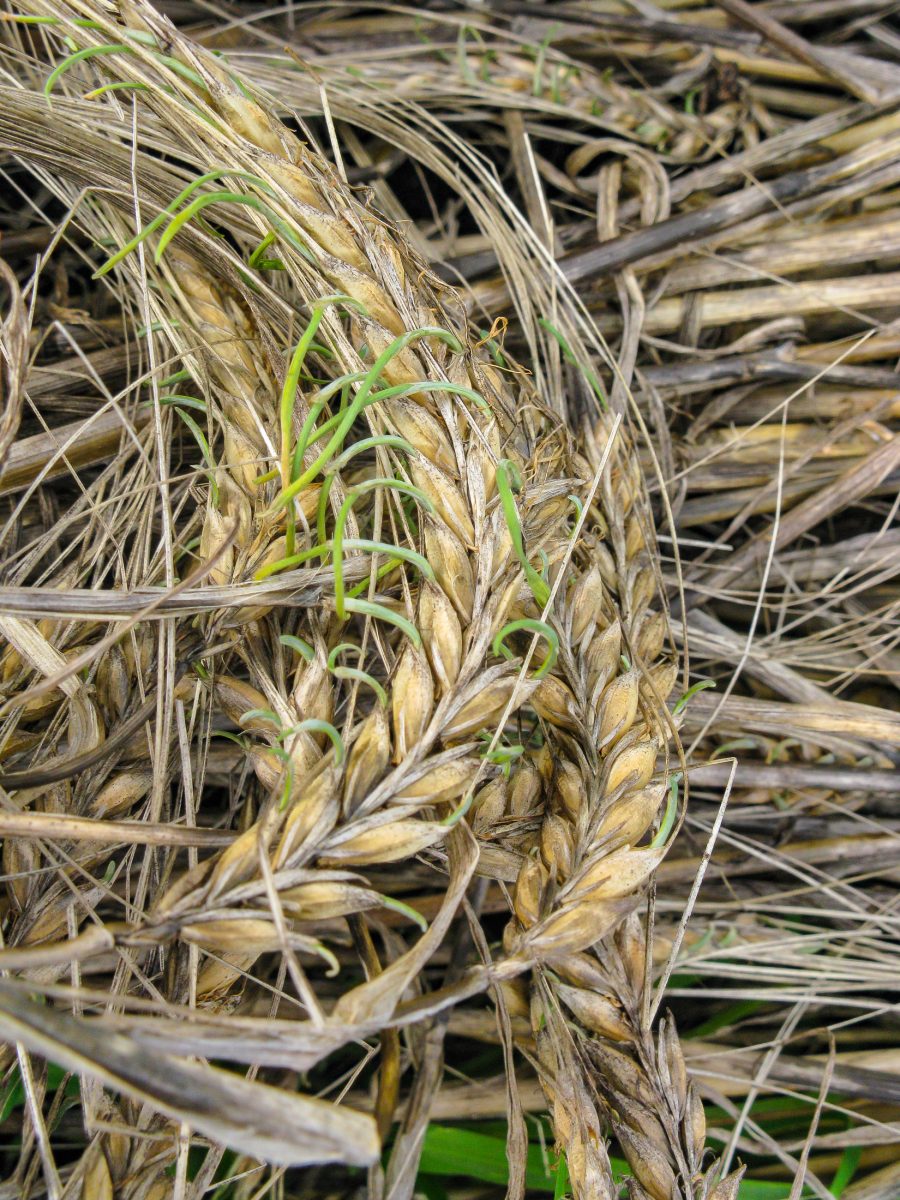
Pre-harvest sprouting (PHS) is a phenomenon that occurs when grains germinate on the plant in mature crops, most commonly after prolonged warm and humid weather before harvest. The result is grains sprouting on the ear that are virtually worthless, which in high-quality potential cereal crops such as barley, wheat, but also rice, can cause significant annual losses worldwide.
In the UK, the problem appears to be most significant in the north of England and Scotland, with sprouted grains of barley failing to meet the quality requirements of the brewing, distilling and even animal feed industries.
However, a breakthrough study published in the journal Science, reports on research at the James Hutton Institute as part of a multi-national team led by Carlsberg Research Laboratory. Here, as part of their wider genetic research, the team has linked a gene complex – labelled MKK3 – to the control of seed dormancy and sprouting.
Furthermore, the researchers suggest that manipulating this could lead to new, predictable ways to breed crops that are resilient to climate extremes, as well as being suitable for more diverse agricultural demands.
TRADE-OFF
According to barley geneticist and project lead at the James Hutton Institute, Professor Robbie Waugh, germination is often a trade-off between what the farmer and the end-user wants. “Farmers want seed that provides good even germination when planted and is then resilient to wet weather if harvest is delayed. In contrast, maltsters want a fast, even germination when the grain is in the steep.
“We found that barley germination isn’t primarily governed by a single gene as was once thought, rather a complex system driven by many varied MKK3 gene types found in different barleys worldwide.
“Our research demonstrates how different combinations of MKK3 types have evolved during thousands of years, and have been selected to control a delicate balance between seed dormancy, sprouting risk and the rapid, even germination demanded by the malting and brewing sectors.”
In wild cereal ancestors, adaptation to unpredictable or seasonal habitats has promoted variability in grain dormancy levels, a vital and evolutionary conserved ‘bet-hedging’ strategy to ensure the reproductive success of a population in case of catastrophic events.
But as the barley crop was domesticated, growers sought out types with a shortened dormancy, because grain with rapid and uniform germination optimised cultivation at the same time as simplifying grain storage and subsequent processing.
With cultivation spreading to temperate and subtropical areas, shorter periods of dormancy allowed for direct resowing of freshly harvested grain, enabling the production of two crops per year, significantly increasing annual yield.
However, short dormancy duration may also promote the undesirable outcome of uncontrolled germination (sprouting) of mature grain before harvest in response to warm and moist weather. Thus understanding the complexity of this genetic balance is vital, particularly for future production in increasingly warm and wet regions where farmers are likely to face the greatest risks.
Dr Joanne Russell, a member of the James Hutton research team says given many of the observations will apply to other major cereal crops like wheat and rice, this new understanding of MKK3 could have a major impact on cereal breeding and is critical for food security in a changing climate.
Furthermore, both Joanne and Robbie anticipate that the global science and breeding communities will exploit these findings to accelerate progress towards the development of resilient crops with a combination of MKK3 variants to suit more difficult and diverse environments.
“Given, warmer and wetter summers we could well require varieties which are less susceptible to sprouting and better able to cope with a more difficult harvest,” says Robbie. “Equally, with wetter autumns and winters on the cards, it could also be that winter cropping may become even more difficult giving an even greater reliance on spring crops to deliver what the industry demands.
“How to balance the avoidance of PHS with the benefits of reduced dormancy in cereals is therefore becoming a higher priority. By dissecting the molecular basis of MKK3 variation in the barley genome, followed by pre-breeding and multi-year field trial validation, we hope to develop plant types that can sustain high-performance agriculture in changing environments.”
Bruce Ferguson, Frontier’s general manager for Scotland raises that malting barley production requires crops to meet strict quality parameters, including low screenings, optimal nitrogen and minimal skinning levels. “Anything that helps to reduce harvest and storage risk would be welcomed.
“This is because although PHS can be a localised issue, it isn’t limited to later harvested crops. Warm, moist conditions close to harvest can create challenges even in typically drier parts of eastern Scotland,” he points out.
UNFORGETTABLE
Adam Christie at Scottish Agronomy explains that PHS in Scotland is probably a one year in 10 issue, but when it does occur, it’s a major problem. “Harvest 2024 was the last time we saw it, but it wasn’t a disaster; most growers coped and after a dry harvest like last year, it’s quickly forgotten.
“But 1995 was a different story – I can remember sitting on combines when the grain coming into the tank was literally green. While we’ve probably had three harvests since then when it was seen, I’d never want to go through a similar year again,” he stresses.
While there’s no official data on the UK Recommended Lists on sprouting susceptibility, Adam suggests growers should look at other characteristics that point to the robustness of a variety.
“For wheats, we find that the lower the Hagberg, the lower the resistance to sprouting. Standing power also plays a part, with more lodging-resistant varieties less likely to succumb to a wetter harvest period.
“However, the problem is that we’ve had a couple of dry years, and newer, more popular wheats haven’t been tested under later, wetter conditions – we don’t know how they’ll perform in a bad lodging season,” he stresses.
Farmers should also be aware that there’s a tendency for new entrants into the RL trialling system to be later to mature, and with each successive list, more of these types are being recommended, suggests Adam. “As such, today’s maturity rating isn’t the same as it was 10 years ago.”
While these later maturing cereals tend to be higher yielding, their ‘robustness’ should be considered further North too, he adds. “A two-day difference in maturity ratings may be fine in the Home Counties, but in Aberdeenshire, it could equate to a couple of weeks.
“This is why it’s important to consider local or supplementary trails data; we keep older standards with known sprouting and maturity in our trials. My concern for some newer varieties is that they’re an unknown quantity and that’s something to bear in mind. Variety choice always has an element of risk limitation as well as performance potential,” concludes Adam.
This article was taken from the latest issue of CPM. Read the article in full here.
For more articles like this, subscribe here.
Sign up for Crop Production Magazine’s FREE e-newsletter here.